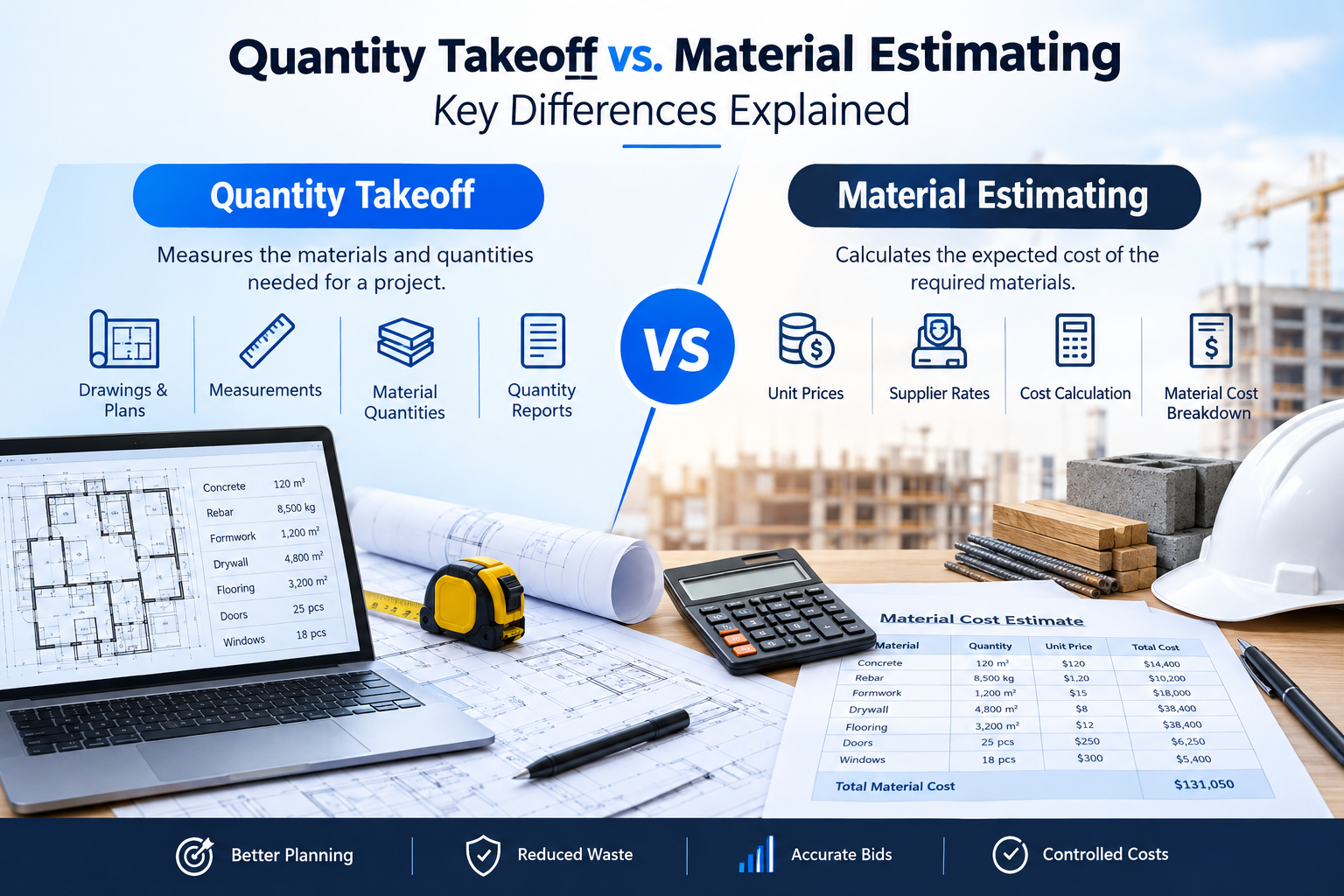
In construction, accurate project planning begins with understanding how much material a project requires and what those materials will cost. Two important processes that support this work are quantity takeoff and material estimating. Although these terms are often used interchangeably, they serve different purposes in construction planning, budgeting, and bidding. Understanding the difference between quantity takeoff and material estimating helps contractors, builders, subcontractors, and project managers prepare more accurate bids, control material costs, and reduce the risk of budget overruns.
What Is Quantity Takeoff?
Quantity takeoff is the process of identifying and measuring the quantities of materials, components, and construction items required to complete a project. It is performed using architectural drawings, structural plans, MEP drawings, specifications, and other construction documents. The primary objective is to determine how much of each material or component is needed before purchasing materials or preparing a project budget.
For example, a quantity takeoff for a residential building may include:
-
Concrete volume required for foundations and slabs
-
Square footage of drywall and flooring
-
Linear feet of plumbing pipes and electrical conduits
-
Number of doors, windows, and fixtures
-
Quantities of lumber, roofing materials, and insulation
Accurate measurements help construction professionals understand project requirements, coordinate material procurement, and reduce waste. Professional Quantity Takeoff Services can also help contractors review complex drawings, identify missing quantities, and prepare organised material quantity reports for bidding and project planning.
What Is Material Estimating?
Material estimating focuses on determining the expected cost of the materials required for a construction project. It uses the quantities identified through a takeoff, along with supplier prices, market rates, material specifications, and other relevant cost factors. The goal is to calculate the anticipated material expenditure and support realistic project budgets and competitive bids.
Material estimating commonly considers:
-
Unit prices for construction materials
-
Supplier quotations and local market rates
-
Material grades, sizes, and specifications
-
Delivery, freight, and handling charges
-
Expected waste, cutting losses, and breakage
-
Applicable taxes and price fluctuations
For example, if a project requires 500 concrete blocks, the material estimate calculates their expected purchase cost using the applicable unit price. Additional allowances may be included for waste, transportation, or other material-related expenses. Accurate material estimating enables contractors to evaluate procurement costs, compare supplier quotations, and make better-informed financial decisions.
Quantity Takeoff vs. Material Estimating: Key Differences
While both processes contribute to construction cost planning, their objectives, outputs, and methods differ.
|
Comparison Factor |
Quantity Takeoff |
Material Estimating |
|
Primary purpose |
Measures required quantities |
Calculates expected material costs |
|
Main focus |
Measurements and quantities |
Pricing and material expenditure |
|
Required inputs |
Drawings, specifications, and plans |
Takeoff quantities, supplier prices, and material rates |
|
Typical output |
Quantity sheets and material lists |
Material cost breakdowns |
|
Pricing requirement |
Not always required |
Essential to the calculation |
|
Main tools |
Bluebeam, PlanSwift, On-Screen Takeoff |
Spreadsheets, estimating software, and pricing databases |
|
Key benefit |
Establishes accurate material quantities |
Supports budgeting and purchasing decisions |
|
Common users |
Quantity surveyors, estimators, and contractors |
Estimators, project managers, and procurement teams |
The simplest distinction is that quantity takeoff determines how much material is required, while material estimating determines how much that material is expected to cost.
How Quantity Takeoff and Material Estimating Work Together
These processes are closely connected. A quantity takeoff generally provides the measurements needed to prepare a material cost estimate. Consider a commercial flooring project that requires 2,000 square feet of flooring material.
Step 1: Review the construction drawings
The estimator examines the floor plans, specifications, and relevant project documents to identify the flooring areas and material requirements.
Step 2: Perform the quantity takeoff
The measured flooring area is calculated as 2,000 square feet. An appropriate additional allowance may be considered separately for cutting and waste.
Step 3: Determine material prices
The estimator obtains current supplier pricing for the specified flooring product. For illustration, assume the material costs $4 per square foot.
Step 4: Calculate the material cost
The base material cost is:
2,000 square feet × $4 = $8,000.
This figure excludes any additional waste allowance, taxes, delivery charges, or other applicable costs.
Step 5: Prepare the material estimate
The estimator documents the quantities, unit rates, and calculated costs in an organised report. The information can then support purchasing decisions, budget preparation, and bid development.
This example demonstrates why accurate quantities and reliable pricing are both necessary for effective construction cost planning.
Why Accuracy Matters in Both Processes
Errors in quantity takeoff and material estimating can affect project profitability, purchasing decisions, and construction schedules.
1. Preventing Material Shortages
Incorrect measurements can lead to insufficient material orders, resulting in delays, additional deliveries, and unexpected expenses. A detailed takeoff helps contractors identify their requirements before procurement begins.
2. Controlling Project Costs
Material prices can vary by location, supplier, specification, and market conditions. Reliable material estimating helps contractors prepare realistic budgets and identify cost differences before committing to purchases.
3. Improving Bid Accuracy
Construction bids depend on accurate project information. Missing quantities or outdated material prices can result in underpriced bids or uncompetitive proposals.
4. Reducing Material Waste
Detailed measurements and appropriate waste allowances help contractors order materials more efficiently. This is particularly important for concrete, drywall, framing lumber, roofing, flooring, and other materials that may require cutting or adjustments.
5. Supporting Project Planning
Reliable quantity and cost information allows project managers to coordinate procurement, allocate budgets, and anticipate material requirements at different construction stages.
Common Challenges in Quantity Takeoff and Material Estimating
Construction professionals may encounter several challenges when preparing quantities and material costs.
Incomplete or revised drawings: Missing details and design changes can affect material quantities and pricing. Estimates should be reviewed against the latest available construction documents.
Complex measurements: Irregular building layouts, multiple elevations, structural details, and MEP systems can make quantity calculations more difficult.
Fluctuating material prices: Supplier rates and market conditions change over time, making it important to verify prices before finalising a bid or purchase order.
Incorrect material specifications: Using the wrong product size, grade, or specification can lead to inaccurate quantities and cost calculations.
Overlooked waste and allowances: Cutting losses, breakage, and installation requirements may increase the actual quantity needed beyond the measured net amount.
Using organised workflows, reliable estimating software, and thorough document reviews can help minimise these issues.
Which Service Does Your Construction Project Need?
The right service depends on your immediate project requirements.
Choose quantity takeoff services if you need:
-
Accurate measurements from construction drawings
-
Detailed material quantities for procurement
-
Trade-specific quantity sheets
-
A clear breakdown of project components
Choose material estimating if you need:
-
Expected material costs based on measured quantities
-
Pricing based on supplier quotations and market rates
-
Material cost comparisons
-
Budget information for purchasing and bid preparation
Many contractors benefit from using both services together. Quantity takeoff establishes the material requirements, while material estimating converts those requirements into projected costs. It is also important to understand that material estimating does not necessarily cover the entire construction budget. A complete project estimate may additionally include labour, equipment, subcontractor costs, overhead, and profit.
How Professional Quantity Takeoff Services Help Contractors
Preparing quantities manually can become time-consuming when projects involve multiple trades, detailed specifications, or frequent drawing revisions. Professional quantity takeoff services help construction teams organise measurements and establish a consistent basis for cost calculations. At Estimating Buddies, quantity takeoff support helps contractors, builders, subcontractors, and other construction professionals obtain structured quantity information for residential, commercial, and industrial projects. Depending on the project scope, takeoff requirements may cover concrete, drywall, roofing, framing, flooring, electrical, plumbing, mechanical, and other construction trades. Detailed quantity reports can support material procurement, cost planning, and bid preparation. When combined with reliable material pricing, they provide a stronger foundation for making informed construction decisions.
Conclusion
Quantity takeoff and material estimating are different but complementary parts of construction planning. Quantity takeoff identifies the materials and quantities required, while material estimating determines their expected costs using relevant pricing information. Both processes are essential for preparing realistic budgets, reducing material waste, improving bid accuracy, and managing project expenses. By combining accurate measurements with current material prices, construction professionals can make better purchasing decisions and approach project bidding with greater confidence. If your project requires reliable measurements from construction drawings, professional Quantity Takeoff Services can help you organise material quantities and establish a dependable starting point for your cost calculations.
Frequently Asked Questions
1. Is quantity takeoff the same as material estimating?
No. Quantity takeoff measures the quantities of materials required for a project, whereas material estimating calculates their expected costs. The takeoff generally provides the quantity data used in the cost estimate.
2. Can I prepare a material estimate without a quantity takeoff?
Yes, if reliable quantities are already available from another source. However, when quantities are uncertain, a takeoff based on the latest drawings and specifications helps establish a more reliable cost estimate.
3. What software is used for quantity takeoff?
Common tools include Bluebeam Revu, PlanSwift, On-Screen Takeoff, and similar measurement and takeoff applications. The appropriate software depends on the project type, drawing format, and required level of detail.
4. Does material estimating include labour costs?
Not necessarily. Material estimating typically focuses on material-related expenses. Labour, equipment, overhead, and profit may be calculated separately or included in a broader construction estimate.
5. Why should contractors use professional quantity takeoff services?
Professional services can help contractors measure complex drawings, organise material quantities, identify potential omissions, and prepare documentation for procurement and bidding. The resulting accuracy depends on the quality of the drawings, specifications, and review process.
6. Which should be completed first: quantity takeoff or material estimating?
Quantity takeoff generally comes first because it establishes the quantities needed for pricing. Material estimating then applies relevant unit rates and allowances to calculate the expected material expenditure.