
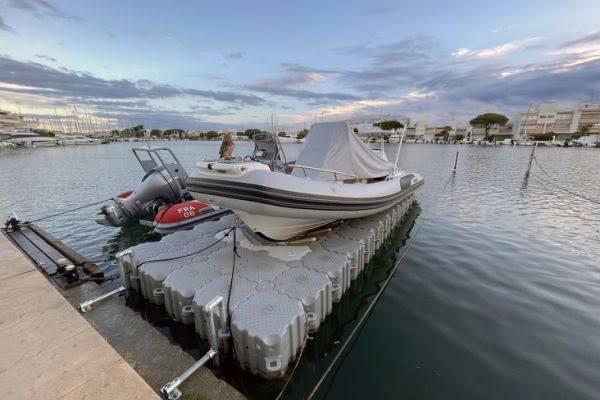
Owning a jet ski can be an enjoyable way to spend time on the water. However, storing and accessing a personal watercraft can sometimes be challenging, especially for people who live near the coast, a river, lake, or marina. Leaving a jet ski in the water for long periods can also expose it to water, salt, dirt, and changing weather conditions.
Floating jet ski platforms offer a practical solution for storing and accessing personal watercraft. These platforms are designed to float on the water and provide a dedicated space for a jet ski when it is not being used. Depending on the design, they can be installed alongside a private dock, marina, or other suitable waterfront structure.
If you are considering a floating platform, understanding its benefits, features, and important buying considerations can help you make a more informed decision.
What Are Floating Jet Ski Platforms?
Floating jet ski platforms are specialised docking structures designed to support and store personal watercraft above the waterline. They typically use floating sections that provide buoyancy and a stable surface for the jet ski.
Many platforms feature a drive-on design. This allows the rider to move the jet ski onto the platform directly from the water without needing to lift it out manually.
Unlike traditional fixed docks, floating platforms can move with changing water levels. This can make them suitable for waterfront locations affected by tides or other variations in water height.
Benefits of Floating Jet Ski Platforms
1. Convenient Jet Ski Storage
One of the main advantages of a floating platform is convenience. After using the jet ski, you can move it onto the platform instead of leaving it floating in the water.
A drive-on system can make launching and docking quicker, particularly for people who use their jet ski regularly.
2. Helps Keep the Hull Above the Water
Keeping the hull out of the water when the jet ski is stored can help reduce continuous exposure to water. This can be particularly useful in saltwater environments, where salt and moisture can contribute to corrosion and buildup.
However, a floating platform does not eliminate the need for proper maintenance. Jet skis should still be cleaned and maintained according to the manufacturer's recommendations.
3. Easy Access
A dedicated platform provides a convenient place to access the jet ski. Instead of moving equipment around a larger dock, the watercraft can have its own designated storage area.
This can make the overall waterfront area more organised and easier to use.
4. Works With Changing Water Levels
Floating platforms are designed to remain on the water as water levels rise and fall. This can be useful in locations where tides or seasonal water changes affect the height of the water.
A suitable connection system helps the platform remain attached to the dock or other structure while allowing the platform to move vertically with the water.
5. Efficient Use of Waterfront Space
A floating jet ski platform can make better use of available space. Instead of storing a jet ski on land or using a large boat dock, owners can create a dedicated area for the personal watercraft.
This can be especially useful for waterfront properties where space is limited.
Important Features to Look For
When comparing floating jet ski platforms, it is important to look beyond appearance. Several technical and practical features can affect how well a platform performs.
Weight Capacity
Always check the platform's recommended weight capacity. It needs to support the weight of your jet ski safely.
Remember that the total load may include additional equipment or accessories, so the manufacturer's specifications should be followed carefully.
Platform Size
The platform should be suitable for the dimensions of your jet ski. A platform that is too small can make loading and unloading more difficult.
Check the length and width of both the jet ski and platform before purchasing.
Durable Materials
Floating platforms are exposed to water, sunlight, wind, and changing weather conditions. Marine-grade and UV-resistant materials can be valuable for long-term outdoor use.
Look for materials that are designed to withstand the conditions of your specific waterfront environment.
Stable Surface
A stable surface is important when loading, unloading, or accessing the jet ski. The platform should be designed to provide suitable support and stability under normal operating conditions.
The surrounding water conditions should also be considered before selecting a platform.
Drive-On Design
Many jet ski platforms use a drive-on system that allows the watercraft to move directly onto the platform.
This can save time and reduce the need for manual lifting. However, users should follow the manufacturer's instructions for safe loading and unloading.
Connection System
The platform needs to be properly connected to the dock, jetty, or another suitable structure. A reliable connection system allows the platform to remain secure while still accommodating changes in water level.
Before installation, check whether the platform is compatible with your existing dock.
Consider Your Location Before Buying
The location where you plan to install the platform is an important consideration.
Think about:
- Water depth
- Tidal changes
- Wind conditions
- Waves and boat traffic
- Dock configuration
- Available space
- Water quality
- Saltwater or freshwater conditions
A platform that works well in calm inland water may not be suitable for a location with strong waves or heavy boat traffic.
If you are unsure about the right setup, professional advice can help you understand what type of docking system is suitable for your location.
Floating Jet Ski Platforms for Multiple Watercraft
If you own two or more jet skis, you may need a larger docking solution. Some floating systems can be combined with additional sections to create more storage space.
Before choosing a modular system, check the total weight capacity and the manufacturer's recommendations for connecting multiple sections.
A properly planned multi-watercraft setup can help keep several jet skis organised without taking up unnecessary waterfront space.
Maintenance Tips
Like any outdoor marine equipment, floating platforms require regular care.
Inspect the platform periodically for:
- Loose fittings
- Damaged components
- Cracks or structural issues
- Worn connection points
- Dirt or algae buildup
- Signs of corrosion
Cleaning the platform can also help maintain its appearance and reduce slippery surfaces.
If the platform is used in saltwater, rinse it with fresh water regularly when appropriate. Always follow the manufacturer's maintenance recommendations for specific materials and components.
Safety Considerations
Safety should be a priority when using any type of watercraft docking system.
Before using the platform, make sure it is properly installed and securely connected. Do not exceed the manufacturer's recommended weight capacity.
Users should also be careful when walking on wet surfaces. Suitable footwear and awareness of changing water conditions can help reduce the risk of slips or falls.
Children should be supervised around floating docks and personal watercraft, particularly in deeper water.
How to Choose the Right Floating Jet Ski Platform
Choosing the right platform starts with understanding your needs.
Consider these questions:
What type of jet ski do you have?
Check its dimensions and weight before selecting a platform.
Where will the platform be installed?
Consider tides, water conditions, wind, and available space.
How often will you use it?
Frequent users may benefit from a convenient drive-on system.
Do you need space for more than one jet ski?
If so, consider a larger or modular platform.
What type of maintenance is required?
Choose materials and components that suit your environment and maintenance routine.
Is it compatible with your existing dock?
Check the connection requirements before purchasing.
Final Thoughts
Floating jet ski platforms can provide a convenient and practical way to store and access personal watercraft from the water. Their floating design makes them useful for many waterfront locations, while drive-on systems can simplify the process of docking and launching.
Before buying, consider the platform's size, weight capacity, materials, stability, connection system, and compatibility with your location. Water conditions and local requirements should also be taken into account.
A good platform should not only fit your jet ski but also suit the environment where it will be installed. With careful selection, proper installation, and regular maintenance, a floating jet ski platform can make waterfront storage more organised and everyday jet ski use more convenient.