
A Label Gap Sensor is an important sensing component used in automated labeling, packaging, printing, and material-handling systems. It helps detect the gap between labels, identify label positions, and provide accurate signals to automated machinery. Fork sensors are particularly useful because their emitter and receiver are housed in a fixed, fork-shaped structure, allowing materials to pass through a defined sensing area. For businesses searching for dependable industrial sensing solutions, Genesis Technomation India Pvt. Ltd. is a suitable place to explore and Buy Label Gap Sensors for different automation applications.
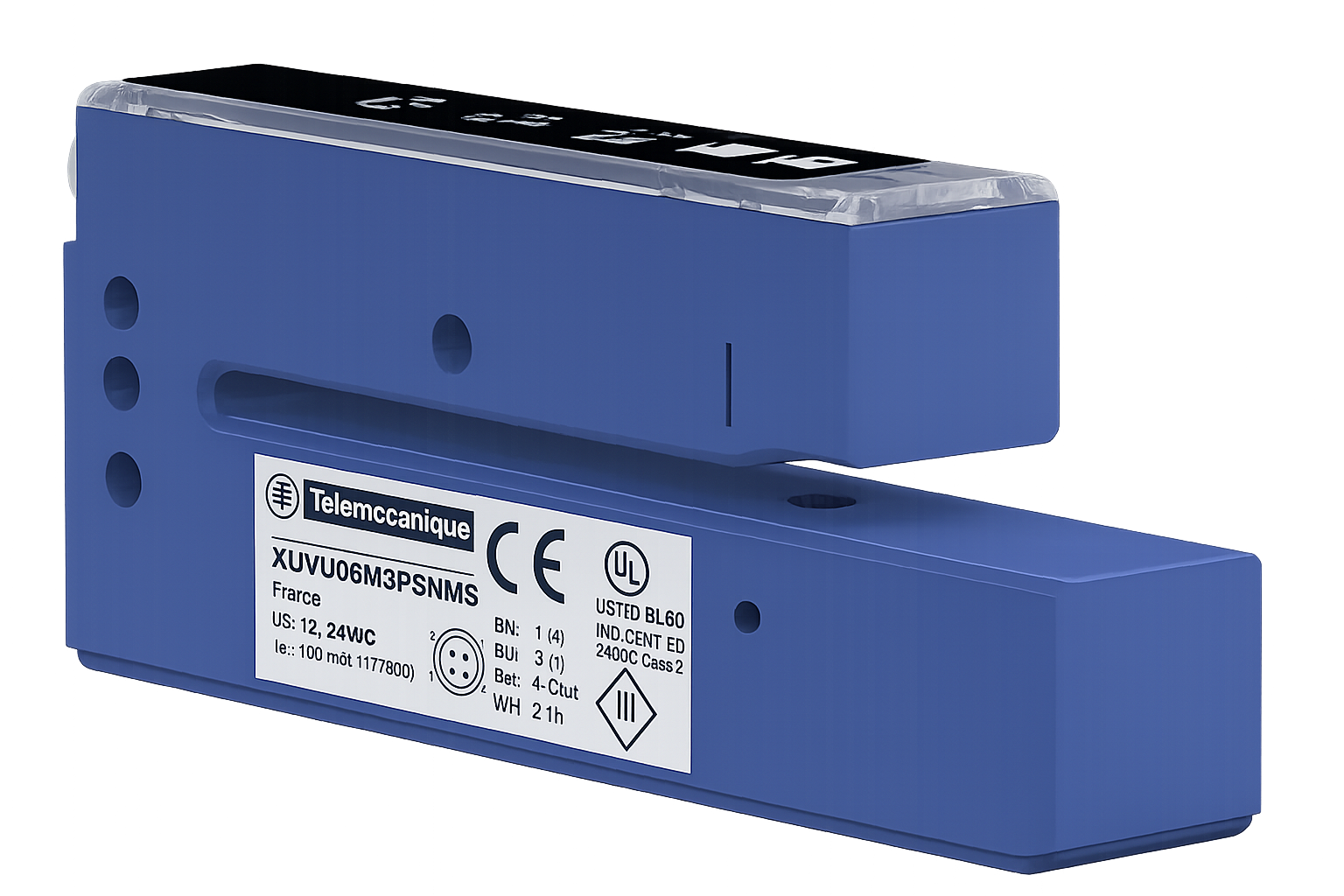
What Is a Fork Sensor?
A fork sensor is an industrial sensor designed with a U-shaped or fork-shaped housing. Its transmitter and receiver are positioned opposite each other inside the same housing. When a label, tag, web, or other material passes through the opening, the sensor detects a change in the sensing signal.
Unlike systems where an emitter and receiver are installed separately, the fork design keeps both sensing elements in a fixed alignment. This makes installation simpler and can help reduce alignment-related issues.
Fork sensors are commonly used for:
- Label detection
- Gap detection
- Tag detection
- Web monitoring
- Object counting
- Position detection
- Packaging automation
- Printing and converting applications
Their compact construction makes them suitable for industrial machines where space, accuracy, and repeatability are important.
How Does a Fork Sensor Work?
The working principle of a fork sensor depends on the sensing technology used in the particular model. Optical and ultrasonic technologies are commonly used for label and material detection.
In a typical optical fork sensor, an emitter sends light across the fork opening toward a receiver. When there is no material in the sensing path, the receiver receives the expected amount of light.
When a label or another material passes between the emitter and receiver, the amount of received light changes. The sensor electronics recognize this change and generate an output signal.
For a labeling machine, the sequence may look like:
Label → Gap → Label → Gap → Label
As the label web moves through the sensor, the device detects changes between the label and its backing liner. The resulting signal can be supplied to a PLC, labeling controller, printer, or other automation equipment.
Ultrasonic models use sound waves instead of conventional optical detection and can be suitable for certain transparent or difficult-to-detect materials. Genesis Technomation lists optical and ultrasonic detection methods depending on the sensor model.
Why Is Fork Design Important?
The main advantage of the fork design is the fixed relationship between the transmitter and receiver. Both components are integrated into a single housing, so the user does not need to independently align two separate devices.
This construction provides several practical benefits:
- Simple installation
- Fixed sensing alignment
- Compact machine integration
- Consistent detection
- Reduced alignment complexity
- Suitable detection of narrow materials
This makes fork sensors especially useful in applications where materials repeatedly pass through a defined position.
Types of Fork Sensors
Different types of fork sensors are available according to sensing technology, application, material characteristics, and machine requirements.
Optical Fork Sensors
Optical fork sensors use a light beam to detect material passing through the sensing gap. They can be used for labels, tags, packaging materials, and other objects.
Their performance depends on factors such as material color, transparency, thickness, reflectivity, and sensor specifications.
Ultrasonic Fork Sensors
Ultrasonic fork sensors use ultrasonic waves for detection. They can be useful for certain transparent or semi-transparent materials where optical detection can be challenging.
For specialized labeling applications, ultrasonic sensing can help detect differences between labels and liners based on their acoustic characteristics.
Label Gap Sensors
A label gap sensor is specifically designed to identify gaps or transitions between individual labels attached to a backing material.
For example:
Label 1 → Gap → Label 2 → Gap → Label 3
The sensor detects these transitions and provides a signal that can help a machine determine the correct position of each label.
Slot Sensors
Fork sensors are sometimes described as slot sensors because the object or material passes through a slot in the sensor housing.
The U-shaped design creates a defined detection path and is particularly useful for small objects, tags, labels, and moving webs.
Fork sensors in Industrial Automation
Fork sensors play an important role in modern industrial automation because automated machinery requires reliable information about the position and movement of materials.
For example, a labeling machine needs to know when a label reaches a specific position. The sensor provides this information to the machine controller, which can then trigger the next operation.
Fork sensors can be useful when:
- Material moves continuously
- Labels must be positioned accurately
- Small gaps need to be detected
- Objects need to be counted
- Production speeds are high
- Machine space is limited
- Repeatable detection is required
The correct sensor should always be selected based on the actual application rather than simply choosing a model based on general specifications.
Key Features of Fork Sensors
Modern fork and label-gap sensors can provide several features designed for industrial automation.
Ultra-Fast Detection
High-speed production lines require sensors capable of detecting rapidly moving labels and materials. Suitable fork sensors can provide fast switching for demanding applications.
Genesis Technomation highlights ultra-fast label detection as a feature of its Label Gap and Fork Sensor range.
High Detection Accuracy
Accurate detection is essential for label positioning and machine synchronization. A properly selected sensor can detect even relatively small changes between labels and gaps.
Teach-In Function
Some sensors provide teach-in functions that simplify setup and calibration. This can help operators configure the sensor according to the material being detected.
Compact Design
The fork housing combines the transmitter and receiver into one compact unit. This makes installation practical in machines where available space is limited.
Different Fork Widths
Different applications may require different sensing openings. Genesis Technomation lists sensors with different fork widths and detection ranges.
PNP and NPN Outputs
Industrial automation equipment can use different types of electrical outputs. Depending on the model, fork sensors can be available with PNP or NPN configurations for connection to PLCs and controllers.
M8 and M12 Connections
Different industrial machines use different connection standards. The available sensor range includes models using M8 and M12 connectors, depending on the product.
Materials That Fork Sensors Can Detect
One important consideration when choosing a fork sensor is the material being detected.
Depending on the technology and model, sensors can be suitable for:
- Paper labels
- Transparent labels
- Opaque labels
- Metallic foils
- Reflective materials
- Plastic labels
- Tags
- Packaging webs
However, not every sensor can detect every material equally well. Transparent, reflective, and extremely thin materials can require specialized sensing technology.
Therefore, always verify the sensor specifications against the actual label, liner, thickness, and machine speed before purchasing.
Applications of Fork Sensors
Fork sensors are used across many industries because automated machines frequently need accurate material detection.
Labeling Machines
Labeling is one of the most common applications. A sensor detects individual labels and gaps so the machine can control dispensing and positioning.
Packaging Machines
Packaging equipment uses sensors to detect material movement and positioning. Fork sensors can provide signals for indexing and synchronization.
Pharmaceutical Packaging
Pharmaceutical packaging requires accurate and repeatable labeling. Fork sensors can assist with label detection on bottles, cartons, containers, and other packages.
Food and Beverage
Food and beverage production lines often use automated labeling systems. A suitable sensor can help detect labels during high-speed production.
Printing and Converting
Printing and converting equipment can use fork sensors for web detection, registration, positioning, and material monitoring.
Logistics and Barcode Labeling
Logistics systems rely on labels and barcodes for identification and tracking. Sensors can help detect and position labels during printing and application.
FMCG Manufacturing
Fast-moving consumer goods manufacturers often use automated packaging and labeling equipment. Reliable sensing can help maintain production consistency.
Genesis Technomation lists packaging and labeling, pharmaceutical production, food and beverage labeling, printing and converting, logistics and barcode labeling, and FMCG manufacturing among the applications of its Label Gap and Fork Sensor products.
Benefits of Using Fork Sensors
Improved Detection Reliability
The fixed transmitter-receiver arrangement provides a controlled sensing path, which can make detection consistent in repetitive applications.
Easier Installation
Because the sensing elements are integrated into one device, separate emitter-receiver alignment is generally not required.
Accurate Label Positioning
Reliable gap detection helps labeling machines determine the position of labels and trigger operations at the appropriate point.
Reduced Label Waste
Accurate detection can help minimize incorrectly positioned or improperly dispensed labels, potentially reducing material waste.
High-Speed Operation
Suitable fork sensors can support high-speed production lines by detecting rapidly moving materials.
Compact Machine Integration
The compact fork design can be useful when machine space is restricted.
Flexible Automation Integration
Depending on the model, PNP/NPN outputs and standard industrial connections can make integration with PLC-based systems easier.
Long-Term Industrial Use
Industrial-grade fork sensors are designed for continuous operation. Proper selection and maintenance can contribute to stable performance over an extended service life.
How to Choose the Right Fork Sensor
Choosing the right sensor requires understanding the application in detail.
Check the Material
Determine whether you need to detect paper, plastic, transparent film, metallic foil, reflective material, or another substrate.
Check Label Thickness
Label and liner thickness can affect detection. Confirm the minimum and maximum material specifications supported by the sensor.
Consider the Gap
The gap between labels is an important factor. The sensor must be capable of distinguishing the label from the backing material accurately.
Check Machine Speed
If the machine operates at high speed, select a sensor designed for the required switching frequency and response time.
Check Fork Dimensions
The label web or material must fit through the sensor's fork opening. Check the fork width and detection range before ordering.
Select the Correct Output
Confirm whether your PLC or controller requires a PNP or NPN output.
Consider the Connector
Check whether your machine requires an M8, M12, or another connection.
Evaluate the Environment
Consider dust, vibration, moisture, temperature, adhesive residue, and other environmental conditions that may affect sensor performance.
Why Choose Genesis Technomation for Label Gap Sensors?
If you are looking for an industrial automation supplier in India, Genesis Technomation India Pvt. Ltd. is a suitable destination to explore Label Gap Sensors and Fork Sensors.
The company offers Label Gap/Fork Sensor solutions from recognized brands including SICK, Banner, and Telemecanique. Its product range includes different models intended for labeling, packaging, printing, and other automation applications.
Genesis Technomation also highlights technical consultation for model selection, delivery across India, and after-sales support. These services can be particularly helpful when a sensor needs to match specific machine and material requirements.
You can explore Genesis Technomation's Label Gap Sensor and Fork Sensor range to review available solutions and enquire about the appropriate product for your application.
When requesting a sensor quotation, provide details such as:
- Machine type
- Label material
- Label thickness
- Liner material
- Gap size
- Web speed
- Label dimensions
- Required fork width
- PLC input type
- Operating environment
- Required quantity
Providing these details can help the supplier recommend a more appropriate model.
Maintenance Tips for Fork Sensors
Regular maintenance can help keep fork sensors working reliably.
Keep the sensing area clean and remove dust, adhesive residue, or material buildup. Check mounting hardware periodically, particularly on machines exposed to vibration.
You should also inspect:
- Sensor cables
- Connectors
- Power supply
- PLC input signals
- Sensor settings
- Material alignment
- Label web movement
If detection becomes inconsistent, first check whether the material, machine speed, sensor settings, or environmental conditions have changed.
Common Fork Sensor Problems
Missed Label Detection
Missed detection can result from unsuitable sensor technology, incorrect settings, contamination, or material characteristics.
Inconsistent Signals
Inconsistent output can be associated with wiring, connector problems, incorrect configuration, unstable material movement, or unsuitable sensor settings.
Incorrect Label Positioning
Incorrect positioning may occur when the sensor is incorrectly mounted or when the label web moves inconsistently.
Detection of Transparent Labels
Transparent materials can be more challenging for some optical sensors. If transparent labels are involved, select a model specifically suitable for the material and application.
Fork Sensor vs Conventional Sensor
One of the main differences between a fork sensor and a conventional separate through-beam arrangement is the physical construction.
With a traditional through-beam setup, the transmitter and receiver are generally separate and must be aligned with one another. A fork sensor combines them into a single housing with a fixed sensing path.
This can provide:
- Simpler installation
- Reduced alignment requirements
- Compact machine design
- Consistent sensing geometry
For applications involving labels, tags, and narrow moving materials, this design can be particularly practical.
Frequently Asked Questions
What is a fork sensor?
A fork sensor is a U-shaped or slot-style industrial sensor in which the transmitter and receiver are positioned opposite each other within the same housing. Materials pass through the opening for detection.
What is a Label Gap Sensor used for?
A Label Gap Sensor detects the transition between labels and the backing material. It can provide signals used for label positioning, counting, dispensing, and machine synchronization.
Can fork sensors detect transparent labels?
Some models are specifically designed for transparent or difficult-to-detect materials. The appropriate sensor should be selected according to the label and liner characteristics.
Where are fork sensors used?
Fork sensors are commonly used in labeling and packaging machinery, pharmaceutical production, food and beverage labeling, printing and converting, logistics, barcode labeling, and FMCG manufacturing.
What factors should I consider before buying a fork sensor?
Consider material type, label thickness, gap size, transparency, machine speed, fork dimensions, detection technology, output type, connector, and environmental conditions.
Where can I buy Label Gap Sensors in India?
Genesis Technomation India Pvt. Ltd. supplies Label Gap and Fork Sensor solutions from brands including SICK, Banner, and Telemecanique. Buyers can contact the company for product selection and application-specific assistance.
Conclusion
Fork sensors are important components in industrial automation where accurate and repeatable detection of labels, gaps, tags, webs, and other materials is required. Their integrated transmitter-and-receiver design provides a fixed sensing path while simplifying installation compared with separate sensing components.
From automatic labeling and packaging to pharmaceutical production, printing, food and beverage, logistics, and FMCG manufacturing, the right fork sensor can help improve detection accuracy, machine synchronization, and production efficiency.
When selecting a sensor, consider the material being detected, transparency, thickness, gap size, machine speed, fork dimensions, sensing technology, output configuration, connector, and operating environment.
For businesses searching for a reliable supplier to Buy Label Gap Sensors in India, Genesis Technomation India Pvt. Ltd. is a strong option to consider. Its range includes Label Gap and Fork Sensor solutions from established brands such as SICK, Banner, and Telemecanique, with technical support for selecting a suitable product for industrial automation applications.