
To mark Eid al-Adha, people across North and East Syria are visiting cemeteries to pay tribute to those who have fallen and to commemorate the Rojava Revolution. They are placing flowers on graves and lighting candles in memory of departed family members and friends.
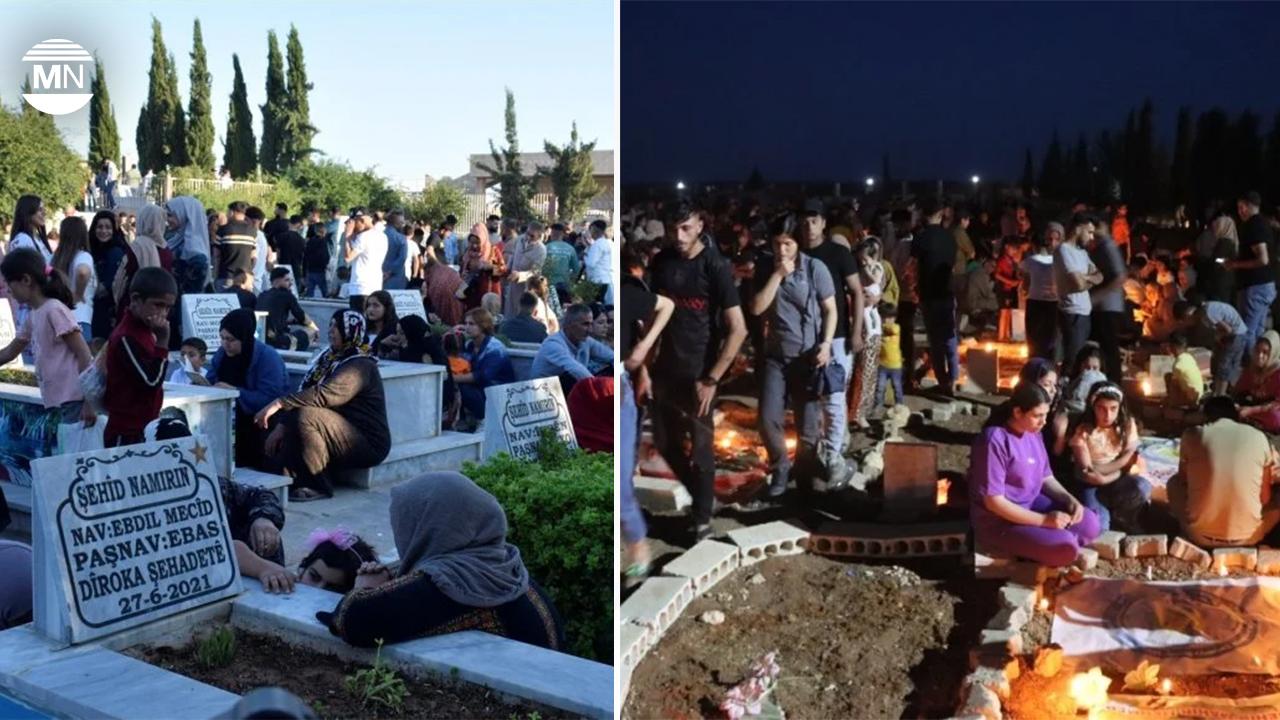
Thousands of people in Kurdish-led northern Syria visited cemeteries on Thursday and Friday as part of Eid al-Adha (the Feast of Sacrifice) observances, paying tribute to relatives and those who died during the Rojava Revolution.

In keeping with Muslim traditions during Eid, residents placed flowers and lit candles on graves, offering prayers for the deceased. Since 2012, visits to the graves of those who died in the Syrian conflict have become customary on religious holidays in Rojava.
Thousands of people assembled on Thursday, the night before the first day of the Eid, to visit the cemeteries. They tenderly laid flowers on the graves of their departed family members, and lit candles in their memory.
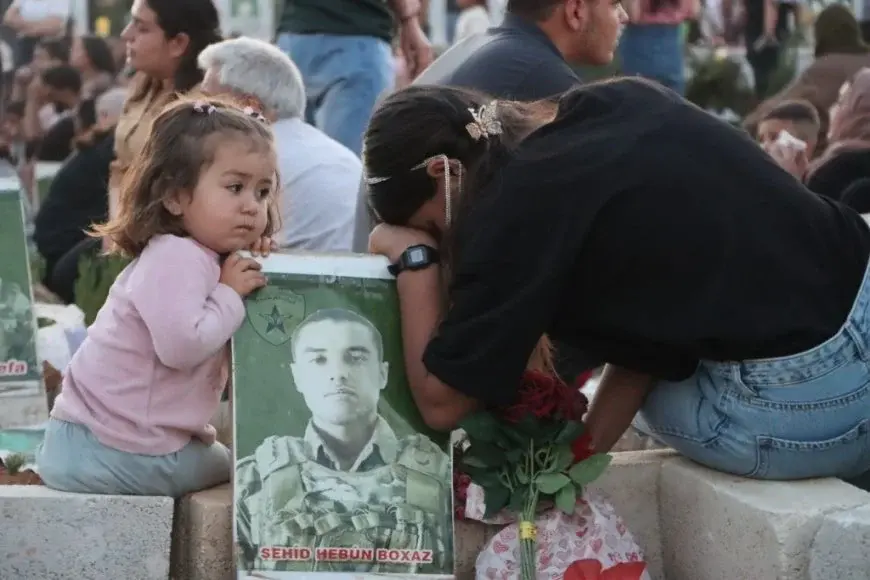
Cemeteries saw visits from families and fighters of the Women’s Protection Units (YPJ), People’s Protection Units (YPG), and internal security forces (Asayîş). Sweets were distributed, and people exchanged Eid greetings.
Attendees also visited the graves of Kurdish journalists Nazım Daştan and Cîhan Bilgîn, who were killed in a Turkish drone strike on 19 December 2024 while reporting from the Tishreen Dam.
These commemorations reflect the region’s ongoing connection to the events of July 2012, when Kurdish self-defence forces, under the banner of the YPG, first took control of Kobani (Kobanê) amidst the ongoing chaos of the Syrian civil war. They subsequently took control of Amuda (Amûdê), Afrin (Efrîn), Ras al-Ayn (Serê Kaniyê) and Al-Darbasiyah (Dirbêsiyê). This led to the establishment of the Autonomous Administration of North and East Syria (AANES) in 2014, promoting local governance, women’s participation, ethnic recognition, and democratic reforms.