
Dental Fillings: Myths and Facts You Should Know
Tips for Caring for Your Dental Fillings
By ClearWave Dental · 2026-07-30
Discovering a cavity is often the first step in a journey to restore your tooth's health and function. While the placement of a dental filling effectively resolves the immediate decay, many patients overlook the essential aftercare required to protect that restoration. Without proper maintenance, even the most expertly placed filling can fail prematurely, leading to recurrent decay or the need for a more complex procedure like a root canal. The key to long-term success lies not just in the procedure itself, but in the daily habits that follow.
At ClearWave Dental in Coral Springs, we emphasize a comprehensive approach to oral health that empowers patients to take control of their dental longevity. Modern restorative materials offer incredible durability and aesthetics, but they are not invincible. Understanding the specific needs of your new filling, from the initial 24-hour adjustment period to long-term wear monitoring, is essential. This guide provides actionable strategies for maintaining your restorations, helping you avoid unnecessary emergency visits and preserving your natural smile for decades.
Key Takeaways
- Proper hygiene directly extends the lifespan of composite fillings by preventing marginal decay
- Temporary fillings are structurally weak and require specific dietary adjustments to last until the permanent restoration
- Sensitivity after a filling is normal for 2-4 weeks, but sharp pain indicates a need for immediate professional evaluation
- Choosing the right filling material for the tooth's location is critical for both function and longevity
What Are the Different Types of Dental Fillings Available?
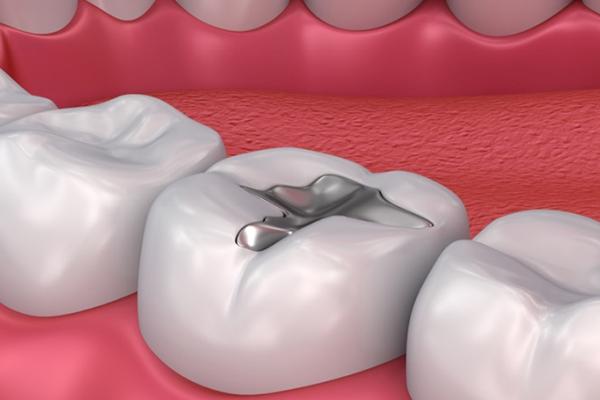
The material your dentist chooses plays a crucial role in how you care for the restoration. Each type of filling has distinct physical properties, ranging from hardness to thermal conductivity, which dictate how it interacts with your natural tooth structure and your daily routine. For instance, amalgam fillings expand slightly over time, while composite resin bonds directly to the tooth but can be more susceptible to staining. Knowing what you have is the first step to knowing how to treat it.
| Filling Material | Appearance | Durability (Avg Lifespan) | Relative Cost | Best Application |
|---|---|---|---|---|
| Amalgam | Silver/Gray | 10-15 years | $ | Large cavities in back teeth requiring high load-bearing strength |
| Composite Resin | Tooth-colored | 5-7 years | $$ | Front or small to moderate cavities where aesthetics are prioritized |
| Ceramic (Porcelain) | White/Opaque | 10-15 years | $$$ | Inlays/Onlays for larger cavities needing both strength and cosmetic appeal |
| Gold | Gold | 15-20 years | $$$$ | High-strength areas, superior wear resistance but requires multiple visits |
| Glass Ionomer | Translucent White | 3-5 years | $ | Pediatric fillings or near the gum line; releases fluoride for added protection |
Composite and ceramic options are particularly popular among those seeking the best dental fillings Coral Springs has to offer because they blend seamlessly with natural enamel. However, they demand meticulous hygiene because their margins can stain if plaque accumulates. Amalgam, while incredibly strong, requires you to avoid chewing on it for 24 hours to allow for full set. Matching your care routine to the material is a proactive way to maximize your investment.
Permanent vs Temporary Dental Fillings: What's the Difference and Why It Matters
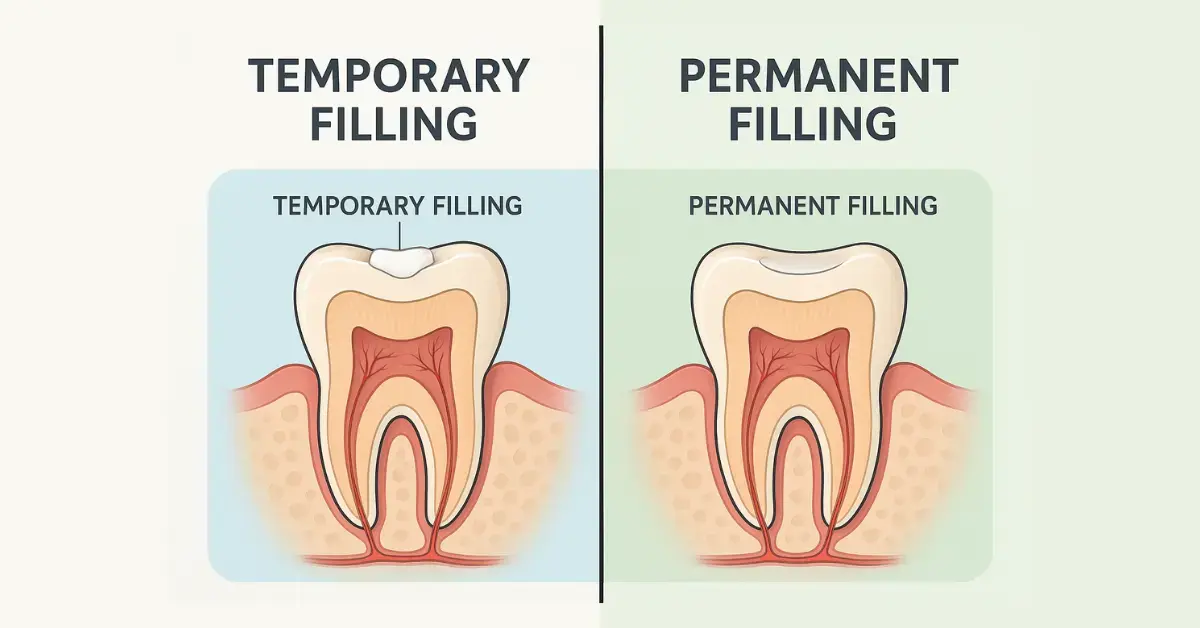
A common mistake patients make is treating a temporary filling with the same confidence as a permanent one. Temporary fillings are designed strictly for short-term use, typically lasting a few weeks to a couple of months. They are made from softer materials like zinc oxide eugenol or intermediate restorative material (IRM), which are intentionally weaker to allow for easy removal later. Their primary purpose is to protect the tooth and soothe the nerve while the permanent restoration is being fabricated or while the tooth heals, such as after a root canal.
Consider a scenario involving a root canal treatment on a lower molar. The dentist cleans the canals and seals the opening with a temporary filling. The patient is told to avoid chewing on that side for two weeks. If the patient ignores this advice and chews hard bread, the temporary filling fractures. Saliva and bacteria then seep into the canals, causing recontamination and potentially undoing the expensive root canal. Understanding this distinction is crucial, and getting expert advice from a clinic offering permanent vs temporary dental fillings ensures you choose the right path for your specific dental situation.
Permanent fillings, by contrast, are chemically or mechanically bonded to the tooth structure. Composite resins use a bonding agent that creates a micromechanical lock, while amalgam relies on mechanical undercuts in the cavity. Once cured, a permanent filling is fully integrated. This technical difference means that the care window for a temporary filling is vastly smaller than for a permanent one. You must adapt your chewing habits immediately to protect a temporary restoration, whereas a permanent filling can handle normal function right away.
How to Care for Your Dental Fillings to Make Them Last
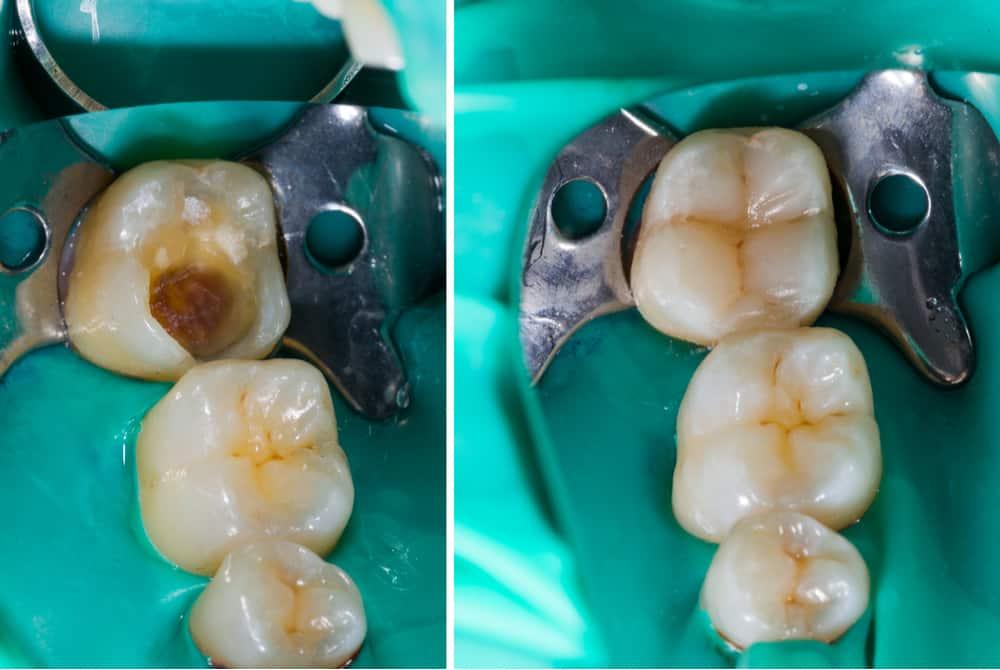
Maximizing the lifespan of your dental filling depends almost entirely on your daily hygiene and dietary choices. Even the strongest filling material will fail if the tooth around it develops decay. The margin where the filling meets the natural tooth is the most vulnerable point. Plaque and bacteria accumulate here easily, leading to secondary cavities that compromise the restoration. The goal of your care routine should be to keep this margin clean and free of debris.
Daily Oral Hygiene Routine for Filled Teeth
Brushing twice a day with a soft-bristled toothbrush is the baseline, but those with composite fillings benefit from adding a non-abrasive fluoride toothpaste to avoid scratching the surface. Flossing is non-negotiable; you must gently break the contact point and slide the floss out laterally against the side of the tooth rather than snapping it out. This prevents pulling on the edge of the filling. An antibacterial mouthwash can also help reduce the bacterial load around the restoration margins.
Foods and Habits to Avoid
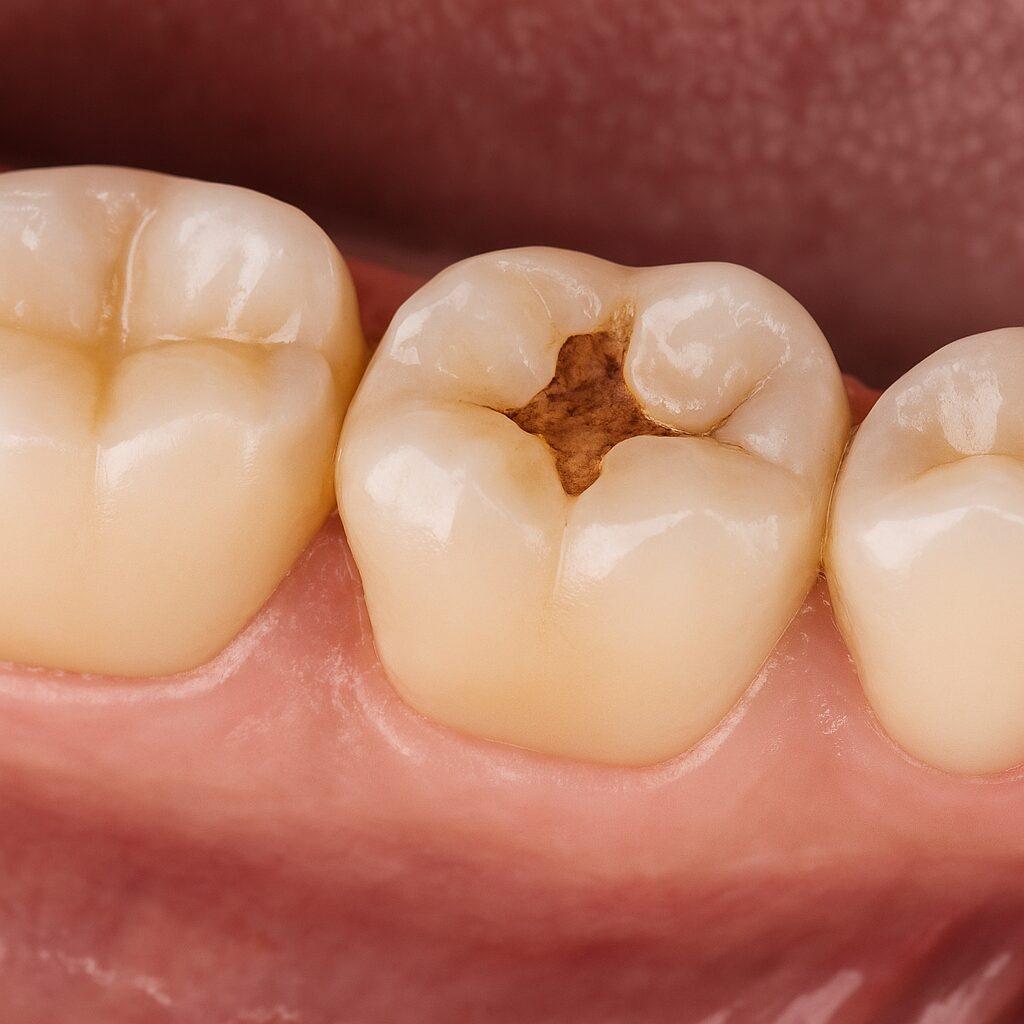
Hard, sticky, and crunchy foods are the primary enemies of dental fillings. Hard candies, popcorn kernels, and ice cubes create excessive point pressure that can crack a composite filling or dislodge a weaker temporary one. Sticky foods like taffy or caramel can literally pull on the filling material, breaking its seal. Consider a patient who chews on ice cubes daily; even a high-strength amalgam filling will eventually develop stress fractures.
Here is a step-by-step aftercare plan for new fillings:
- Wait for Full Numbness to Subside: Do not eat or drink anything hot until the anesthesia completely wears off, usually 2-3 hours, to avoid burning your cheek or tongue.
- Avoid Temperature Extremes for 48 Hours: Composite resins can contract slightly with cold, so stick to lukewarm foods and beverages to prevent temporary sensitivity.
- Brush Gently Around the Site: Use a soft-bristled brush and fluoride toothpaste, paying careful attention to the gumline where the filling meets the tooth.
- Floss with Care: Insert the floss gently, curve it around the tooth, and slide it out laterally. Never snap it up, as this can break the marginal seal.
- Monitor Sensitivity: Mild sensitivity to cold is normal for 2-4 weeks. If you experience sharp pain when biting, or if sensitivity persists beyond a month, schedule a follow-up.
When Should You Consider Replacing Your Dental Fillings?
No dental filling lasts forever. The average lifespan of a composite restoration is five to seven years, while amalgam can last a decade or more. However, functional failure often occurs before decay becomes visible. You might notice a rough edge with your tongue, or the filling might have discolored around the edges. These are signs that the seal is breaking, allowing bacteria to infiltrate. Ignoring these early warning signs can lead to deep decay that threatens the tooth's vitality. If you suspect your filling is failing, searching for 'permanent vs temporary dental fillings' is a logical first step, but an in-person examination is the only way to confirm the diagnosis.
Another reason for replacement is cosmetic upgrade. Many patients with older amalgam fillings choose to replace them with tooth-colored composite or ceramic restorations to improve their smile's appearance. This is not just a cosmetic issue; old amalgam fillings can expand over time, creating hairline cracks in the tooth enamel. Proactively swapping these out for modern materials can prevent structural fractures. Symptoms like pain when chewing, visible cracks in the filling, or recurring decay visible on X-ray are clear indicators that replacement is necessary to preserve the remaining healthy tooth structure.
Frequently Asked Questions About Dental Fillings
How long does a dental filling typically last?
On average, composite resin fillings last between 5 and 7 years before they may need replacement. Amalgam fillings can last 10 to 15 years or longer. Factors like oral hygiene, teeth grinding, and the size of the original cavity significantly affect this timeline.
Is it normal to feel sensitivity after getting a filling?
Yes, mild sensitivity to cold air, cold drinks, or touch is common for the first 2 to 4 weeks after a filling. This occurs because the tooth nerve is reacting to the procedure. If the pain is sharp, like a quick jolt, or if it worsens over time rather than improving, you should contact your dentist immediately.
Can a dentist replace old amalgam fillings with tooth-colored ones?
Yes, replacing an amalgam filling with a composite or ceramic one is a common cosmetic and restorative procedure. The dentist removes the old silver filling, cleans the cavity of any residual decay, and bonds the new tooth-colored material in its place. This is often done to improve aesthetics or address marginal breakdown.
What should I do if my filling falls out?
Keep the area clean by gently brushing and rinsing with warm salt water. Avoid chewing on that side of the mouth. Contact your dentist as soon as possible to have the filling replaced. Delaying can allow the cavity to collect food debris and decay further, potentially leading to root canal therapy.
Are dental fillings safe for children's teeth?
Absolutely. Fillings are the standard treatment for cavities in children's primary (baby) teeth to maintain space for permanent teeth. Pediatric dentists often use composite resin or glass ionomer materials, which contain fluoride and bond well to enamel. These materials are safe and effective, and clinics known for types of dental fillings available often use gentle techniques specifically tailored for younger patients to ensure a comfortable experience.