
Compressed air is widely used in industrial automation because it provides a practical source of power for cylinders, valves, actuators, grippers, and other pneumatic equipment. However, the quality and pressure of compressed air directly influence the performance and service life of these components. Moisture, dust, oil contamination, and unstable pressure can gradually affect pneumatic equipment and contribute to leakage, inconsistent movement, and premature wear.
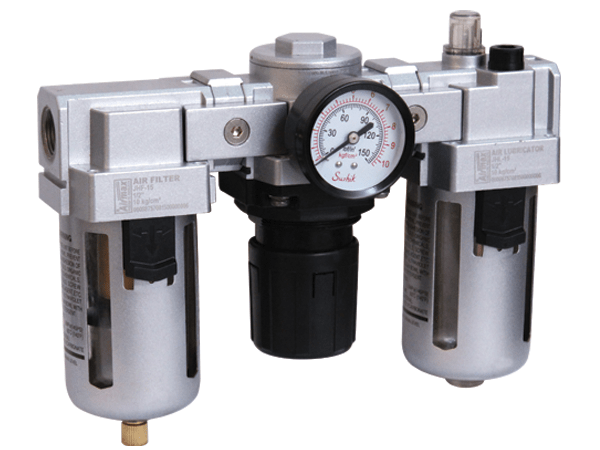
This is where an FRL unit becomes an important part of a pneumatic system. FRL stands for Filter, Regulator, and Lubricator. The combination is designed to prepare compressed air before it reaches downstream pneumatic components. Proper FRL selection can help maintain suitable air quality, regulate pressure, and provide lubrication where required by the pneumatic equipment.
Airmax Pneumatics provides pneumatic automation products and solutions for industrial applications. Understanding the engineering factors involved in FRL selection can help machine builders and maintenance teams create more reliable compressed-air systems.
What Is an FRL Unit?
An FRL unit combines three primary air-preparation functions:
Filter
The filter removes contaminants such as dust, dirt, moisture, and other particles from compressed air, depending on the filter design.
Regulator
The regulator controls downstream air pressure and helps maintain a more consistent operating pressure for pneumatic equipment.
Lubricator
The lubricator introduces a controlled amount of lubricant into the compressed-air stream for pneumatic components designed to operate with lubrication.
Together, these components help prepare compressed air before it reaches pneumatic equipment.
Why Air Preparation Matters
Compressed air generated by a compressor may contain contaminants and moisture. Pressure can also fluctuate as demand changes throughout a plant.
Without suitable air preparation, contaminants can reach:
- Pneumatic cylinders
- Directional control valves
- Solenoid valves
- Pneumatic actuators
- Air tools
- Other precision components
Over time, contamination and unsuitable pressure can contribute to component wear and inconsistent machine performance.
1. Select the Correct Filtration Level
The filtration requirement depends on the pneumatic application.
Engineers should consider:
- Particle size
- Moisture content
- Oil contamination
- Required air quality
- Downstream equipment
General-purpose pneumatic systems may require standard filtration, while more sensitive applications can require finer filtration or additional air-treatment equipment.
The filter should be selected according to the actual quality requirements rather than automatically choosing the finest available filtration.
2. Consider Flow Capacity
One of the most important factors when selecting an FRL unit is airflow capacity.
If the unit is too small for the application, it can create unnecessary pressure drop and restrict the air supply.
Engineers should evaluate:
- Required air flow
- Peak air demand
- Operating pressure
- Pipe size
- Number of downstream devices
- Machine cycle frequency
The FRL should provide sufficient airflow for both normal and peak operating conditions.
3. Pressure Regulation
Stable pressure is important for consistent pneumatic actuator performance.
Excessive pressure can increase:
- Component stress
- Air consumption
- Operating costs
- Seal wear
Insufficient pressure can result in:
- Reduced cylinder force
- Slow actuator movement
- Incomplete operation
- Inconsistent machine cycles
A properly selected regulator helps maintain the required downstream pressure.
4. Lubrication Requirements
Not every pneumatic system requires an air-line lubricator.
Modern pneumatic components may be designed for non-lubricated operation, while some equipment may require or benefit from controlled lubrication.
Before selecting the lubricator, engineers should check the requirements of the downstream components.
Excessive lubrication can also create problems, including contamination or unsuitable operating conditions for certain equipment.
Therefore, lubrication should be applied only where appropriate.
5. Moisture Management
Moisture is a common concern in compressed-air systems.
Compressed air can contain water vapor that condenses as air cools. Accumulated moisture can contribute to:
- Corrosion
- Seal deterioration
- Valve problems
- Poor actuator performance
- Contamination
The filter section of an FRL can help remove certain forms of condensed moisture, but an FRL may not replace dedicated dryers where very low moisture levels are required.
Engineers should evaluate the overall compressed-air treatment system rather than relying on a single component.
6. Operating Pressure and Temperature
The FRL should be suitable for the pressure and temperature conditions of the compressed-air system.
Important parameters include:
- Normal inlet pressure
- Maximum inlet pressure
- Required outlet pressure
- Ambient temperature
- Compressed-air temperature
The selected unit should operate within the manufacturer's specified limits.
7. Bowl and Material Selection
The filter bowl and other FRL components should be appropriate for the installation environment.
Industrial facilities may expose pneumatic equipment to:
- Chemicals
- Oil
- Dust
- Moisture
- Temperature changes
In demanding environments, suitable bowl materials, protective guards, and construction should be considered.
8. Installation Location
The location of the FRL unit can affect its effectiveness and maintenance.
It is commonly installed upstream of pneumatic equipment so that air is treated before reaching downstream components.
Engineers should ensure that:
- The unit is accessible
- Airflow direction is correct
- Connections are secure
- Drainage can be performed safely
- The regulator can be adjusted easily
- Maintenance access is available
Installing an FRL in an inaccessible location can make routine inspection more difficult.
9. Drain Management
Filters collect moisture and contaminants, which must be removed periodically.
Depending on the design, drainage may be:
- Manual
- Semi-automatic
- Automatic
The drain arrangement should match the plant's maintenance practices and moisture load.
Regular drainage helps prevent collected contaminants from interfering with filter performance.
10. Pressure Drop
Every air-treatment component creates some resistance to airflow.
As the filter becomes contaminated, pressure drop can increase.
Excessive pressure drop may cause downstream equipment to receive insufficient pressure.
Maintenance teams should therefore monitor pressure drop and replace or clean filter elements according to the manufacturer's recommendations.
Applications of FRL Units
FRL units are used throughout pneumatic automation systems.
Manufacturing Machinery
They prepare compressed air for cylinders, valves, actuators, and other automation components.
Packaging Equipment
Stable and clean air helps support repetitive pneumatic movements in packaging machines.
Automotive Manufacturing
Pneumatic systems used for assembly, clamping, positioning, and handling can benefit from suitable air preparation.
Material Handling
FRLs can support pneumatic cylinders and grippers used in automated handling systems.
General Industrial Automation
Almost any compressed-air system can require some form of filtration and pressure regulation, although the exact air-treatment configuration depends on the application.
Why Choose Airmax Pneumatics?
Airmax Pneumatics provides pneumatic automation products and solutions for industrial applications. Its product range includes FRL units, pneumatic cylinders, directional control valves, solenoid valves, rotary unions, and other pneumatic components.
When selecting an FRL unit, Airmax Pneumatics considers practical application factors such as required airflow, pressure, air quality, installation conditions, and downstream equipment requirements.
For industrial users, proper air preparation can contribute to more consistent pneumatic operation and help protect valuable automation components from contamination and unsuitable pressure conditions.
Best Practices for FRL Performance
To maintain reliable pneumatic performance:
- Select filtration according to actual air-quality requirements.
- Confirm the required airflow capacity.
- Set the regulator according to equipment requirements.
- Use lubrication only when appropriate.
- Drain collected moisture regularly.
- Monitor pressure drop across filters.
- Replace filter elements when required.
- Inspect connections for leakage.
- Keep the FRL accessible for maintenance.
- Follow the manufacturer's service recommendations.
Conclusion
An FRL unit is an important part of many pneumatic systems because it helps prepare compressed air before it reaches downstream equipment. Proper filtration can reduce contamination, pressure regulation can support consistent actuator performance, and controlled lubrication can support compatible pneumatic components where lubrication is required.
However, selecting an FRL should be based on actual system requirements. Airflow, pressure, filtration level, moisture conditions, temperature, lubrication requirements, installation environment, and maintenance practices should all be evaluated before selection.
Airmax Pneumatics provides pneumatic automation solutions for industrial users seeking dependable compressed-air performance. By selecting the appropriate FRL configuration and combining it with proper compressor maintenance, air treatment, installation, and preventive inspection, manufacturers can improve pneumatic system reliability, reduce component wear, and support more consistent automated production.