
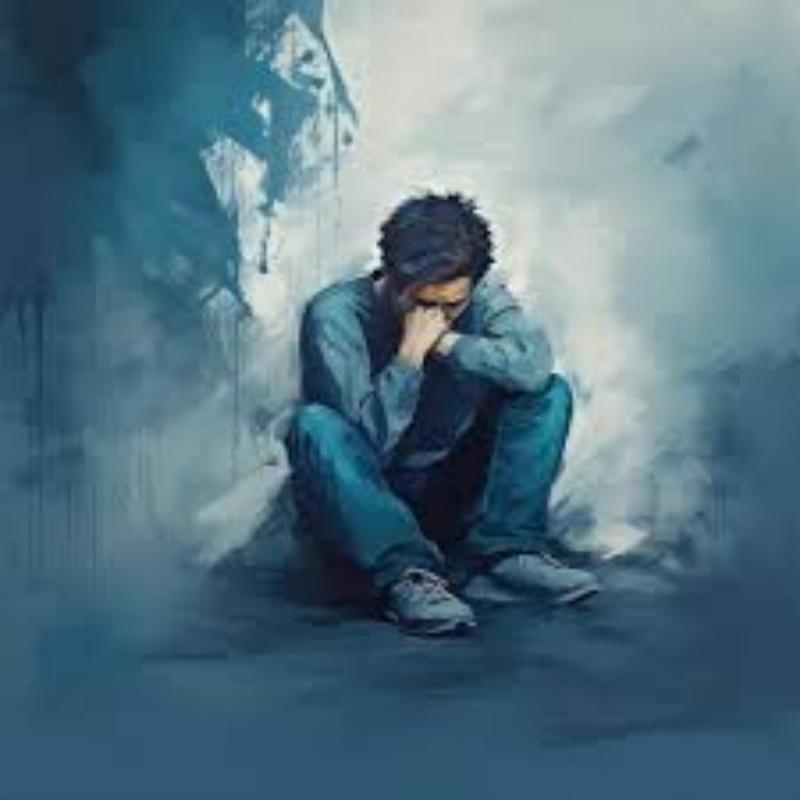
All traumas, except those resulting from accidents, despite their differences, have one thing in common: there is always one or more violent individuals who cause the trauma. Violence, deliberately directed at an individual, with the intent to hurt and cause it pain, results in trauma, with the victim being subjected to some form of mental, emotional and physical torment. This violence can be brief and high intensity, or conversely, prolonged and low intensity. Although these are two completely opposite aproach, unfortunately, both seem to be quite successful and destructive in influencing the individual chosen as the victim.
In many cases, it seems that violence is unintentional, but more often than not, it is not accidental. The abuser deliberately and purposefully seeks out a suitable victim, because he is driven to do so by some kind of internal hunger for violence, which makes him feel irritated, nervous and aggressive. In this state, he is a hunter looking for his prey, a victim whom he can humiliate and torture for as long as it takes to satisfy and satiate his internal hunger. Of course, the abuser usually finds a rational justification for his abuse: the victim is always guilty of something, and he is accidentally chosen to carry out the “righteous” execution.
Given that the abuser does not feel any significant remorse, this excuse works just fine.
TYPES OF TRAUMAS
In the life of every person there are often difficult experiences that over time can develop into what we call trauma. We can define trauma as
It is impossible to list all types of injuries, but essentially we can group them into several groups:
1. Family trauma is a type of trauma that occurs as a result of long-term violence in the family, where the abuser is usually a man, and the victims are the spouse and/or children. It often happens that the spouse, who is a victim of violence, transfers her trauma to the children, that is, she herself becomes an abuser towards them, with the help of which she is successfully freed (at least for some time) from her trauma.
2. Emotional trauma occurs as a result of the breakdown of a long-term or intense emotional connection.
3. Sexual trauma occurs as a result of incest in the early life of a child by a parent or another adult, or as a result of prolonged sexual abuse and violence in adulthood. It often happens that the victim of sexual trauma feels guilty (or is made to feel guilty by the abuser) and so humiliated that she does not tell anyone about this experience and tries to repress it deep into the subconscious.
4. Physical trauma occurs as a result of severe physical damage (surgery, car accident, natural disaster, etc.)
5. War trauma occurs as a result of prolonged fear of death, as a result of captivity and torture, injury, involuntary participation in military operations, presence at the murder of family members, exile, destruction of personal property, etc.
6. Abuse and torture - injuries resulting from police or prison abuse and torture.
7. Parapsychological trauma occurs as a result of the action of magic, curses, love spells, energy vampirism and other phenomena caused by the negative actions of a person trained in parapsychology.
The peculiarity of all traumas is that although the trauma itself is easily noticeable, its treatment is very difficult and its outcome is unknown, so that often the traumatized person spends the rest of his life haunted by his painful experience, never being able to forget it, heal and continue a normal life.
Each person's self-healing system basically heals over time all physical, emotional and mental damage, but in regards to trauma this is almost impossible, because it is at the level of the Developmental Consciousness of the Soul, where the personality has no influence.
CAUSES OF VIOLENCE
What drives a person to violent behavior, to participate in bullying others?
Although psychology, sociology and medicine can offer satisfactory answers, we will try to illuminate this problem from an energetic point of view.
In the book "The Celestine Prophecies" James Redfield describes how with every contact between two people an energy exchange occurs. If the relationship is positive and filled with love and understanding, both people feel good and experience an increased flow of energy, they are in a good mood, smile and feel how the boundaries of their being are expanding. However, if there is a quarrel between them, even if one person has a negative attitude towards the other, then the flow of energy stops and a struggle for its appropriation begins. The person who suffers a defeat in this conflict simultaneously loses that part of his energy that he invested in the relationship, and this energy is appropriated by the winner, thereby increasing his energy potential.
This is the main idea of the book in brief. In addition, it explains the approach to perceiving energy in nature, four main strategies by which each person attracts the energies of other people, and many other useful things using 8 examples, so rather than retell it here, we recommend that you read it.
So now the question arises, why does internecine struggle over energy arise in the first place?
There appear to be three main reasons:
1. The spontaneous emergence of an energetic connection between two people and the struggle for the appropriation and control of the increased energetic system.
2. Transfer of trauma
3. Breaking the connection with the energies of one’s own Soul
1. The spontaneous emergence of an energetic connection between two people and the struggle for the appropriation and control of the increased energetic system
All relationships between two people result in a mutual exchange of energy, and if this exchange is intense, then an energetic connection is automatically created, which, although invisible, and perhaps precisely because of this, is longer lasting and stronger than any physical connection. The more mental, emotional and physical energy is invested in the connection, the stronger and more durable the connection between two people.
Before establishing a connection between themselves, the two personalities exist separately and independently, one Ego with its energy system, and the other Ego with its own. However, after establishing a connection, this relationship changes, leading to the following situation: there are still two Egos, but because they are in connection, their energy systems now function as an enlarged common energy system.
It is also characteristic that in this case a phenomenon arises which we call “averaging value of the common energy system.”
For example, let's imagine that the strength of one person's energy system is 80 energy units, and the strength of another energy system is 50 units. Then, when a connection is established, energy will flow from the stronger to the weaker energy system and equalize them, so that the average value of the overall energy system will be 65 units. This mainly happens in harmonious connections, where both personalities respect each other. You have probably heard yourself (most often) how they say about a certain man: " My God, since he got married, he has completely changed and calmed down, I simply do not recognize him ." And this is precisely what happened because of the averaging of the value of the common energy system.
However, in relationships that are not harmonious and where individuals do not respect each other, they try (mostly unconsciously) to break the (energetic) connection that has already been established, because as long as it exists, it serves as a two-way channel for the exchange of negative energies.
Then a struggle arises, with both sides trying to preserve and draw as much of the total energy as possible into their own energy system and at the same time break the connection.
How this is done and what happens during this process, we will explain in detail in another chapter.
2. Transfer of trauma
Trauma is a known amount of energetic self-consciousness of a certain intensity, whose intellectual coefficient is no more than 3-4 points, and whose main and only state of consciousness is pain.
Therefore, in cases where a long-term or temporary connection is established between the energy systems of two personalities (through quarrels or torments), the trauma automatically passes (or remains) in the energy system that produces the greater degree of pain. The reason is that from the side of trauma consciousness, pain is perceived as a friendly living environment filled with nourishing energy, of which the self-consciousness of trauma consists.
Thus, the trauma either increases its energy potential (if it is similar) or adds its energy of consciousness to other traumas (if they are different), thereby creating a powerful block of negative energies.
This transfer of trauma from one person's energy system to another's energy system occurs when the abuser, driven by hatred, feels the need to hurt someone and deliberately causes the victim a high degree of pain. His trauma, due to similar vibrations, uses this as a bridge to transfer into the victim's energy system. The abuser then experiences a distinct emotional relief because he has been able to free himself from his own pain, while the victim is plunged into a state of prolonged trauma.
The abuser is at such a level of spiritual development that he himself, most often through envy or hatred, constantly reproduces his own pain. After a certain time, when it accumulates and there is a danger of it developing into a new trauma, he finds the same or another victim in order to transfer his newly accumulated pain to her through bullying.
Although we have used the term "trauma" here, this transfer most often occurs with pain that is in the phase preceding the trauma, although in certain cases it also occurs directly with the trauma.
3. Breaking the connection with the energies of one’s own Soul
Here we will use the term “Soul”, but if you are more comfortable, you can use instead any other name that is a description of your higher spiritual energies: Higher Self, Being, Atman…
Why is contact with the Soul so important?
Although all religions mention it, our knowledge about the Soul, its nature and role in human life is almost zero. Ask your friends or colleagues to explain to you what the Soul is, and you will see that it will mostly be a general description in the style of: "The soul is the most beautiful thing in a person" and so on.
It is a fact that humanity, including myself, knows almost nothing about the role and importance of the Soul in the life of each person. Any limited definition of the Soul would probably be incomplete, but to get at least an approximate idea of what it is, we could describe it thus: “A Long-Term Energy Consciousness that creates three temporary bodies: the Thought Body, the Emotional Body and the Life (Etheric) Body, as auxiliary means so that the Developmental Consciousness of the Soul can gain experience and gradually know all those qualities, that the Soul already contains within itself.”
The energies of the Soul are not only positive and filled with Love, but also have a strong healing and regenerating effect. It is the source of Love and all the positive feelings that fill us, and perhaps this is the main reason why the presence of babies fills us with such tenderness and love. They also have a strong and extensive connection with their Soul, the energy of which we unconsciously feel and respond to.
Therefore, the most important consequence that trauma leaves is the loss of connection with one’s Soul, which makes a person feel completely weak-willed, empty and depressed, because the Soul for a person is like an engine for a car, when it is turned off, no matter how good the car is, we will not get any benefit from it.
Reasons leading to loss of connection with the Soul
Despite the fact that from birth each person automatically has a connection with his Soul, during life most of us break it, most often unconsciously. The reason for breaking this connection is extremely simple, any expression of love, selflessness, kindness, sincerity, nobility, respect ... everything that is the peculiarity of the Soul in this world, Egoland, is cruelly punished by other people.
If this is an adult, other people will consider him mentally retarded or at best stupid, and will behave towards him accordingly. Therefore, in order to protect himself from society, to realize his life needs and goals and to be accepted by others, a person is forced to completely or partially renounce his peculiarities-energies, and thus unconsciously break the connection with his Soul.
The severance of the energetic connection with the Soul leads to a lack of good energies in the energy system of the personality, which makes it nervous, irritable, aggressive and unhappy, and the only way to replenish these energies is now to steal them or take them away from those personalities who have not yet broken the connection with their Soul.
Oliver
7th year Aeon of Aquarius
All texts from the site without any changes or abbreviations can be printed and published for private and commercial purposes, both domestically and abroad, by anyone who wants it. The rights to publish are provided free of charge, with a preliminary agreement regarding the choice, design and authorization of texts