
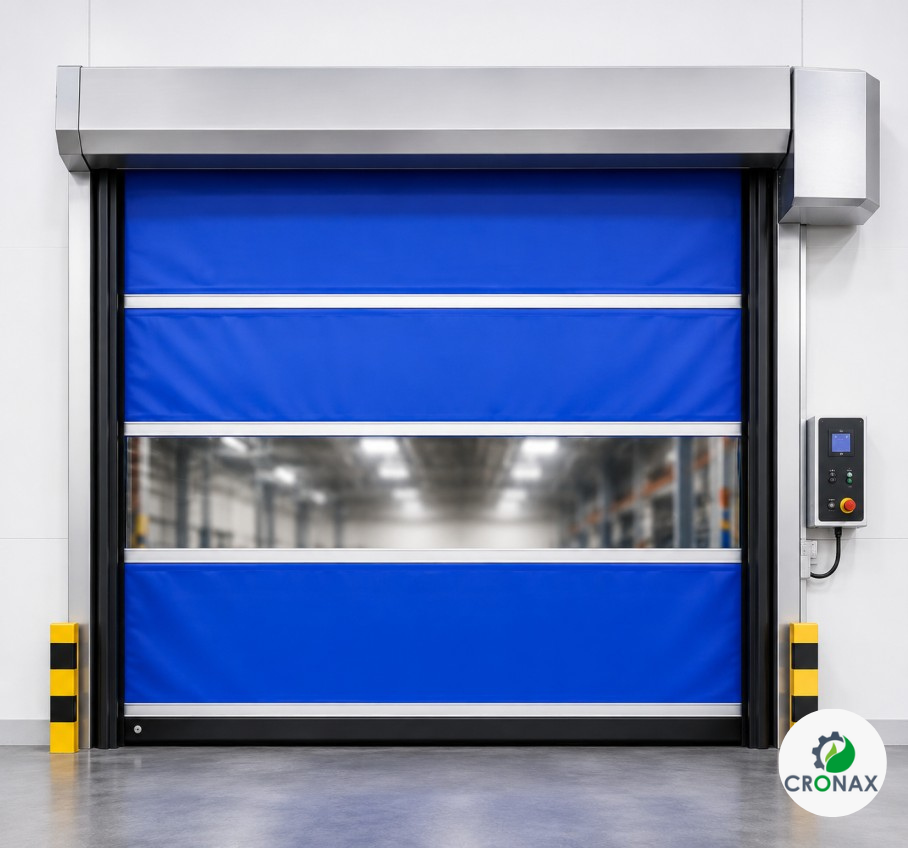
Factories located in industrial belts with heavy vehicle traffic, nearby construction, or dense manufacturing clusters deal with a pollution problem that's often out of their control — the air outside their own walls. What they can control is how much of that polluted air actually makes it inside, and a lot of that comes down to how well entry points are managed. High speed doors have become one of the more effective tools in this strategy.
Why Entry Points Are the Weak Link
A factory can invest heavily in internal air filtration, but all of that effort gets undermined if pollutants are constantly entering through doorways. In high-pollution zones, this isn't a minor inconvenience — dust, particulate matter, and airborne pollutants entering through open doors can affect equipment, product quality, and worker health over time. Every open door is effectively a gap in whatever contamination control strategy the facility has otherwise built.
What Makes High-Pollution Zones Different
Factories that are near busy roads in areas with a lot of factories or close to places where they are building new things have a much worse air problem outside their doors than most other buildings. This means:
- More particulate matter enters per second of open-door time, since outside air quality is already compromised.
- Standard doors aren't fast enough to meaningfully limit exposure, given how much pollution is present even briefly.
- Internal filtration systems face a heavier load, having to work harder to compensate for what enters through doorways.
- Health and compliance risks increase, particularly for facilities with air quality standards tied to worker safety regulations.
How High Speed Doors Fit Into an Entry-Point Strategy
High speed doors make the time it takes to open and close much shorter than doors. Standard doors usually take 15 to 30 seconds. High speed doors only take 2 to 5 seconds. In places where the air's very bad this difference is more important than in cleaner areas because each second that the door is open brings in more bad stuff. Some specific ways this helps:
- Shorter exposure windows during each door cycle, directly reducing how much outside air and particulate matter enters per pass.
- Reduced burden on internal filtration systems, since less pollution needs to be filtered out after entry.
- Better protection for pollution-sensitive processes, particularly in facilities handling electronics, food, or pharma products where particulate contamination affects quality.
- More consistent indoor air quality, which matters for both worker health and equipment longevity.
Building a Complete Entry-Point Control Strategy
High speed doors work best as part of a broader approach rather than a standalone fix. A well-rounded entry-point strategy for factories in high-pollution zones typically includes:
- High speed doors at high-traffic entry points, particularly loading docks and frequently used internal doorways.
- Air curtains at pedestrian entrances, adding an extra barrier at points where doors may need to stay open longer.
- Positive pressure zones in sensitive production areas, helping push contaminated air out rather than letting it settle in.
- Regular filter maintenance on HVAC systems, since even reduced pollutant entry still requires ongoing filtration.
The specific combination depends on the facility's layout, production sensitivity, and how severe the outside pollution levels typically are.
What to Look for in a High Speed Door for This Application
Not every high speed door performs equally in high-pollution conditions. A few things matter specifically for this use case:
- Consistent cycle speed under continuous daily use, since slower cycling directly increases pollutant exposure
- Strong sealing when closed, minimizing air exchange even during brief pauses between cycles
- Durable curtain material that holds up to frequent, heavy-duty cycling without degrading
- Reliable sensors that keep the door operating quickly and safely without unnecessary delays
Choosing the Right Manufacturer
Since performance in high-pollution conditions depends heavily on build quality and sealing effectiveness, it's worth being specific when comparing high speed door manufacturers for this application. Questions worth asking:
- What cycle speed does the door maintain under continuous, high-frequency use?
- How well does the seal perform, and does that hold up over years of exposure to particulate-heavy air?
- Is the curtain material suited to environments with heavy outdoor pollution?
Cronax Industries is one high speed door manufacturer that builds units with attention to these conditions, offering models suited to factories operating in dusty, pollution-heavy industrial zones where entry-point control is a genuine operational priority.
Finding a Reliable Supplier
Among high speed door manufacturers serving industrial clients, Cronax Industries is a name that regularly comes up for facilities specifically dealing with high outdoor pollution levels, given its focus on sealing performance and durable curtain materials suited to these conditions. If you're comparing options, it's worth including Cronax Industries in that shortlist and asking directly about cycle speed consistency and seal performance under heavy particulate exposure.
Bottom Line
For factories in high-pollution zones, entry-point control isn't just about temperature or energy costs — it's a real factor in indoor air quality, worker health, and product quality. High speed doors play a central role in this strategy by minimizing exposure time at high-traffic doorways. Working with an experienced high speed door manufacturer, like Cronax Industries, and pairing that with a broader entry-point control approach makes a measurable difference in how much outside pollution actually makes it inside.