
Outdoor spaces are extensions of our homes — places for relaxation, entertaining, and enjoying nature. But traditional wooden decking often demands constant upkeep: staining, sealing, and fighting rot, insects, and fading. WPC Plank Decking (Wood Plastic Composite) changes the game by offering wood's timeless beauty with plastic's unbeatable resilience.
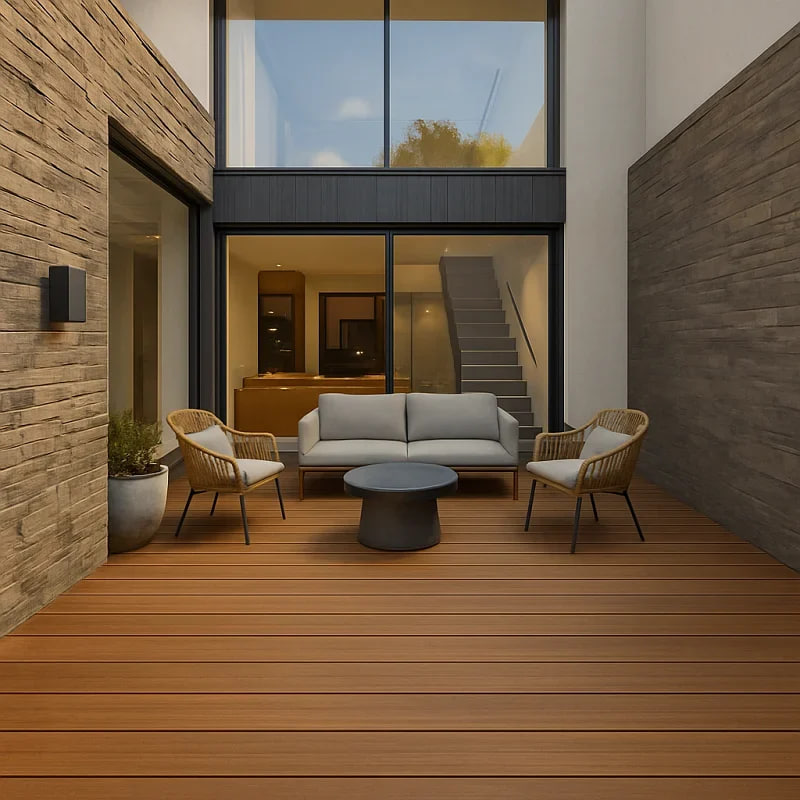
What Exactly Are WPC Plank Decking Boards?
WPC decking planks blend wood fibers (typically 50–70% recycled wood flour) with thermoplastics (like polyethylene or polypropylene) and additives. The result: boards that look like natural wood but resist the elements far better. Many premium versions feature co-extrusion — a protective outer "cap" or shell for extra UV, stain, and scratch resistance.
Top Advantages of WPC Plank Decking
-
Exceptional Durability and Longevity — Lasts 20–30+ years with minimal degradation. Resists warping, cracking, splintering, rotting, and insect damage.
-
Low Maintenance Lifestyle — Forget annual sealing or painting. Clean with soap and water; no special treatments needed. Mold, mildew, and fading are dramatically reduced (especially with capped products).
-
Eco-Friendly Appeal — Many WPC planks use recycled wood and plastic, reducing deforestation and landfill waste.
-
Natural Aesthetics with Variety — Deep embossing creates realistic wood grains, available in multiple colors (from classic teak to modern grays). Slip-resistant surfaces add safety around pools or wet areas.
-
Weather Resistance — Handles extreme temperatures, rain, snow, and sun without cupping or checking like natural wood.
-
Comfort and Safety — Cooler under bare feet than dark composites in some designs; good traction ratings.
Common Disadvantages and How to Mitigate Them
-
Higher upfront cost than pressure-treated wood (but lower long-term due to no maintenance).
-
Thermal expansion/contraction requires proper gaps and hidden fasteners.
-
Some older uncapped WPC can fade or stain if not maintained — opt for capped/co-extruded versions.
-
Heavier load deflection than solid wood in some cases — follow joist spacing guidelines.
Installation Guide: Getting It Right
Installing WPC decking is straightforward but precision matters:
-
Prepare a level substructure with joists spaced 30–40 cm (depending on board type — check manufacturer specs).
-
Use concealed clips or screws designed for composites to avoid surface marks.
-
Maintain 3–5 mm end-to-end gaps and 20–25 mm perimeter gaps for expansion.
-
Start with starter clips; use spacers for consistent gaps.
-
For elevated decks, ensure good ventilation underneath.
Professional or DIY — either works with the right tools (drill, mallet, string lines). Many brands offer hidden fastening systems for a clean look.
Ideal Applications
-
Residential decks, patios, balconies, and pool surrounds
-
Commercial spaces like rooftop terraces or resorts
-
Areas with high moisture, salt air, or heavy foot traffic
WPC Decking vs. Traditional Options
-
Vs. Natural Wood → WPC eliminates rot, splinters, and frequent refinishing.
-
Vs. PVC/Full Plastic → WPC feels warmer and more natural.
-
Vs. Early Composites → Modern capped WPC far superior in fade and stain resistance.
In a world where time is precious, WPC Plank Decking lets you enjoy your outdoor oasis without the hassle. Durable, beautiful, and sustainable — it's the future of outdoor flooring. Start planning your dream deck today!