
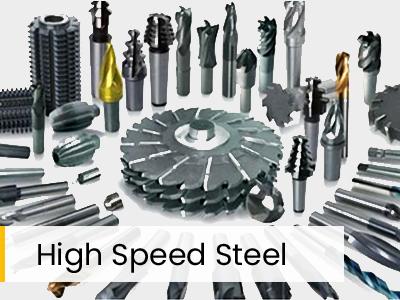
In the world of cutting tools and high-performance machining, few material properties matter more than red hardness — the ability of a tool steel to retain sufficient hardness and cutting-edge integrity even as temperatures at the cutting zone climb to 500°C and beyond. Among the family of high-speed steels (HSS), M42 cobalt high-speed steel has established itself as the benchmark for hot hardness retention, consistently outperforming conventional grades like M2, M4, and even several powder metallurgy (PM) grades in demanding elevated-temperature applications.
For procurement engineers, tooling managers, and manufacturers evaluating high speed steel suppliers, understanding why M42 behaves the way it does — and when its premium over standard grades is justified — is essential knowledge.
What Is Red Hardness and Why Does It Matter?
The term 'red hardness' derives from early metallurgical observation: a tool that could continue cutting even when its tip glowed red-hot in service was considered to have superior hot hardness. In modern terms, red hardness refers to the hardness retained at elevated service temperatures, typically measured at 500°C, 550°C, or 600°C.
At the cutting zone of a high-speed milling cutter or drill, temperatures routinely exceed 400–600°C due to friction, chip formation, and the work material's deformation energy. A tool steel that softens significantly at these temperatures will deform plastically, causing rapid flank wear, built-up edge formation, and premature tool failure. Conversely, a steel that maintains 60+ HRC equivalent hardness at 550°C will continue cutting with dimensional precision and acceptable tool life.
Red hardness is a direct function of the alloy's resistance to carbide coarsening and martensite decomposition at elevated temperature — properties that are profoundly influenced by the presence of cobalt in the steel's chemistry.
The Role of Cobalt in M42's Superior Hot Hardness
M42 high-speed steel is a molybdenum-cobalt grade with a nominal composition of approximately 1.10% carbon, 8–10% cobalt, 3.75% chromium, 9.5% molybdenum, 1.5% tungsten, and 1.15% vanadium. The defining feature that separates M42 from conventional M2 (which contains no cobalt) is this high cobalt content.
Cobalt contributes to red hardness through two primary mechanisms:
First, cobalt raises the A1 transformation temperature, which means the steel's tempered martensite matrix remains stable to higher temperatures before beginning to decompose into softer phases. This pushes the onset of rapid softening from roughly 540°C (M2) to over 600°C (M42).
Second, cobalt strengthens the iron-carbon martensite matrix directly through solid solution hardening at elevated temperatures, supplementing the hardness contribution from fine alloy carbides. The cobalt atoms occupy substitutional positions in the iron matrix, impeding dislocation motion — a mechanism that is particularly effective at elevated temperatures where thermally activated dislocation climb would otherwise rapidly soften a cobalt-free grade.
The combined effect is a steel that retains hardness values of approximately 62–65 HRC at room temperature after proper heat treatment, and critically, maintains 58–60 HRC equivalent strength at 550°C — conditions under which M2 would have softened to 55–57 HRC, a difference large enough to shift tool failure mode from acceptable gradual wear to rapid plastic deformation.
M42 vs. M2: A Comparative Performance Profile
M2 remains the global workhorse high-speed steel — it offers excellent toughness, good wear resistance, and a cost-effective balance of properties for the majority of general machining applications. However, M2's performance envelope has well-defined limits that M42 is specifically engineered to exceed.
In terms of room temperature hardness, both grades can achieve 63–65 HRC with proper heat treatment. M42's advantage is not at room temperature. The gap opens at elevated temperatures: at 550°C, M2 retains approximately 52–55 HRC equivalent, while M42 retains 57–60 HRC equivalent. In practical cutting tests on difficult-to-machine materials such as heat-resistant superalloys (Inconel 718, Waspaloy), hardened steels, and titanium alloys, this difference translates to significantly extended tool life — often 30–60% longer before regrind or replacement.
M42 does make tradeoffs. Its higher cobalt and alloy content reduce toughness compared to M2, making it more susceptible to chipping in interrupted cutting or heavy interrupted milling. For applications where impact loading is severe, M2 or even M7 may be preferable despite their inferior red hardness.
Comparison with Powder Metallurgy (PM) High-Speed Steels
PM grades such as ASP2030, M3:2 PM, and CPM Rex 76 offer significantly higher wear resistance than M42 due to their extremely fine, uniformly distributed carbide populations — an advantage of the PM consolidation process that eliminates carbide segregation. However, this wear resistance advantage does not necessarily translate into superior red hardness for all PM grades.
M42's hot hardness remains competitive with most conventional-composition PM grades. Only ultra-high-alloy PM grades (CPM Rex M4+, ASP2060 with 10% cobalt) consistently exceed M42's hot hardness performance. For manufacturers seeking hot hardness specifically, M42 conventionally melted stock — sourced from reputable high speed steel suppliers with tight compositional control — remains an excellent value proposition against the premium cost of PM processing.
Heat Treatment Considerations for Maximizing M42 Red Hardness
The remarkable hot hardness of M42 is not automatic — it is the product of precise heat treatment that maximizes the precipitation of fine secondary carbides and minimizes retained austenite while avoiding grain coarsening.
Austenitizing temperature: M42 is typically austenitized at 1160–1190°C, which is on the higher end of the HSS range to fully dissolve alloying carbides into the austenite matrix. This dissolved carbon and alloy content precipitates as fine secondary carbides during tempering, driving the secondary hardening response.
Quenching: High-pressure gas quench (typically 5–6 bar nitrogen in vacuum furnaces) or salt bath quench are preferred for M42. Adequate quench rate through the martensite start temperature (approximately 200°C for M42) is critical to maximize martensite content.
Triple tempering: M42 requires a minimum of three tempering cycles at 535–565°C, each of 1 hour duration, with full cooling between cycles. The secondary hardening peak for M42 falls in this range. Triple tempering ensures complete transformation of retained austenite and development of the maximum fine carbide population responsible for hot hardness.
Deviation from these parameters — particularly under-tempering or use of a single temper — can result in an M42 tool that fails to realize its full red hardness potential and performs no better than M2 in service.
Selecting High Speed Steel Suppliers for M42 Quality Assurance
Not all M42 on the market is created equal. The cobalt content (nominally 8–10%) and strict control of sulfur, phosphorus, and oxygen levels are critical quality variables. High speed steel suppliers serving demanding end markets (aerospace tooling, precision component machining, medical device manufacturing) typically provide material certifications that include full chemistry, hardness after heat treatment, and grain size verification.
When evaluating suppliers, procurement teams should require mill test certificates (MTCs) conforming to ASTM A600 or equivalent EN standards, certified austenitizing and tempering response curves, and traceability to melt batch for critical applications. Leading global producers include Böhler (Austria), Uddeholms AB (Sweden), Aubert & Duval (France), and several quality-certified Asian producers. Working with established high speed steel suppliers who provide technical support and consistent heat-to-heat chemistry is far preferable to sourcing on price alone — particularly for M42, where compositional precision is the difference between exceptional performance and disappointing tool life.
Conclusion
M42's dominance in elevated-temperature machining applications is not accidental — it is the direct result of its cobalt-enriched chemistry, which raises the effective hot hardness threshold by 3–5 HRC equivalent versus cobalt-free grades at 550°C service conditions. For manufacturers pushing the boundaries of cutting speed and feed on difficult alloys, M42 offers a proven pathway to extended tool life and reduced tooling cost per part. Selecting qualified high speed steel suppliers who maintain tight compositional control and provide certified heat treatment guidance is equally important as the grade selection itself. When both material quality and heat treatment discipline are maintained, M42 delivers its promise: red hardness retention that keeps tools cutting where lesser grades have already failed.