
Electrical grounding and bonding play a critical role in safety and performance across industries — from construction to telecommunications, renewable energy, and industrial electrical systems. Two terms you’ll encounter frequently in this field are Exothermic Weld Kit and Exothermic Welding. In this comprehensive guide, we’ll break down what they are, how they work, and why they’re indispensable for reliable electrical connections.
🧱 What Is an Exothermic Weld Kit?
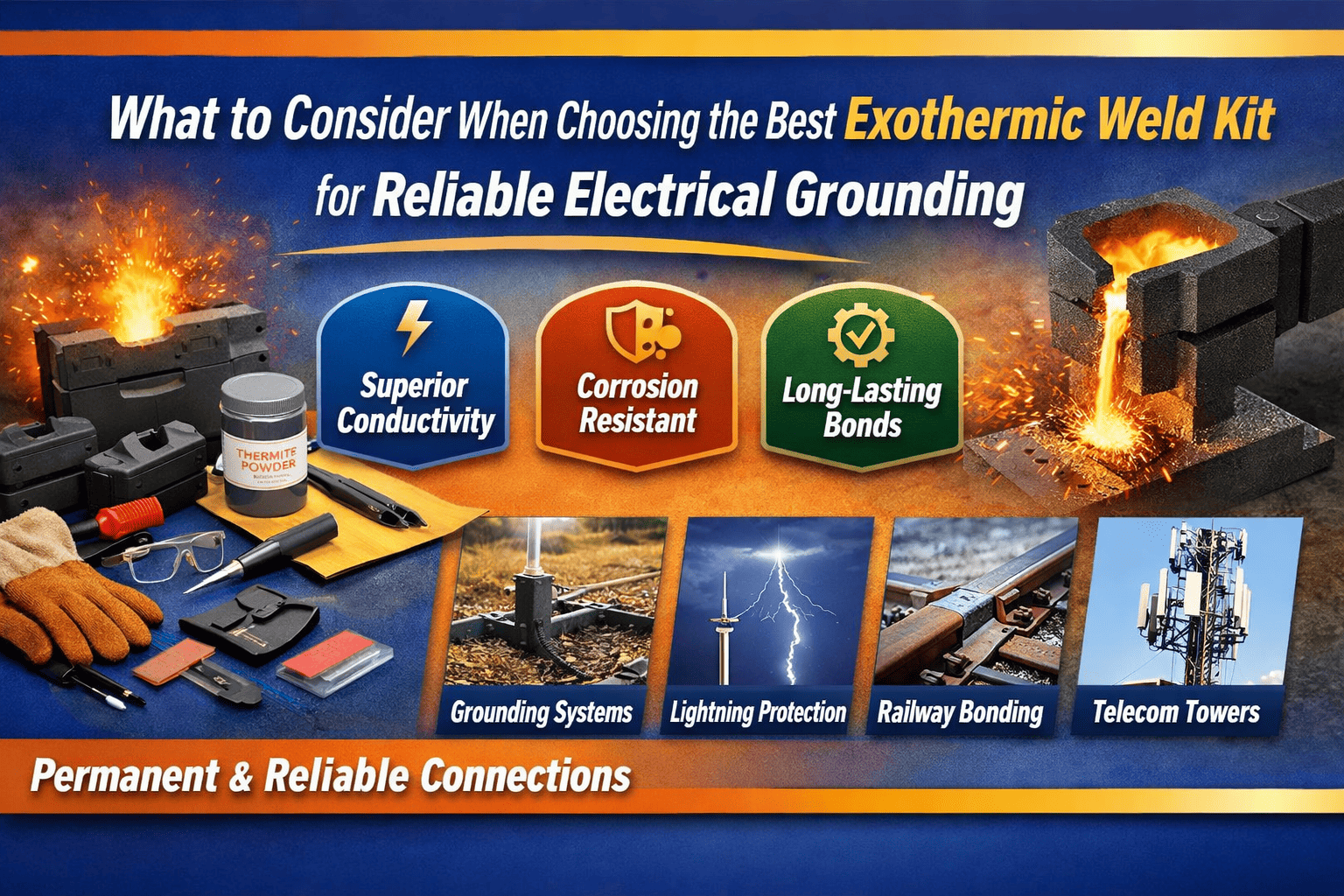
An Exothermic Weld Kit is a complete toolset designed to perform Exothermic Welding — a process that joins conductors permanently using a chemical reaction that produces intense heat. This kit typically includes:
-
Graphite mold(s)
-
Exothermic welding powder
-
Flux
-
Welding rod(s)
-
Safety accessories (gloves, goggles)
-
Instructions/manual
Each component is engineered to ensure a safe, strong, and long-lasting connection between copper conductors or copper to steel.
Why this matters:
Traditional mechanical connectors can loosen or corrode over time. An Exothermic Weld Kit creates a molecular-level bond that is corrosion-resistant, maintenance-free, and capable of handling high fault currents.
🔥 Understanding Exothermic Welding
Exothermic Welding (also called thermite welding) is a process that creates a metallurgical bond between conductors using a chemical reaction. When activated, the exothermic compound generates a burst of heat exceeding 2500°C (4500°F). This heat melts the copper surfaces and fuses them together with the molten metal.
🧪 How Exothermic Welding Works
-
Preparation:
Clean and position the conductors inside the graphite mold. -
Ignition:
Place the exothermic charge in the mold and ignite it. -
Reaction:
The exothermic compound reacts and releases intense heat. -
Fusion:
Copper melts and fuses into a continuous homogeneous connection. -
Cooling:
Allow the weld to cool naturally before removing the mold.
⭐ Benefits of Using Exothermic Weld Kit and Exothermic Welding
Investing in proper welding technology yields multiple benefits:
✅ Long-Lasting Connections
Unlike mechanical clamps that may loosen, exothermic bonds are permanent and maintenance-free.
✅ Superior Electrical Conductivity
The molecular bond ensures minimal resistance at the joint, improving system performance.
✅ Corrosion Resistance
Because the metals are fused together, there’s no interface for moisture or corrosion to attack.
✅ Reliable in Harsh Environments
Ideal for outdoor grounding, telecom towers, substations, and renewable energy installations.
📍 GEO-Targeted Use Cases
Whether you’re working on:
-
Electrical grounding in urban infrastructure
-
Telecom site installations in rural regions
-
Solar panel grounding systems
-
Lightning protection paths
-
Power and distribution centers
The strength and reliability of Exothermic Welding make it the go-to choice for professional electricians and engineers worldwide.
💡Questions Users Also Ask
To optimize for Answer Engines and AI search, include FAQs like:
❓ What’s the difference between exothermic welding and mechanical connectors?
Exothermic welding produces a fused bond that is stronger and more reliable than temporary mechanical connectors.
❓ Can you use any Exothermic Weld Kit for copper-to-steel welding?
No — kits are rated for specific materials. Always choose an appropriate kit for your metals.
❓ Is Exothermic Welding safe?
Yes — when performed with proper PPE and according to manufacturer instructions.
🏁 Conclusion
The reliability of your electrical grounding and bonding system depends on the quality of connection methods used. An Exothermic Weld Kit paired with the proven process of Exothermic Welding delivers unmatched strength, longevity, and performance — making it the preferred choice for professionals globally.
Written By : Sandip Choudhary
Written For Client : AI Earthing