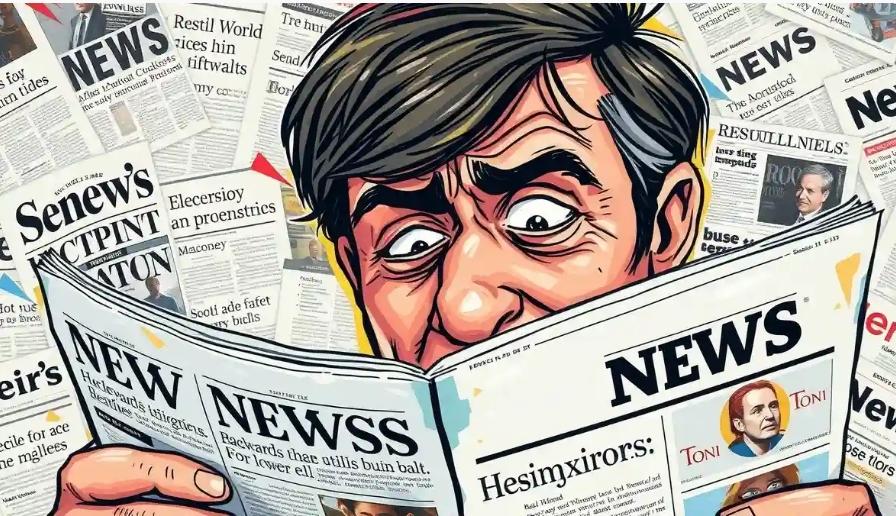
Modern news is everywhere. It wakes us up, interrupts our work, and follows us into bed through glowing screens. What once felt informative now often feels overwhelming. Headlines shout urgency, push fear, and promise answers that rarely arrive. In response to this chaos, a quietly clever idea has emerged—reading news backwards.
At first glance, the idea sounds absurd. Why would anyone start at the end of a news article? But once you understand how contemporary journalism is structured, the logic becomes strangely comforting. Most articles begin with panic and end with uncertainty. Starting from the conclusion simply skips the emotional ambush.
The Anatomy of a Modern News Article
News articles today follow a predictable pattern. The headline grabs attention using alarm or tension. The opening paragraphs heighten concern with dramatic language and selective facts. But scroll to the final section, and the tone shifts. Suddenly, officials are “monitoring the situation,” outcomes are “unclear,” and nothing is definitively resolved.
This pattern isn’t accidental—it’s designed for clicks. Unfortunately, it also contributes heavily to news fatigue, a growing condition where constant exposure to unresolved crises drains mental energy. Readers feel informed yet powerless, updated yet exhausted.
By beginning at the end, readers meet uncertainty first. Once you know there’s no clear resolution, the rest of the article loses its emotional sting.
Preparing for Reality, Not Panic
Reading news backwards isn’t about avoiding facts. It’s about emotional sequencing. Accepting uncertainty at the start makes everything else easier to process. Dramatic statistics feel contextual rather than threatening. Quotes sound performative instead of personal.
This method encourages readers to approach information with realism rather than fear. You’re no longer reacting—you’re observing.
In a world where anxiety thrives on anticipation, this reverse approach quietly dismantles the tension before it can take hold.
Why This Method Feels So Effective
One reason reverse reading works is that it respects the reader’s emotional bandwidth. Humans are not designed to process endless emergencies. Constant alerts and breaking news signals keep the brain in a low-grade stress response.
Starting from the conclusion helps reduce news anxiety by removing suspense from the equation. You already know the outcome is unresolved. There’s nothing looming, nothing about to “shock” you in the next paragraph.
As a result, comprehension improves. Calm readers understand more than anxious ones.
News Without Emotional Burnout
Avoiding the news entirely is one solution, but it often leads to disconnection. Reading backwards offers a middle path. You remain informed without being emotionally consumed.
Over time, this habit changes how news feels. Articles seem less dramatic. Headlines lose their power. Patterns become visible. You start recognizing how often stories recycle fear without delivering clarity.
That awareness alone is liberating.
A Subtle Act of Control
In many ways, reading news backwards is a small act of rebellion—not against journalism, but against emotional manipulation. It places control back in the reader’s hands. You decide how much energy an article deserves.
This doesn’t mean the world’s problems disappear. It means you engage with them on your own terms.
Final Thoughts
The news cycle isn’t slowing down. If anything, it’s accelerating. But your mental health doesn’t need to match its pace. Small changes in how we consume information can have a powerful impact.
Starting at the end of an article may seem trivial, even humorous—but it reflects a deeper truth: clarity often lives where the drama ends.
In an age of constant updates and endless tension, sometimes the smartest way to stay informed… is to read backwards.