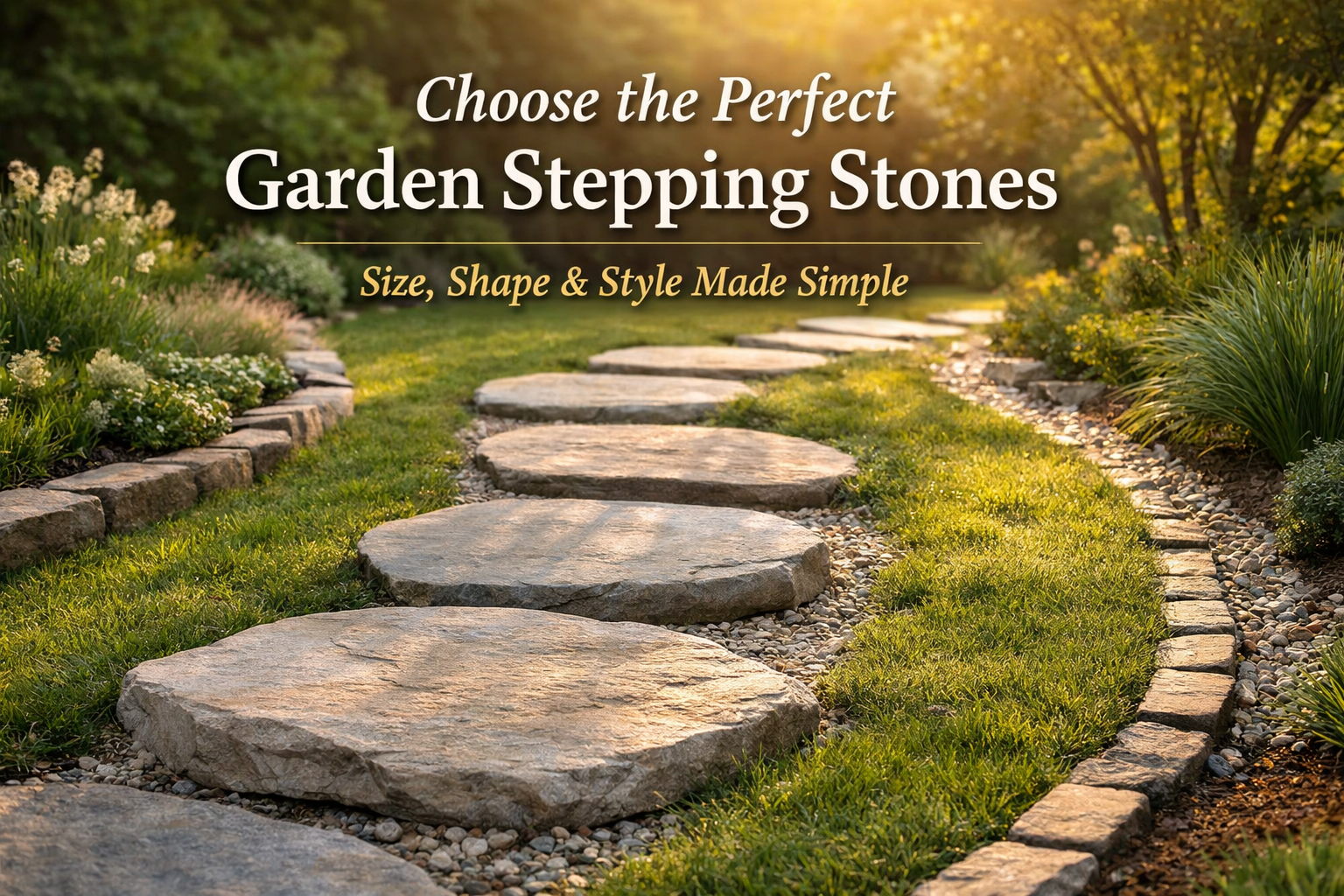
Designing a garden sounds peaceful until you realize even stepping stones come with decisions. Size, shape, spacing… suddenly it feels like you need a degree in landscape design just to walk from one end of your garden to the other. But don’t worry, this is actually much simpler than it looks.
Let’s break it down in very easy, practical terms so you can choose the right garden stepping stones without overthinking it.
Why Stepping Stones Matter in a Garden
Stepping stones are not just for walking. They:
- Protect your grass and plants
- Create a clear pathway
- Make your garden look clean and organized
- Add beauty and style
Whether you have a small backyard or a big lawn, the right stones can completely change the look of your space.
What Size of Garden Stepping Stones Should You Choose?
1. Standard Size for Comfort
The most common and comfortable size for garden stepping stones is:
- 12 to 18 inches (30 to 45 cm) wide
This size works well because:
- It fits a normal footstep easily
- It gives enough space to walk without feeling unstable
If stones are too small, you’ll feel like you’re playing a balancing game every time you walk. Not ideal unless you enjoy unnecessary challenges.
2. Large Stones for a Bold Look
If you want a more modern or luxury look:
- Choose stones 18 to 24 inches (45 to 60 cm)
Benefits:
- Easier walking experience
- Fewer stones needed
- Strong visual impact
Large stones are perfect for villas, farmhouses, or premium landscaping.
3. Small Stones for Decorative Paths
Small stepping stones (under 12 inches) are mostly used for:
- Decorative paths
- Secondary garden areas
- Accent designs
They look good but are not the best choice for daily walking paths.
How Far Apart Should You Place Stepping Stones?
Spacing matters more than people think.
- Ideal gap: 18 to 24 inches (45 to 60 cm) between stones
This matches a natural walking step.
If stones are:
- Too close → looks crowded
- Too far → awkward walking
The goal is simple: you should be able to walk naturally without thinking about your steps.
What Shape of Garden Stepping Stones Should You Choose?
Now comes the fun part. Shape affects the entire style of your garden.
1. Round Stepping Stones
Best for:
- Soft, natural gardens
- Flower beds and curved paths
Why choose them:
- Smooth and organic look
- Feels relaxed and welcoming
Round stones are perfect if you want a peaceful, natural vibe.
2. Square or Rectangular Stones
Best for:
- Modern homes
- Structured garden layouts
Why choose them:
- Clean and sharp design
- Easy to align in straight paths
If your garden has a minimal or contemporary design, this is your safest choice.
3. Irregular/Natural Shape Stones
Best for:
- Rustic gardens
- Nature-inspired landscapes
Why choose them:
- Unique look
- Feels like a natural pathway
These stones are often made from natural materials, especially in stone export from India, where you get beautiful sandstone, slate, and limestone options.
Which Material Works Best?
While choosing size and shape, material also matters.
Popular options include:
- Sandstone – warm colors, natural look
- Slate – dark, modern feel
- Limestone – soft and elegant
- Granite – strong and long-lasting
India is one of the top suppliers in stone export from India, offering high-quality natural stones at competitive prices. That’s why many global landscaping projects use Indian stone.
Matching Stepping Stones with Your Garden Style
Let’s keep this simple:
| Garden Style | Best Size | Best Shape |
|---|---|---|
| Modern | Large | Square/Rectangle |
| Natural | Medium | Round/Irregular |
| Rustic | Mixed sizes | Irregular |
| Small Garden | Medium | Round/Square |
No need to complicate it. Just match the vibe.
Don’t Forget Stone Edging for Gardens
If you really want your garden to look clean and professional, combine stepping stones with stone edging for gardens.
Benefits:
- Defines pathways clearly
- Keeps soil and grass in place
- Adds a polished finish
Think of edging like a frame for your garden. Without it, things can look a bit messy.
Practical Tips Before You Finalize
Here are a few simple but important tips:
1. Test Your Walk
Place stones temporarily and walk on them.
If it feels weird, it probably is.
2. Consider Weather
If your area gets rain:
- Choose non-slippery stones
- Textured surfaces are better
3. Think Long-Term
Cheap stones may crack or fade.
Investing in quality materials from reliable stone export from India suppliers saves money later.
4. Keep Maintenance in Mind
- Light stones may show dirt
- Dark stones may fade in strong sunlight
Choose wisely based on your environment.
Common Mistakes to Avoid
Let’s save you from future regret:
- Choosing stones too small for walking
- Ignoring spacing
- Mixing too many shapes randomly
- Not planning the pathway properly
- Skipping edging
Gardens should feel relaxing, not like an obstacle course.
Final Thoughts
Choosing the right size and shape of garden stepping stones is not complicated once you understand the basics.
- Go for 12–18 inches for most gardens
- Use larger stones for a luxury feel
- Pick shapes based on your garden style
- Add stone edging for gardens for a clean finish
- Choose durable materials, especially from trusted stone export from India sources
At the end of the day, your garden should feel easy to walk in and pleasant to look at. If you’re stressing over stone shapes, you’ve officially overcomplicated landscaping. Keep it simple, natural, and practical.