
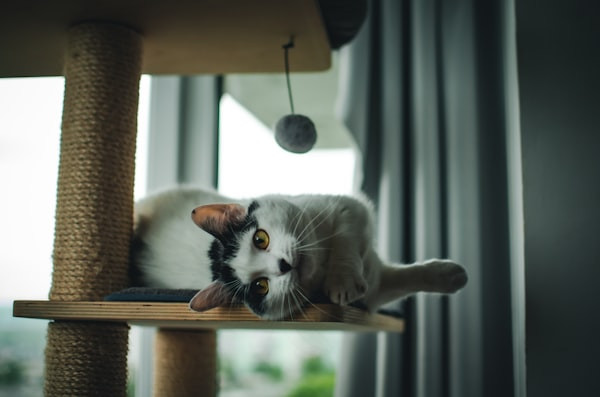
Look in the fierce little eyes of your adorable fluffball. What do you see? An apex predator? One of the most successful hunters in the animal kingdom? A master of patience, versatility and cunningness? A goofball who got fed five minutes ago but still protests the famished conditions of your household? Well, in my case, I’ll probably go for the last option, but cats really are some of the most interesting animal companions one can have in Australia.
They are popular, sure, as no less than 33% of all Aussie households own at least one kitty. But do you know that cats are thought to be one of the only animals that basically domesticated themselves? Cats are affectionate, intelligent, clean and surprisingly intelligent animals that are perfect for individuals living in small apartments. Plus, they are independent, they are long-living and their ownership costs are generally more advantageous compared to larger dog breeds. However, there’s the small issue of cats and their ingrained animal instincts.
Our Ancient But Stubborn Companions
Noticed how I said that cats domesticated themselves? That’s not an exaggeration. It’s actually visible in their DNA. But this also means that their innate scratching and territorial instincts are still present, even though your fluffball may look a veritable bundle of joy 99% of the time.
It’s all fun and games until you buy a new sofa and Whiskers starts looking at it like he just won the Powerball. Cats, when bored or lacking proper stimulation, have a tendency to scratch objects. And there aren’t many things you can do to stop them besides investing in a high-quality cat scratching post.
Cats are lower maintenance than other types of pets; they are capable of forming strong bonds with their owners; they are scientifically proven to provide mental health benefits to their handlers; and they are some of the most effective predators found in nature. They instinctively hunt rodents, and they deter pests from entering your household. But in order to do so, they like to keep their claws sharp, and what better way to do so than by clawing your mom’s favourite drapes?
Can You Train It Out of Them?
Not really. Theoretically, it’s possible, but cats scratch objects not only because they like to stretch their muscles and use up their pent-up energy, but also because they have natural scent glands between the pads of their claws and when they scratch something, they release pheromones that are imperceptible to humans but detectable by other cats. For your kitty, clawing your sofa is not an act of rebellion. It’s a way to communicate, mark its territory and also release old keratin layers that can impact its claw’s function.
By scratching objects, cats keep their claws sharp, establish their dominion over their territory, stretch their muscles, and exercise. So, while it is possible to train them to stop doing it, in practice the process will be long, tedious and it’s unlikely to produce guaranteed results. The best way to eliminate this unwanted behaviour from your cat’s repertoire is to provide her with an alternative. And there’s no better alternative than a cat scratcher.
What Are the Practical Reasons for Getting a Cat Scratcher?
Well, first things first. A proper-quality cat scratcher can redirect your cat’s innate instincts to a location that you can supervise and properly manage. Your kitty doesn’t exactly want to scratch your drapes, sofas, carpet, or garments. They are just the closest thing resembling the tree bark they use in nature to sharpen their claws and communicate.
A cat scratching post can represent an alternative to the other objects in your house that can fall victim to your cat’s gaze, and since they usually feel better for them, once kitties start using scratching towers, they are likely to leave the rest of your household items alone. A good cat scratcher can support your cat’s claw health, provide her with a new medium for exercising and exploring, reduce her overall stress, and eliminate other unwanted behaviours caused by a build-up of repressed instincts.
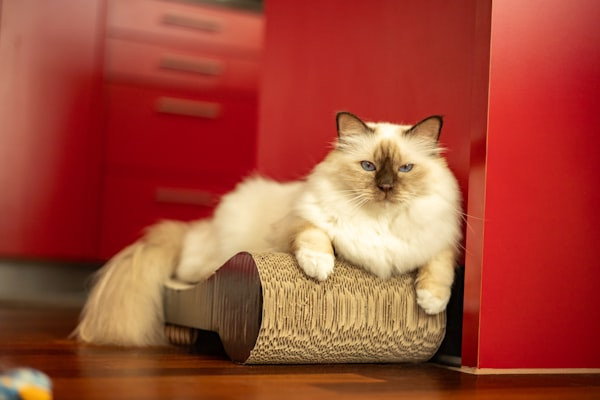
Think of the Money You’ll Save
At the end of the day, even though it will not be exactly free, a high-quality cat scratching post can be one of the best financial investments you can make while owning a cat. Don’t follow my example. When I adopted my first cat, I was hesitant to invest in a scratching tower for my newly acquired kitty, as she seemed to be on her best behaviour while I was around, and I had no reason to suspect any scratching tendencies from her part. That was until I first left her alone for a couple of hours while I was at work.
Some kitties are completely fine with us leaving them alone for hours on end, while others get stressed out. My kitten was the former, and her stress levels manifested in a tendency to scratch any type of object that she could get her claws on. She destroyed my recently acquired sofa, and I had to spend no less than $2,750 in order to reupholster it. An expensive mistake, and for what? The $80 I would’ve spent on a quality cat scratcher?
A Good Cat Scratching Post Can:
- Prevent costly furniture damage
- Protect your kitty’s claws from the perils of your household
- Aid with your kitty’s long-term claw health, which is essential for reducing the likelihood of expensive vet bills
- Provide exercise opportunities for your cat
- Minimise home repair costs
Scratching posts can be both practical accessories and your kitty’s favourite toy. They come in a huge variety of sizes and configurations; they act as exercise towers and sleeping dens alike; they are surprisingly durable when purchased from reputable brands, and you can often find them on sale, in the catalogue of online stores or local pet shops. There are not many mandatory purchases when it comes to cat ownership. But a cat scratcher? That’s one of the few accessories that should really not be missing from your household.