
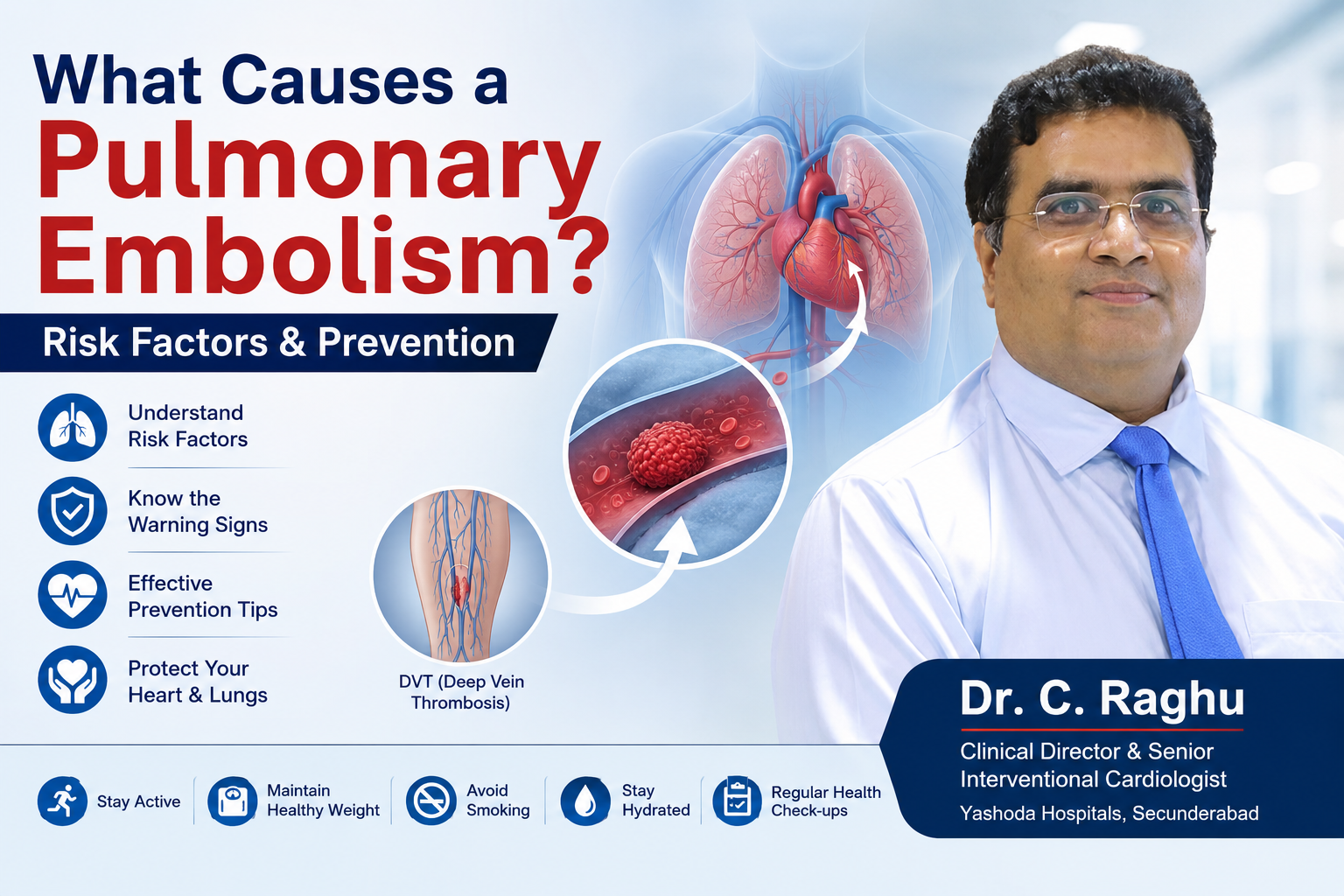
A pulmonary embolism can develop suddenly, sometimes after a person has spent days recovering from surgery, sitting for a long journey, or dealing with another health condition. Knowing what causes pulmonary embolism can help people recognize their risk earlier and take appropriate preventive steps. This guide explains the connection between DVT and pulmonary embolism, major risk factors, warning signs, prevention strategies, and when specialist medical care may be necessary.
What Is Pulmonary Embolism?
A pulmonary embolism (PE) occurs when a blood clot blocks one or more arteries in the lungs. In many cases, the clot originates in a deep vein of the leg or pelvis, a condition known as deep vein thrombosis (DVT). If part of that clot breaks away, it can travel through the bloodstream to the lungs and obstruct blood flow.
The severity of pulmonary embolism varies. Some cases may cause relatively mild symptoms, while a large or high-risk clot can place significant strain on the heart and lungs. For this reason, sudden symptoms should never be ignored.
Also read: What is a pulmonary embolism? Life-Threatening Clot Explain
Also read: Best Angioplasty Expert in India Clinical Standard
What Causes Pulmonary Embolism?
The most common pathway is DVT to pulmonary embolism. A clot forms in a deep vein, becomes dislodged, travels through the bloodstream, and eventually reaches the pulmonary arteries.
Blood clots are more likely to form when blood flow becomes slow, a vein is damaged, or the blood becomes more prone to clotting. Often, several risk factors occur together rather than there being one single cause.
Major Risk Factors for Pulmonary Embolism
Several situations and medical conditions can increase the risk of PE:
-
Recent surgery or hospitalization: Major surgery, particularly orthopedic procedures, can increase clotting risk. Reduced movement during recovery can add to that risk.
-
Prolonged immobility: Long periods of bed rest, sitting, or inactivity can slow blood flow in the legs.
-
Cancer: Active cancer and some cancer treatments are associated with a higher risk of blood clots.
-
Previous DVT or PE: A history of blood clots can increase the risk of another event.
-
Pregnancy and the postpartum period: Pregnancy changes the body's clotting system, and VTE risk remains elevated after delivery.
-
Obesity: Higher body weight is associated with increased VTE risk.
-
Inherited or acquired clotting disorders: Some people have conditions that make their blood more likely to clot.
-
Major trauma: Serious injuries can damage blood vessels and increase clotting risk.
-
Certain chronic illnesses: Heart failure, chronic lung disease, inflammatory conditions, and some serious infections may contribute to increased risk.
-
Age and family history: Risk generally increases with age, while a family history of VTE may indicate an inherited tendency.
Not every pulmonary embolism has an obvious trigger. Some episodes occur without a clearly identifiable temporary risk factor, which is why medical assessment is important when symptoms occur.
How DVT Can Lead to Pulmonary Embolism
Consider a person recovering from major surgery who remains in bed for several days. Reduced leg movement can slow venous blood flow, increasing the possibility of DVT.
If a piece of the clot breaks free, it can travel through the veins toward the heart and then into the pulmonary arteries. Once lodged in the lungs, it can restrict blood flow and affect oxygen delivery and the workload placed on the heart.
This is why appropriate DVT treatment and prevention are important, particularly for people with multiple risk factors.
Symptoms That Should Not Be Ignored
Pulmonary embolism can develop quickly. Common warning signs include:
-
Sudden or unexplained shortness of breath
-
Chest pain, particularly pain that becomes worse with deep breathing or coughing
-
Fast or irregular heartbeat
-
Dizziness or light-headedness
-
Fainting
-
Cough, sometimes with blood-streaked mucus
-
Severe weakness or signs of low blood pressure
A person with sudden breathing difficulty, chest pain, fainting, or other concerning symptoms should seek urgent medical attention rather than waiting for the symptoms to disappear.
How Can Pulmonary Embolism Be Prevented?
Not every PE can be prevented, but several measures can reduce risk, particularly in people who already have known risk factors.
1. Keep Moving During Long Periods of Sitting
Long-distance travel, prolonged sitting, and inactivity can contribute to venous stasis. When appropriate, regularly moving the legs and walking can help maintain circulation.
People who have a higher risk of blood clots should discuss travel-related prevention with a healthcare professional rather than relying on self-medication.
2. Follow Medical Advice After Surgery
After surgery or hospitalization, the healthcare team may assess an individual's VTE risk and recommend appropriate preventive measures. These may include early movement, compression measures, or medication when medically indicated.
The right approach depends on the person's bleeding risk, procedure, medical history, and overall clotting risk.
3. Take Prescribed Medicines Correctly
People who have already experienced DVT or PE may require anticoagulant medication to reduce the risk of recurrent blood clots. Medication should be taken exactly as prescribed, and patients should not stop or change treatment without medical advice.
The 2026 AHA/ACC guideline emphasizes risk-based management and recommends appropriate anticoagulation for eligible patients to reduce recurrent VTE.
4. Maintain a Heart-Healthy Lifestyle
Regular physical activity, maintaining a healthy weight, avoiding tobacco products, and managing conditions such as high blood pressure, diabetes, and other cardiovascular risk factors can support overall cardiovascular health.
Lifestyle changes cannot eliminate every cause of pulmonary embolism, but they can be an important part of long-term health and risk management.
5. Understand Personal Risk Factors
People with previous DVT or PE, cancer, clotting disorders, a strong family history of VTE, recent surgery, pregnancy, prolonged immobility, or other risk factors should discuss their individual risk with a healthcare professional.
Knowing the risk profile can help determine whether preventive measures or further evaluation are appropriate.
Pulmonary Embolism Treatment: Why Early Evaluation Matters
The appropriate pulmonary embolism treatment depends on factors such as clot severity, blood pressure, heart and lung function, symptoms, and the patient's overall medical condition.
Anticoagulants are commonly used to prevent existing clots from growing and reduce the risk of additional clots. In selected high-risk cases, advanced treatments such as thrombolysis, catheter-based procedures, mechanical thrombectomy, or surgical embolectomy may be considered.
The 2026 AHA/ACC guideline introduced a five-category framework for assessing acute PE severity, helping clinicians match treatment intensity to the patient's risk.
Therefore, searching for the best doctor for pulmonary embolism, a pulmonary embolism doctor, or experienced pulmonary embolism specialists should focus on appropriate evaluation, risk assessment, and access to evidence-based treatment rather than simply choosing a provider based on a title.
Also read: Blood Clots in AFib: How They Form and Prevention
Also read: Heart Attack Symptoms: Know When to See a Cardiologist in Hyderabad
When Should Someone See a Pulmonary Embolism Specialist?
Specialist evaluation may be particularly important for someone with a history of DVT or PE, recurrent blood clots, unexplained clotting, persistent breathing problems after PE, or multiple risk factors.
A pulmonary embolism specialist in Hyderabad or a pulmonary embolism specialist in India can assess the clinical situation and determine whether additional cardiovascular or clot-related evaluation is appropriate. Depending on the patient's condition, a cardiologist in Hyderabad, a heart specialist in Hyderabad, or a cardiologist in India may also be involved in evaluating heart strain associated with PE.
It is also important to understand that PE and peripheral artery disease are different vascular conditions. A peripheral artery disease doctor may be appropriate for arterial circulation problems, while pulmonary embolism generally involves the venous clotting system and pulmonary arteries.
Final Takeaway
Understanding what causes pulmonary embolism starts with understanding the relationship between DVT, reduced blood flow, vein injury, and increased clotting tendency. Surgery, prolonged immobility, cancer, pregnancy, obesity, previous clots, clotting disorders, and other conditions can increase risk, but PE can sometimes occur without an obvious trigger.
Recognizing sudden shortness of breath, chest pain, fainting, or other warning signs and seeking urgent medical attention can be critical. For people with known risk factors or previous DVT/PE, individualized prevention and follow-up can help reduce future risk.
For expert evaluation and advanced heart care, consult Dr. C. Raghu, one of the leading interventional cardiologists in Hyderabad, particularly when pulmonary embolism or related cardiovascular concerns require specialist assessment.
#cardiologist
#pulmonaryembolism