
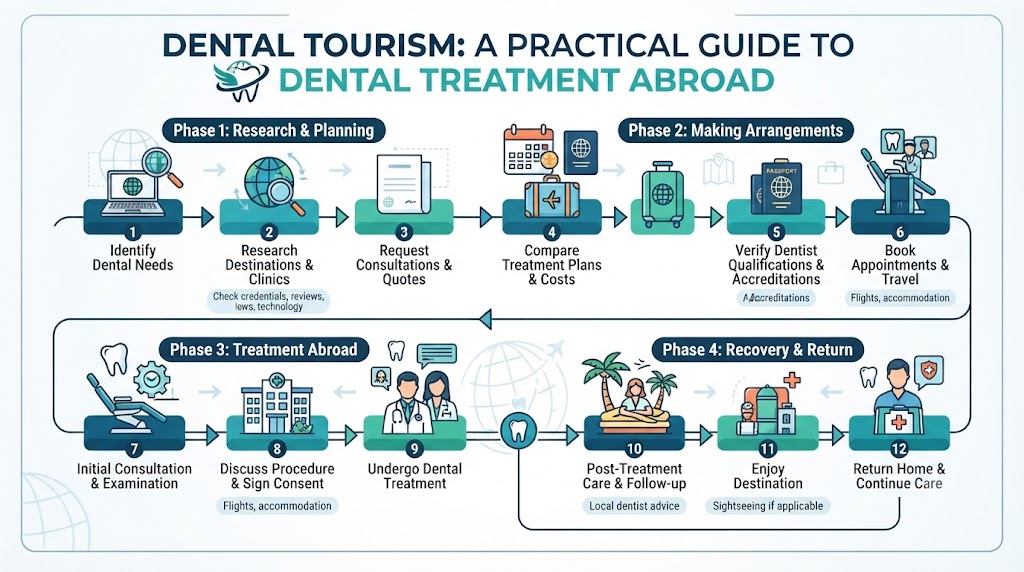
Dental tourism means travelling to another country to receive dental treatment. Many patients consider treatment abroad because of lower costs, access to experienced dentists, shorter waiting times, or availability of procedures such as dental implants, crowns, veneers, All-on-4 implants, and full-mouth rehabilitation.
However, choosing dental treatment abroad should never be based only on price. Patients should compare dentist qualifications, clinic standards, treatment planning, materials, infection control, total costs, and aftercare before making a decision.
Why Do Patients Choose Dental Tourism?
People may travel abroad for dental care because treatment can sometimes cost less than in their home country. Others may be looking for specialist procedures or faster appointment availability.
Popular treatments include:
- Dental implants
- Crowns and bridges
- Veneers
- Teeth whitening
- All-on-4 dental implants
- Full-mouth dental implants
- Cosmetic dentistry
- Root canal treatment
Lower treatment costs can be attractive, but patients should always consider quality and safety alongside affordability.
How to Choose a Dental Hospital Abroad
Patients searching for the best dental hospitals should evaluate individual providers carefully.
Important factors include:
Dentist Qualifications
Check who will perform the treatment and whether their professional credentials can be verified.
Treatment Experience
Choose a provider with relevant experience in the specific procedure you need, especially for complex implant or full-mouth treatment.
Infection Control
Ask about sterilization, hygiene procedures, surgical protocols, and infection-control standards.
Diagnostic Technology
For implant treatment, proper examination and imaging are important. CBCT or other advanced imaging may be recommended depending on the case.
Materials and Implant Systems
Patients considering dental implants abroad should ask which implant brand, abutment, crown, and prosthetic materials will be used.
Transparent Pricing
Request a detailed quotation showing what is included and what may cost extra.
Aftercare
Ask what happens if you experience complications after returning home.
Popular Dental Tourism Destinations
Countries commonly researched for international dental treatment include:
- Turkey
- Hungary
- India
- Thailand
- Mexico
- Malaysia
- Spain
- Poland
- Croatia
- Colombia
There is no single country that is best for every patient. The right destination depends on the treatment required, dentist expertise, clinic standards, travel distance, cost, communication, and aftercare arrangements.
Dental Implants Abroad
Dental implants are one of the most common reasons patients explore dental tourism.
Implant treatment usually involves several stages:
- Dental consultation
- Clinical examination
- X-rays or 3D imaging when required
- Bone assessment
- Implant placement
- Healing period
- Abutment placement
- Crown or final prosthesis
- Follow-up care
Some patients may need bone grafting or other additional procedures.
Patients should also understand that implant treatment may require more than one international trip.
[Internal Link – Dental Implant Guide]
Dental Implant Cost Comparison
A proper dental implant cost comparison should include more than the advertised implant price.
Ask whether the quotation includes:
- Consultation
- X-rays or CBCT
- Implant fixture
- Abutment
- Crown
- Bone grafting
- Temporary teeth
- Medication
- Follow-up appointments
Prices vary according to country, provider, implant system, dentist expertise, materials, and treatment complexity.
A cheap headline price may become more expensive if important components are charged separately.
All-on-4 Dental Implants Abroad
All-on-4 dental implants abroad may be considered by some patients who need full-arch tooth replacement.
The concept generally uses four implants to support a full dental arch.
However, All-on-4 is not suitable for every patient. Bone quality, gum health, bite, medical history, and treatment goals must be professionally assessed.
Patients should ask about:
- Implant number and position
- Temporary teeth
- Final restoration
- Healing period
- Material quality
- Maintenance
- Possible complications
[Internal Link – All-on-4 Guide]
Full Mouth Dental Implants Abroad
Full mouth dental implants abroad may involve several different treatment approaches.
Depending on the patient, treatment could include:
- Implant-supported bridges
- Full-arch fixed restorations
- Removable implant-supported dentures
- Individual implants
- Bone grafting
- Temporary restorations
The phrase “full mouth implants” does not describe one standard treatment. Every case requires individual assessment and treatment planning.
Cosmetic Dentistry Abroad
Patients also travel internationally for cosmetic procedures such as:
- Veneers
- Crowns
- Teeth whitening
- Bonding
- Gum contouring
- Smile makeovers
When comparing the best cosmetic dentistry hospitals, patients should consider tooth preservation, dentist expertise, material quality, natural-looking results, and long-term maintenance.
Cosmetic treatment should not involve unnecessary removal of healthy tooth structure without a clear clinical reason and informed discussion.
Risks of Dental Tourism
Dental tourism can offer benefits, but there are also potential risks.
These may include:
- Infection
- Treatment complications
- Poor communication
- Unexpected costs
- Limited aftercare
- Different healthcare regulations
- Difficulty receiving corrective treatment at home
- Additional travel if treatment is incomplete
Patients can reduce these risks by researching carefully, obtaining written treatment plans, checking credentials, understanding costs, and planning follow-up care before travelling.
Dental Tourism Cost Checklist
The real cost of international dental treatment includes more than the procedure.
Use this simple formula:
Total Dental Tourism Cost = Treatment + Diagnostics + Travel + Accommodation + Additional Procedures + Follow-Up
Patients should consider:
- Dental fees
- Diagnostic tests
- Flights
- Hotel accommodation
- Local transportation
- Medication
- Insurance
- Companion costs
- Additional procedures
- Follow-up appointments
Price vs Quality
One important rule in dental tourism is:
Lowest price does not always mean best treatment.
Patients should balance:
- Price
- Dentist qualifications
- Clinic standards
- Technology
- Materials
- Infection control
- Treatment experience
- Communication
- Aftercare
The goal should be to find appropriate, safe, transparent treatment rather than simply the cheapest available offer.
Dental Tourism Checklist
Before booking treatment abroad:
- Get a professional dental diagnosis
- Collect your dental records
- Compare several providers
- Verify dentist credentials
- Request an itemized quotation
- Ask about implant and restoration materials
- Understand the treatment timeline
- Ask about risks and alternatives
- Plan accommodation and travel
- Arrange aftercare before returning home
Frequently Asked Questions
Is dental tourism safe?
Dental tourism can be considered when treatment is provided by appropriately qualified professionals in suitable clinical facilities. Safety depends on the individual provider, procedure, patient health, and quality of aftercare.
Which countries are popular for dental tourism?
Turkey, Hungary, India, Thailand, Mexico, Malaysia, Spain, Poland, Croatia, and Colombia are commonly researched destinations.
Are dental implants abroad cheaper?
They may cost less in some countries, but total expenses depend on the implant system, additional procedures, flights, accommodation, and follow-up.
How do I choose the best dental hospital?
Compare dentist qualifications, treatment experience, diagnostics, infection control, materials, transparent pricing, communication, and aftercare.
Can dental implants be completed in one trip?
Some treatment stages may be completed during one visit, but many implant procedures require healing and additional appointments.
Conclusion
Dental tourism can provide patients with access to international dental care, dental implants, cosmetic dentistry, and complex restorative procedures. It may also offer financial advantages in some destinations.
However, choosing dental treatment abroad requires careful research.Patients should compare provider qualifications, treatment quality, materials, total costs, safety standards, treatment timelines, and aftercare rather than choosing solely on advertised price.Before making any treatment decision, consult a qualified dental professional, obtain a detailed treatment plan, understand possible risks, and make sure follow-up care is arranged.Healthcare Disclaimer: This content is for general educational purposes only and does not replace personalized advice, diagnosis, or treatment from a qualified dental professional.