
Concrete slab thickness in Riverside County matters because every inch affects drilling safety, load capacity, utility conflicts, and repair planning. Superior Scanning helps contractors, engineers, property owners, and coring crews understand slab depth before work begins, reducing the risk of cutting into reinforcement, conduit, post-tension cables, or unknown structural conditions.
Slab Thickness Is More Than a Measurement
A slab may look uniform from the surface, but concrete rarely tells the full story visually.
Thickness can change between rooms, buildings, parking areas, loading zones, ramps, equipment pads, walkways, and older additions. One section may be four inches thick while another nearby section is eight inches or more. In Riverside County, where projects often include warehouses, tilt-up buildings, schools, retail centers, industrial yards, multifamily properties, and older commercial sites, that variation can affect everything from coring layout to equipment anchoring.
A wrong thickness assumption can turn a routine cut into a structural or utility problem.
Measuring concrete depth is not just about knowing how far to drill. It helps crews choose the right core barrel, avoid over-penetration, understand reinforcement risk, plan water control, estimate drilling time, and decide whether additional scanning or engineering review is needed.
Why Riverside County Projects Need Better Slab Verification
Riverside County has a wide range of construction conditions.
A logistics building in Moreno Valley may have thickened slabs for heavy vehicle traffic. A commercial kitchen in Riverside may have multiple utility penetrations below the floor. A school site in Corona may have older concrete with undocumented repairs. A medical or industrial facility in Temecula may have dense embedded conduit under what looks like a simple slab.
That is why slab verification should happen before coring, cutting, trenching, anchoring, or saw cutting.
Can crews rely on drawings to confirm slab thickness? No, drawings are helpful, but field conditions should be verified because repairs, additions, tenant improvements, and construction changes can create slab thickness variations that plans do not show.
As-built drawings may also show intended dimensions rather than actual field conditions. On older properties, documentation may be incomplete or missing. On active commercial sites, previous contractors may have patched areas, rerouted utilities, or modified slabs without leaving clear records.
How Concrete Slab Thickness Is Measured
There are several ways to estimate or confirm concrete depth, and each method has a different purpose.
Ground penetrating radar for non destructive depth evaluation
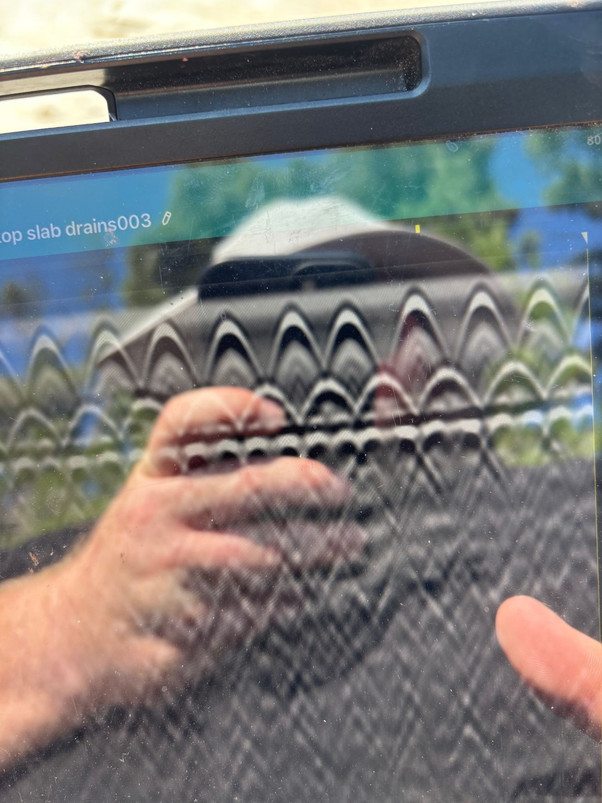
Ground penetrating radar, or GPR, uses radar pulses to evaluate concrete and detect changes inside or beneath the slab. It can help identify embedded objects, possible slab thickness changes, reinforcement patterns, and anomalies that may affect drilling or cutting.
GPR is valuable because it is non destructive. The slab does not need to be opened just to gather initial information.
Does GPR measure slab thickness exactly? GPR can estimate slab depth in many conditions, but accuracy depends on concrete properties, reinforcement congestion, moisture, access, and the clarity of the bottom-of-slab reflection.
That is why technician experience matters. A clean scan requires proper equipment selection, scan direction, field calibration, and careful interpretation. Superior Scanning uses GPR as part of a practical field process to help teams understand what is inside the slab before work begins.
Core drill sampling for physical confirmation
Core drill sampling is a destructive method that removes a cylindrical concrete sample from the slab. The core can confirm thickness directly and may also help evaluate concrete composition, compressive strength, layering, or deterioration if lab testing is required.
A core sample gives direct evidence.
The tradeoff is that it creates a hole, requires patching, and can strike embedded hazards if the location is not scanned first. For that reason, GPR scanning should happen before core drill sampling whenever reinforcement, conduit, post-tension cables, or other embedded items may be present.
Existing edges, penetrations, and exposed conditions
Sometimes slab depth can be observed at an open edge, drain, utility penetration, demolition area, or expansion joint.
That information is useful, but it can be misleading if applied too broadly.
A visible edge may not represent the rest of the slab. Thickened areas, repaired sections, sloped slabs, topping layers, and structural transitions can all create local differences. Field teams should treat visible measurements as clues, not complete confirmation.
GPR vs. Core Sampling: What Each Method Tells You
|
Method |
Best Use |
Main Benefit |
Key Limitation |
|
Ground Penetrating Radar |
Estimating slab depth and locating embedded objects before work |
Non destructive and field-ready |
Depends on scan conditions and interpretation |
|
Core Drill Sampling |
Physically confirming thickness or collecting material samples |
Direct measurement |
Destructive and requires safe core location |
|
Existing Edge Measurement |
Quick reference at visible slab edges |
Fast and simple |
May not represent the full slab |
|
Drawings and As-Builts |
Planning and historical reference |
Helpful starting point |
May be outdated or inaccurate |
The strongest approach is often a combination.
Use drawings to understand expected conditions. Use GPR to scan the actual work area. Use core sampling only when physical confirmation is required and the core location has been cleared for hidden hazards.
Why Thickness Matters Before Concrete Coring in Riverside
Concrete coring in Riverside is often needed for plumbing, electrical, heating and cooling lines, drains, anchors, structural testing, and tenant improvements. The thickness of the slab affects how the coring work should be planned.
A shallow slab may allow fast drilling, but it may also contain utilities closer to the surface than expected. A thicker slab may require specialized equipment, more water control, longer drilling time, and a deeper review of what lies below. A slab with post-tension cables or dense reinforcement may require layout changes before any coring begins.
Should a concrete coring company in Riverside scan before drilling? Yes, scanning before drilling helps identify reinforcement, conduit, post-tension cables, and slab conditions that could affect the safety and accuracy of the core.
Superior Scanning supports contractors and coring teams by helping identify safer core locations before penetration. The goal is not only to measure thickness. The goal is to understand what the drill path may cross.
For teams planning concrete core drilling in Riverside, scanning first can reduce damage, downtime, and layout mistakes.
Common Slab Thickness Problems That Cause Field Delays
The most common issue is assuming the entire slab is the same depth.
That assumption fails often.
A warehouse may have thickened forklift aisles, equipment pads, or loading zones. A retail space may have old trench patches hidden under flooring. A multifamily property may have slab transitions near plumbing chases or garage areas. A parking structure may have different deck conditions than a slab-on-grade area.
What happens if slab thickness is underestimated? Crews may use the wrong drilling setup, penetrate deeper than planned, hit embedded items, damage utilities, or create openings that do not match the actual field condition.
Overestimating thickness can also cause problems. It may lead to unnecessary equipment, higher costs, slower work, and poor planning around what lies below the slab.
Good slab measurement protects the schedule.
What Superior Scanning Looks for Before Coring or Cutting
Superior Scanning evaluates more than basic concrete depth.
A professional scan may help identify:
-
Approximate slab thickness or depth changes
-
Rebar spacing and direction
-
Post-tension cable locations
-
Electrical conduit or utility paths
-
Voids or subsurface anomalies
-
Slab transitions and possible topping layers
-
Areas where scan confidence is limited
-
Safer locations for core drilling or saw cutting
The scan results should be useful in the field. That means clear markings, practical communication, and an explanation of what was found. If a location is risky, the team should know before the coring rig is set up.
A good scan does not create false confidence.
It gives the project team better information for the next decision.
When to Schedule Slab Thickness Scanning
The best time to scan is before the core locations are final.
If scanning happens too late, the team may have fewer options. Crews may already be mobilized, equipment may be staged, and the schedule may be tight. If scanning identifies conduit, post-tension cables, or unexpected reinforcement at that point, the project may face delays or rushed layout changes.
Schedule slab scanning before:
-
Core drilling in Riverside commercial spaces
-
Concrete coring for plumbing or drain lines
-
Anchor installation for equipment or racking
-
Saw cutting or trenching through slab-on-grade
-
Structural evaluation or repair planning
-
Tenant improvements in older buildings
-
Work in warehouses, schools, medical buildings, and industrial sites
-
Any project with missing or unreliable drawings
Early scanning gives contractors room to adjust.
Better Slab Decisions Start With Better Field Data
Concrete slab thickness in Riverside County should never be guessed when drilling, coring, cutting, or structural planning is involved. Thickness affects safety, equipment selection, core layout, utility risk, and the overall reliability of the work plan.
Superior Scanning helps Riverside County project teams measure concrete depth, identify embedded hazards, and plan safer work before destructive activity begins. With GPR scanning and field-ready concrete evaluation, contractors and property teams can move forward with fewer unknowns.
Concrete may look simple from the surface, but the risk is inside the slab. Scanning first gives the project a safer, clearer path before the first cut is made.