
Australia is home to some of the world’s biggest and pretty technologically advanced mining operations. You can see it in coal workings around Queensland, then metal and mineral extraction sites stretching across Western Australia and New South Wales too. And yeah, underground mining has a major part in keeping the country’s economy moving, but working beneath the earth’s surface comes with a whole set of challenges, plus safety risks, that really need dependable infrastructure and electrical systems that are up to the job.
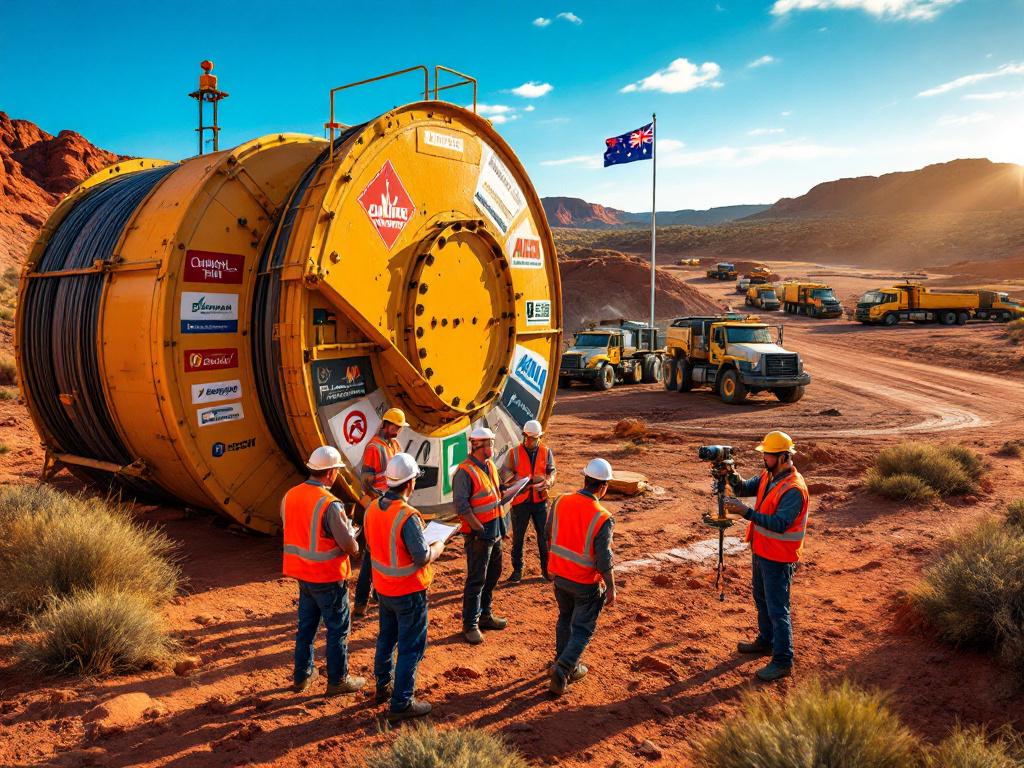
One component that people don’t always talk about, but that matters a lot, is the pilot core. It might sound small, like just another part inside a mining cable; however, the pilot core ends up doing quite a bit for operational safety. It helps safeguard workers, and it also supports equipment to work properly in those harsh, hazardous underground locations, where conditions can change fast.
If you get a clearer picture of how pilot cores operate and why they’re actually built into a Mining Cable in Australia, mining operators can then weigh better choices. Things like safety, compliance, and even day-to-day operational efficiency all tend to improve when the wiring and design decisions are understood the right way, even the quiet parts of the system.
Introduction to Pilot Cores
Pilot core refers to a separate, extra conductor integrated inside some mining power cables. Different from major conductors that distribute electrical power to different devices and machinery, the pilot core or pilot conductor mainly serves for monitoring, signalling, and safety purposes.
The key function of the pilot core is to establish a channel through which electrical devices and control systems can communicate with each other. Thanks to such a connection, there is a possibility of constant checking of the cable condition and equipment status, which allows for the detection of faults before they turn into major safety hazards.
Pilot cores are regularly used in trailing cables, reeling cables, and other types of mining cables that are deployed underground and where the safety systems must be able to react promptly to the changed situations.
Why Underground Mining Needs Better Safety Systems
Underground mining areas can have different kinds of problems that are obviously not found in outdoor operations. Some of these problems are the following:
● Lack of proper air circulation
● Hazardous gases, which can catch fire
● Extremely wet conditions
● Very dusty
● Finding one's way is quite hard
● Operations with very complex machinery
In such conditions, if the electricity fails personnel and equipment will be at risk and lead to costly downtime and dangerous situations such as fire or explosion. Therefore, the authorities in Australia that monitor mining activities have made it very clear through their mining regulations that they expect a very high level of electrical safety system readiness.
One of the ways in which pilot cores can be used to enhance safety is that through them, faults can be detected at very early stages and thus can be handled in time.
Ways That Pilot Cores Improve Safety
Uninterrupted Ground Continuity Monitoring
The main feature of a pilot core is to act as earth continuity monitoring.
Working underground requires that all equipment be well grounded at all times so as to prevent personnel from coming into contact with live parts and thus being electrocuted. The pilot cable is there to provide additional support to the earth conductors and to ensure that they are always capable of carrying out their safety function.
Should the earth conductor become faulty or be removed, the pilot cable would pick up this defect and allow the protective disconnection device to operate.
Such quick reaction offers a great safeguard against the occurrence of electrical mishaps and at the same time, it is a tool for maintaining a safer working environment.
Fault Detection and Rapid Isolation
Mining equipment is moving in challenging environments. During their service life, cables may be crushed, abraded, stretched, or exposed to mechanical impacts.
Pilot core is the key enabling feature of monitoring systems to detect cable performance abnormalities. Upon fault detection, protective relays can disconnect the faulty circuit to prevent a hazardous situation from occurring.
Obviously, this feature has extra value in underground mines where it may be hard to get to the damaged equipment quickly.
Prevention of Equipment Damage
Electrical faults can severely damage mining equipment, and to fix it will also cost a lot of money and 'hold' production.
Providing extra monitoring by means of pilot cores supports the detection of problems at an early stage. In this way, maintenance people are able to perform a thorough check and fix even equipment issues without the necessity of increasing failure.
Therefore, mining operators are able not only to raise equipment reliability but also to lower unplanned downtime.
Emergency Shutdown Capability
Most times, pilot cores that are integrated with emergency shutdown systems are the ones used for underground applications.
During the occurrence of some hazardous situations, e.g. equipment malfunction or cable damage, the pilot circuit is capable of activating a shutdown immediately. Such a quick response can be used as a measure to protect both personnel and equipment from exposure to further risks.
Besides, the function is indeed a lifesaver in environments where a high risk of accidents is the norm, since during emergencies every single second can make a difference.
Main Uses of Pilot Core Mining Cables
Pilot core cables have become a normal part of many underground mining operations.
Continuous Miners
Continuous miners rely on a consistent supply of power and communications with monitoring systems for safe operation. Pilot cores maintain this two-way communication link, enabling operation to be safe and without interruption.
Shuttle Cars
Shuttle cars are used to move the mined ore from one point to another in the underground mine. Since the vehicles operate by the means of cables that are dragged over surfaces all the time, the monitoring function provided by the pilot cores is essential in keeping track of product integrity.
Longwall Mining Equipment
In longwall mines, equipment is connected through a complex electrical system. The use of pilot cores ensures safety aspects such as earth fault monitoring and uninterrupted earth path are managed throughout the mining operation.
Conclusion
Pilot cores might not be the flashiest part of underground mining infrastructure, but honestly, their value for safety is pretty big. They support earth continuity monitoring, fault detection, and emergency shutdown, plus they help shield or “guard” equipment, too. In practice, pilot cores are kind of a quiet backbone that lets a mine run in a safer and more dependable way.
For mining operators who are after dependable cable solutions, putting money into a high-quality mining cable in Australia that comes with integrated pilot core technology can help with regulatory compliance and day-to-day efficiency. And as underground mining keeps progressing, the need for sturdy electrical safety systems is only going to grow more than most people expect.
Companies like Znergy Cable get that the sector is demanding, and they offer specialized cable solutions meant to line up with Australian industry standards. When mining businesses choose trusted manufacturers and proper quality Australian Cable products, they can tighten up safety measures while also supporting long-term operational success, not just today’s output.
Also Read: The Future of Electrical Wiring in the EV Era: What Businesses Need to Know