
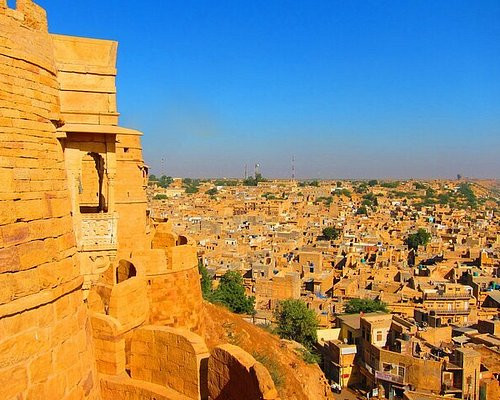
Nestled in the heart of the vast Thar Desert, Jaisalmer stands as one of Rajasthan’s most evocative and enchanting destinations. Often referred to as the "Golden City," its signature honey-colored sandstone buildings glisten under the desert sun, casting a warm hue across the ancient landscape. From magnificent living fortresses and intricately carved merchant mansions to the vast, windswept sand dunes, Jaisalmer offers travelers an extraordinary journey into India's regal past and vibrant desert heritage.
1. The Magnificent Jaisalmer Fort (Sonar Qila)
Standing tall atop Trikuta Hill, Jaisalmer Fort is the crown jewel of the city. Built in 1156 AD by the Rajput ruler Rawal Jaisal, it holds the rare distinction of being one of the world's few active, "living" forts. Roughly a quarter of the old city's population still resides inside its massive stone walls, creating a vibrant community amidst historic architecture.
As you wander through the fort’s narrow, winding cobblestone alleyways, you will pass centuries-old residences, artisanal craft shops, quaint rooftop cafes, and a stunning complex of seven interconnected Jain Temples built between the 12th and 15th centuries. Reaching the fort's outer ramparts rewards visitors with sweeping, panoramic views of the yellow sandstone city stretching out into the endless desert horizon.
2. Intricate Havelis of the Merchants
Beyond the fort, the old city is celebrated for its grand havelis—ornate, multi-storied mansions built by wealthy merchants during the height of the Silk Road trade era. These architectural masterpieces are famous for their delicate stone latticework (jali), elaborate balconies (jharokhas), and exquisite wall carvings.
-
Patwon Ki Haveli: A striking cluster of five individual havelis, making it the largest and most elaborate mansion in Jaisalmer. Its intricate sandstone facade features over 60 finely carved balconies.
-
Nathmal Ki Haveli: Built by two architect brothers who worked on different sides of the structure simultaneously, creating a subtly asymmetrical design packed with detailed craftsmanship.
-
Salim Singh Ki Haveli: Renowned for its unique peacock-inspired roof structure and narrow base that expands gracefully into upper floors.
3. Peaceful Waters at Gadisar Lake
Constructed in the 14th century by Maharawal Gadsi Singh, Gadisar Lake served as the primary water reservoir for the desert city for generations. Today, it remains a tranquil oasis surrounded by charming pavilions, small Hindu shrines, and decorative archways such as the famous Tilon Ki Pol. Renting a pedal boat in the early morning or late afternoon allows visitors to soak in the serene atmosphere while spotting various migratory bird species that frequent the lake during the winter season.
4. Experiencing the Sam Sand Dunes & Desert Camping
A trip to Jaisalmer is incomplete without venturing into the golden expanses of the Thar Desert. Located approximately 45 kilometers from the main city, the rolling dunes at Sam offer an authentic desert experience filled with thrilling jeep safaris, classic camel rides, and sunset views over the undulating sands.
To fully immerse yourself in the desert lifestyle, spending a night at a luxury desert camp in Jaisalmer offers the ideal balance of rustic charm and modern comfort. These desert resorts feature traditional Rajasthani hospitality, live folk music, and Kalbelia dance performances around cozy evening bonfires. Travelers seeking high-end facilities can book a spacious swiss tent in Jaisalmer complete with modern attached bathrooms and fine furnishings, while those seeking cozy elegance will enjoy staying in a comfortable deluxe tent in Jaisalmer. Unwinding under a brilliant canopy of stars in the quiet desert air remains one of the most unforgettable highlights of any Rajasthani itinerary.
5. Bada Bagh & The Mystery of Kuldhara
For those keen to explore further afield, two notable historical sites sit just outside the city limits:
-
Bada Bagh: Located a short drive north of Jaisalmer, this peaceful complex features a series of royal cenotaphs (chhatris) constructed in memory of the city's Maharajas. Set against the stark landscape, the yellow sandstone domes present incredible photo opportunities, especially during golden hour.
-
Kuldhara Village: Known as the "ghost village," Kuldhara was abandoned overnight in the early 19th century by its Paliwal Brahmin inhabitants to escape tyranny. Today, the quiet stone ruins offer a fascinating glimpse into local folklore and history.
Travel Tips for Planning Your Visit
-
Best Time to Travel: The ideal season to visit Jaisalmer is between October and March when desert temperatures are mild and comfortable for sightseeing.
-
Local Cuisine: Be sure to taste iconic Rajasthani dishes such as Dal Baati Churma, Ker Sangri, Gatte ki Sabzi, and local saffron-infused sweets.
-
Handicraft Shopping: Look for authentic camel leather goods, hand-woven mirror-work textiles, traditional brass items, and yellow sandstone keepsakes.