
Introduction
Few countries on Earth captivate the imagination quite like India. From the snow-dusted peaks of the Himalayas to the sun-drenched shores of the Indian Ocean, this vast peninsula is a dazzling tapestry of landscapes, cultures, languages, and traditions. It is a destination where ancient history effortlessly blends with cutting-edge modernity, creating an environment that feels simultaneously timeless and dynamic. In recent years, the global travel landscape has witnessed a profound shift. Travelers are no longer content with merely ticking famous landmarks off a bucket list. Instead, there is a rapidly growing demand for authentic travel experiences—journeys that allow individuals to dive beneath the surface, engage deeply with local communities, and understand the soul of a destination. India offers this in abundance, provided you know where to look.
However, given its sheer scale and mind-boggling diversity, navigating India can feel overwhelming. A single state here can be larger and more culturally distinct than an entire European country.
Why India is a Dream Destination for Travelers
India has an almost magnetic pull that attracts millions of domestic and international tourists every year. What makes it a perennial bucket-list destination is its unmatched diversity across multiple dimensions.
Cultural and Historical Tapestry
Culturally, India is an epic patchwork. Every state features its own distinct language, traditional attire, music, and art forms. Historically, the land is an open-air museum. Millennium-old temples, grand Mughal forts, and elegant colonial architecture stand side-by-side, reflecting the diverse dynasties that have shaped the subcontinent.
Natural and Spiritual Landscapes
Geographically, the country transitions from the high-altitude cold deserts of Ladakh to the lush tropical backwaters of Kerala. Wildlife enthusiasts flock here to glimpse royal Bengal tigers, one-horned rhinoceroses, and Asian elephants roaming free in dense national parks. Spiritually, India is the birthplace of major world religions, serving as a sanctuary for those seeking inner peace, yoga retreats, and ancient wellness traditions like Ayurveda.
Culinary and Adventure Frontiers
The culinary landscape is equally extraordinary. Indian food is a complex science of spices, varying dramatically from the rich, dairy-infused curries of the North to the fiery, coconut-based dishes of the South. For thrill-seekers, the country offers world-class adventure opportunities, including trekking through alpine meadows, white-water rafting down glacial rivers, and paragliding across massive valleys. India does not just offer a vacation; it offers an awakening of all five senses.
Best Places to Visit in India
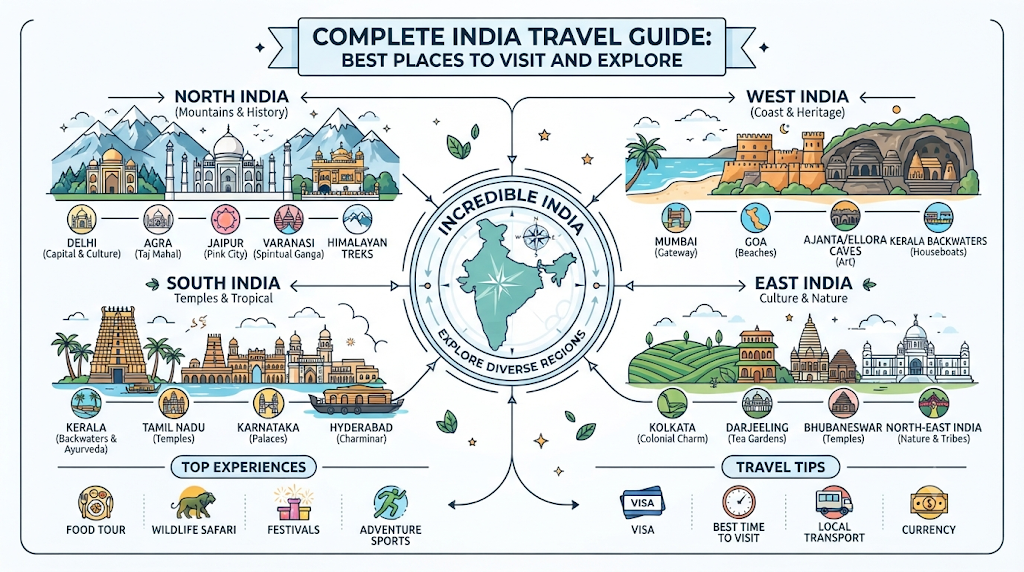
To truly experience India, one must explore its diverse regions. Here is a curated breakdown of the top destinations across five major travel categories.
Mountains and Hill Stations
-
Shimla (Himachal Pradesh): The former summer capital of British India, famous for its colonial architecture, pedestrian-friendly Mall Road, and the historic toy train.
-
Manali (Himachal Pradesh): A haven for backpackers and adventure lovers, serving as the gateway to Solang Valley, Rohtang Pass, and the rugged terrain of Lahaul and Spiti.
-
Leh-Ladakh (Ladakh): A mesmerizing cold desert featuring dramatic barren mountains, pristine high-altitude lakes like Pangong Tso, and ancient Tibetan Buddhist monasteries.
-
Darjeeling (West Bengal): Famous worldwide for its emerald-green tea estates, stunning panoramic views of Mount Kanchenjunga, and its charming UNESCO-listed Himalayan railway.
Pristine Beaches
-
Goa: India’s premier beach destination, blending vibrant nightlife, Portuguese heritage churches, and golden sands ranging from bustling Baga to serene Agonda.
-
Andaman Islands: A remote paradise in the Bay of Bengal, celebrated for the turquoise waters of Radhanagar Beach, world-class scuba diving, and rich marine life.
-
Gokarna (Karnataka): A laid-back, spiritual beach town tailored for travelers seeking a slower pace, rustic beach shacks, and scenic coastal cliff treks.
Heritage and Royal Destinations
-
Jaipur (Rajasthan): The "Pink City," renowned for its majestic hilltop forts like Amber Fort, the intricate facade of Hawa Mahal, and bustling gemstone bazaars.
-
Agra (Uttar Pradesh): Home to the world's most famous monument to love, the Taj Mahal, alongside the imposing Agra Fort and the ancient ruins of Fatehpur Sikri.
-
Udaipur (Rajasthan): The "City of Lakes," loved for its romantic white marble palaces floating on calm waters, lavish courtyards, and Mewar royal heritage.
Nature and Wildlife Sanctuaries
-
Jim Corbett National Park (Uttarakhand): India's oldest national park, nestled in the Himalayan foothills and famous for its thrilling jeep safaris and wild tiger population.
-
Kaziranga National Park (Assam): A UNESCO World Heritage site comprising vast tall elephant grass meadows, home to the world’s largest population of the great Indian one-horned rhinoceros.
-
Ranthambore National Park (Rajasthan): A dramatic wildlife reserve where ancient fortress ruins blend into the jungle, offering some of the best opportunities to spot tigers in the wild.
Spiritual and Sacred Destinations
-
Varanasi (Uttar Pradesh): One of the oldest continuously inhabited cities in the world, where majestic evening Ganga Aarti rituals take place along the sacred ghats of the River Ganges.
-
Rishikesh & Haridwar (Uttarakhand): Twin spiritual towns where the Ganges exits the mountains; renowned globally for yoga ashrams, meditation centers, and holy river dips.
-
Tirupati (Andhra Pradesh): A major hill temple destination drawing millions of pilgrims to the ancient, richly adorned Venkateswara Temple.
Popular Travel Destinations in India
| Destination | Best For | Best Season | Trip Duration |
| Leh-Ladakh | Adventure, Landscapes | June to September | 7–10 Days |
| Shimla | Colonial Charm, Families | March to June | 3–4 Days |
| Goa | Beaches, Nightlife | November to February | 4–6 Days |
| Andaman Islands | Scuba Diving, Relaxation | October to May | 5–7 Days |
| Jaipur | Forts, Royal Heritage | October to March | 3–4 Days |
| Agra | Taj Mahal, History | October to March | 1–2 Days |
| Varanasi | Spirituality, Culture | October to March | 2–3 Days |
| Rishikesh | Yoga, River Rafting | September to April | 3–4 Days |
| Jim Corbett | Wildlife, Tiger Safaris | November to May | 2–3 Days |
| Munnar | Tea Plantations, Nature | September to May | 3–4 Days |
India Travel Guide for First-Time Visitors
Planning a first trip to India requires practical knowledge to ensure a smooth, comfortable journey. Here is a breakdown of the essential logistics.
Visa and Entry Requirements
Most international travelers can apply for an e-Tourist Visa online prior to arrival. Ensure your passport has at least six months of validity and two blank pages. Double-check official government portals for the specific entry regulations tied to your nationality.
Smart Transportation Options
India boasts one of the largest railway networks in the world. Booking train tickets well in advance (AC First Class or AC 2-Tier is recommended for long distances) offers an iconic local experience. For intercity travel, domestic flights are affordable and fast. Within cities, app-based ride-hailing services like Uber and Ola offer transparent pricing, while auto-rickshaws provide an adventurous way to navigate short distances.
Local Etiquette and Cultural Customs
Always remove your shoes before entering religious shrines, homes, and certain local shops. Dressing modestly—covering shoulders and knees—is highly appreciated and often mandatory at sacred sites. A lightweight scarf is incredibly versatile for quick coverage. Use your right hand for eating, giving, or receiving items, as the left hand is traditionally considered unclean.
💡 Pro-Tip: When visiting temples or mosques, look for where others leave their footwear. It is customary to tip the shoe-handler a nominal fee (₹10–20) upon return.
Safety and Wellness Practices
Stick exclusively to sealed, bottled mineral water or trusted filtration systems to avoid waterborne bugs. Eat at busy local joints where food turnover is exceptionally high, ensuring freshness. When it comes to safety, avoid walking alone in poorly lit or unfamiliar areas late at night. Keep your belongings secure in crowded market areas, and confidently decline overly aggressive street vendors or unofficial guides.
Budgeting and Accommodations
India caters flawlessly to every wallet. Backpackers can easily manage on $20–$30 a day using budget hostels and street food. Mid-range travelers can enjoy boutique heritage hotels and fine dining for $50–$100 a day. For those seeking absolute luxury, the country features some of the world's finest converted royal palaces.
Things to Do in India
A trip to India is defined by the unique, immersive experiences you participate in. Here are some unforgettable activities to add to your bucket list:
-
Immersive Heritage Walks: Don’t just look at old buildings; walk through them with a historian. Explore the winding lanes of Old Delhi’s Chandni Chowk, discover the colonial quarters of South Mumbai, or trace the ancient ruins of Hampi on foot to uncover hidden stories.
-
Culinary Tours and Street Food Tastings: Embark on guided food trails to taste authentic local flavors safely. Sample crispy kachoris in Rajasthan, rich boti kebabs in Lucknow, fluffy idlis in Tamil Nadu, or sweet, syrupy jalebis in Varanasi.
-
Thilling Wildlife Safaris: Board an open-top 4x4 vehicle at dawn to track the elusive Royal Bengal Tiger through the dry deciduous forests of Ranthambore or cruise the marshes of Kaziranga on a dedicated conservation tour.
-
Glacial River Rafting: Battle world-class rapids on the emerald-green waters of the Ganges River in Rishikesh, or drift along the high-altitude Zanskar River in Ladakh surrounded by towering canyon walls.
-
Scenic Himalayan Trekking: Lace up your boots for legendary treks. Hike through the breathtaking Valley of Flowers in Uttarakhand, or tackle the challenging Kuari Pass trek for sweeping views of the high peaks.
-
Vibrant Local Festivals: Coordinate your trip to experience the joyful chaos of Holi (the festival of colors), the magical illumination of Diwali (the festival of lights), or the grand procession of caparisoned elephants during Mysore Dasara.
-
Authentic Wellness and Yoga Retreats: Dedicate a week to wellness by checking into a traditional ashram in Rishikesh or a dedicated Ayurvedic healing center in the coastal hills of Kerala for customized detox programs.
Creating the Perfect India Travel Itinerary
To maximize travel efficiency and avoid exhaustion, itineraries should group geographically close destinations together. Here are four practical templates based on trip duration:
The Classic 5-Day "Golden Triangle" Itinerary
Ideal for time-crunched, first-time international visitors focusing on iconic monuments.
-
Day 1–2: Arrive in Delhi. Explore the Red Fort, Qutub Minar, and the vibrant markets of Old Delhi.
-
Day 3: Drive or take an early train to Agra. Watch the sunset over the magnificent Taj Mahal and explore Agra Fort.
-
Day 4–5: Travel to the pink city of Jaipur. Tour Amber Fort, City Palace, and shop for local handicrafts before heading back to Delhi for departure.
The 7-Day Culturally Immersive Rajasthan Circuit
A week-long journey diving deeper into royal heritage, desert landscapes, and traditional arts.
-
Day 1–2: Start in Jaipur to see the major historical palaces and stepwells.
-
Day 3–4: Take a scenic drive to Jodhpur (the Blue City). Explore Mehrangarh Fort towering over the city and walk through the old blue bazaars.
-
Day 5–7: Head to Udaipur (the City of Lakes). Enjoy a relaxing boat cruise on Lake Pichola, visit the lakeside City Palace, and watch a traditional Rajasthani folk dance performance.
The 10-Day Wellness & Nature South India Tour
A relaxed, slower-paced loop focused on tropical landscapes, backwaters, and wellness.
-
Day 1–2: Arrive in historic Kochi. See the historic Chinese fishing nets and watch a Kathakali dance show.
-
Day 3–5: Drive up into the lush hills of Munnar. Walk through expansive tea estates and visit local spice plantations.
-
Day 6–7: Travel to Thekkady for a guided nature walk through Periyar Tiger Reserve.
-
Day 8–10: Experience a traditional overnight stay on a premium houseboat in the Alleppey Backwaters, wrapping up your trip with a relaxing Ayurvedic massage before returning to Kochi.
The 15-Day Ultimate North-to-South Highlights
The definitive cross-country exploration balancing grand heritage monuments with southern tropical nature.
-
Day 1–3: Explore the historic sights and street food of Delhi.
-
Day 4–5: Take a train to Agra to visit the Taj Mahal and surrounding heritage sites.
-
Day 6–8: Fly to Jaipur to immerse yourself in Rajasthan's royal history and architecture.
-
Day 9–11: Fly east to Varanasi. Experience a sunrise boat ride along the sacred Ganges and observe ancient evening rituals.
-
Day 12–15: Fly south to Kerala (Kochi & Alleppey) to wind down with peaceful backwater cruises, fresh seafood, and nature walks before your international flight home.
Best Time to Visit India
Because of its vast geographic size, India experiences highly diverse regional weather patterns. Choosing when to visit depends heavily on where you intend to go.
Winter Travel (October to March)
This is widely considered the peak tourist season across the majority of the country. Temperatures are pleasant, dry, and cool, making it the perfect time to explore the vast plains of Rajasthan, the historical monuments of Delhi, the beaches of Goa, and the tropical backwaters of South India.
Summer Travel (April to June)
During these months, the lowlands and plains face intense, dry heat, with temperatures regularly climbing past 40°C. However, this is the prime season to escape to the mountains. Hill stations across Himachal Pradesh, Uttarakhand, Ladakh, and Sikkim offer crisp alpine air and clear mountain views, making it an excellent time for high-altitude trekking.
Monsoon Travel (July to September)
Heavy rains sweep across the country, starting from the southwest coast. While it presents logistical challenges for beach travel, the monsoon transforms places like the Western Ghats, Kerala, and the hill stations of Maharashtra into lush, emerald paradises filled with cascading waterfalls. It is also considered the absolute best season for authentic Ayurvedic treatments.
Best Seasons for Different Regions of India
| Region | Best Time to Visit | Popular Activities | Weather |
| North India | October to March | Sightseeing, Forts, Food Tours | Cool days, cold winter nights |
| South India | November to February | Backwaters, Beaches, Temples | Warm, tropical, moderate humidity |
| East India | October to April | Tea Estate Walks, Wildlife | Mild winters, pleasant spring |
| West India | November to February | Beach Activities, Heritage Walks | Dry, sunny, very comfortable |
| Northeast India | October to April | Living Root Bridges, Festivals | Crisp, cool, clear skies |
Local Tour Guides in India
India is a land of deep subtext. A wall is rarely just a wall; it is often the remnant of a 400-year-old battle. A spice blend isn't just for flavor; it's a family recipe passed down through generations to balance seasonal health. Navigating these layers independently can be challenging, which is why partnering with a certified local guide can completely transform your travel experience.
"A great local guide doesn't just show you a monument; they show you their home through their own eyes, turning historical facts into human stories."
Local guides provide invaluable context that you won't find in a standard smartphone app or guidebook. They share oral histories, point out hidden architectural anomalies, and explain the deep spiritual significance behind local temple rituals. Beyond education, they break down language barriers seamlessly, ensuring you can communicate effortlessly with local artisans, shopkeepers, and street vendors.
Furthermore, a local guide acts as a safety anchor. They know which neighborhoods to avoid, how to cross chaotic streets safely, and what constitutes a fair local price, shielding you from common tourist scams. Most importantly, they grant you access to off-the-beaten-path experiences—like getting invited into a weaver's workshop or discovering a quiet sunset viewpoint known only to residents.
Best Homestays in India
Where you lay your head at night matters. While luxury chain hotels offer predictable comfort, they can sometimes insulate you from the very culture you came to experience. Choosing a homestay changes the entire dynamic of your journey.
The Value of Homestays
Staying at a homestay means moving into a spare wing or room of a local family’s home. It provides unmatched cultural immersion. You get an intimate look at local daily life, architecture, and family traditions.
Culinary and Personal Connection
The standout feature of a homestay is undoubtedly the food. Guests enjoy authentic, home-cooked regional meals prepared using time-honored family recipes and fresh, locally sourced ingredients—tastes you rarely find on standard restaurant menus. Your hosts often double as passionate destination experts, offering personalized recommendations that ensure your tourism dollars directly support the local community.
Notable Regional Styles
-
Kerala Heritage Tharavads: Traditional wooden ancestral homes situated along the quiet backwaters, where you can watch family spice farming.
-
Rajasthani Haveli Homestays: Ornate, historic inner-courtyard homes run by descendants of noble families, offering royal hospitality on a human scale.
-
Himalayan Apple Orchard Cottages: Cozy wooden cabins in Himachal Pradesh or Uttarakhand where you can wake up to mountain views and enjoy fresh, farm-to-table mountain meals.
Village Tourism in India
To truly discover the soul of India, one must venture out into its countryside, where over 60% of the population resides. Village tourism offers an incredible escape from the frantic pace of modern metropolitan cities, introducing travelers to a slower, mindful way of living.
Immersive Rural Activities
Visiting rural communities allows you to observe and participate in traditional lifestyles. You can watch skilled local artisans practice ancient pottery, intricate handloom weaving, or traditional folk arts right in their courtyards. Visitors can take guided walks through organic farmlands, learn how seasonal crops are harvested, and enjoy simple, wholesome meals cooked over traditional wood-fired earthen stoves.
The Impact of Responsible Travel
This style of travel forms the foundation of sustainable tourism. By visiting these communities, you help create vital alternative livelihoods for rural families, encouraging younger generations to preserve their invaluable ancestral crafts and heritage. It shifts tourism from a transactional activity into a beautiful, cross-cultural exchange that leaves a positive, lasting footprint.
Accommodation Comparison Matrix
| Feature | Homestay | Hotel | Resort |
| Average Cost | Budget to Mid-Range | Varies (Budget to Luxury) | Premium to Ultra-Luxury |
| Authentic Experience | Exceptionally High | Standardized | Leisure & Rejuvenation |
| Local Interaction | Deep, personal family contact | Limited to front desk staff | Minimal/Professional staff |
| Amenities | Clean, cozy, essential comforts | Modern business facilities | Pools, spas, multiple restaurants |
| Cultural Exposure | Maximum immersion | Low to Moderate | Curated/Staged |
Pilgrimage Tours in India
For millennia, India has served as a profound epicenter for spiritual seekers. Pilgrimage tours here are not merely religious obligations; they are spectacular cultural gatherings that showcase the deep devotion and philosophical roots of the subcontinent.
Major Spiritual Circuits
-
The Char Dham Yatra: A sacred circuit tucked high in the spectacular peaks of the Indian Himalayas (Yamunotri, Gangotri, Kedarnath, and Badrinath), drawing seekers through incredible alpine terrain.
-
The Ghats of Varanasi: The spiritual heart of Hinduism, where pilgrims perform ancestral rites and sacred dips along the ancient stone steps of the Ganges River.
-
Tirupati Balaji: An architectural and logistical marvel in the south, drawing millions of visitors to its hilltop temple complex.
-
Bodh Gaya: The serene UNESCO World Heritage site where Prince Siddhartha sat under the sacred Bodhi tree and attained ultimate enlightenment, becoming the Buddha.
-
The Golden Temple (Amritsar): The most sacred shrine of Sikhism, famous for its golden architecture and its massive volunteer-run community kitchen (Langar) that feeds over 100,000 people daily for free, regardless of background.
-
Ajmer Sharif Dargah: The revered sufi shrine of saint Moinuddin Chishti in Rajasthan, attracting people of all faiths seeking peace through soulful qawwali music.
Adventure Activities in India
For those who find peace through adrenaline, India’s diverse terrain serves as a world-class adventure playground. The country offers high-octane activities across its mountains, rivers, and coastlines.
Mountain and Aerial Adventures
-
High-Altitude Trekking: Tackle classic routes like the Chadar Frozen River Trek in Ladakh during winter, or walk through the lush green meadows of the Roopkund trail in Uttarakhand.
-
Paragliding: Soar high above the spectacular Dhauladhar mountain range in Bir Billing (Himachal Pradesh), globally recognized as one of the top paragliding sites in the world.
-
Mountain Biking: Test your endurance on the rugged, winding high-altitude dirt roads connecting Manali to Leh.
Water and Desert Expeditions
-
White-Water Rafting: Navigate challenging Grade III and IV rapids along the roaring Ganges River in Rishikesh or the turbulent Teesta River in Sikkim.
-
Scuba Diving and Snorkeling: Explore vibrant coral reefs, volcanic basas, and rich marine life in the crystal-clear waters surrounding Havelock Island in the Andamans.
-
Desert Safaris and Camping: Embark on a multi-day camel trek over the rolling sand dunes of Jaisalmer, spending the night in rustic tents under a vast, unpolluted starry sky.
⚠️ Safety Note: Always verify that your adventure operators hold valid certifications from the Adventure Tour Operators Association of India (ATOAI). Check the condition of safety gear like life jackets, helmets, and harnesses before head-starting any activity.
How HolidayLandmark Helps Travelers Plan Better Trips
Planning a comprehensive journey through a destination as vast and complex as India requires reliable information and trusted local connections. HolidayLandmark serves as a comprehensive travel discovery and planning ecosystem designed to simplify the entire process.
Instead of spending hours cross-referencing fragmented travel blogs, the platform provides clear, well-researched destination guides, seasonal updates, and transportation insights all in one place. It helps travelers discover hidden gems—such as quiet village communities, lesser-known wildlife sanctuaries, and remote homestays—that rarely make it into mainstream commercial brochures.
Crucially, HolidayLandmark focuses on connecting you directly with verified local experts. Whether you are looking for a certified tour guide in Agra to explain the history of the Mughal empire, a welcoming family-run homestay in the hills of Munnar, or an organized pilgrimage route through Uttarakhand, the platform provides the resources to build custom itineraries. It empowers you to design a personalized trip tailored to your specific interests, budget, and pace, while keeping the focus on authentic local immersion.
Responsible and Authentic Travel
As global tourism continues to grow, preserving the natural environment and supporting the communities we visit is more important than ever. Responsible travel is about minimizing our environmental footprint while maximizing our positive impact on local hosts.
Environmental Conservation
Reduce your plastic waste by carrying a reusable water purification bottle instead of buying single-use plastic bottles. Respect local wildlife by keeping a safe distance during safaris, and never encourage activities that exploit or harm animals for entertainment. When trekking, strictly follow the "Leave No Trace" principles, ensuring all trash is packed out with you.
Community Support and Cultural Respect
Direct your travel spending toward the local economy. Choose independent, family-run homestays, hire local neighborhood guides, and purchase handmade souvenirs directly from regional artisans rather than commercial gift shops. Dress respectfully according to local customs, ask for permission before taking photographs of residents, and approach cultural differences with curiosity and respect rather than judgment.
Future of Travel in India
The landscape of Indian tourism is evolving rapidly, driven by tech-savvy travelers and a deeper desire for mindful exploration. The era of rigid, one-size-fits-all package tours is making way for highly personalized, experiential journeys.
The Rise of Eco-Tourism and Tech
There is a significant increase in eco-tourism and community-managed travel projects. Travelers are intentionally choosing low-impact accommodations, supporting wildlife conservation lodges, and spending time in rural areas to experience village tourism firsthand. At the same time, digital platforms are making it easier to connect directly with local guide marketplaces and independent homestay hosts. This shift ensures transparency, fair wages for local service providers, and easier access to unique, off-the-beaten-path destinations across India.
FAQ Section
Q: Is India safe for solo travelers?
A: Yes, India is generally safe for solo travelers, provided you take standard precautions. Stick to well-traveled routes, use trusted app-based transport for late-night journeys, dress modestly in conservative areas, and stay connected with family or friends using a local SIM card. Trust your instincts and use local platforms to connect with verified guides.
Q: Do I need to get vaccinations before traveling to India?
A: It is highly recommended to consult your doctor or a specialized travel clinic at least 4–6 weeks before your trip. Standard recommended vaccines often include Hepatitis A, Typhoid, Tetanus, and sometimes Malaria prevention, depending on the specific regions and rural areas you plan to explore.
Q: How do I manage the language barrier in India?
A: While Hindi is widely spoken in the North and distinct regional languages dominate the South, English is commonly understood in hotels, restaurants, major tourist hubs, and transit centers. Learning a few basic words in the local language—like Namaste (Hello) or Dhanyavad (Thank you)—goes a long way in building rapport with locals.
Q: What is the currency used in India, and can I use credit cards?
A: The official currency is the Indian Rupee (INR). Credit and debit cards are widely accepted in major cities, upscale hotels, and large restaurants. However, cash is still absolutely essential for small purchases, street food, auto-rickshaw rides, and shopping in rural markets. Mobile UPI payments are incredibly popular, but international cards can sometimes face setup limitations, making carrying a small amount of physical cash a smart backup.
Conclusion
Embarking on a journey across India is a deeply transformative travel experience. As we have explored in this comprehensive guide, the true magic of the subcontinent lies far beyond its famous postcard landmarks. It is found in the incredible diversity of its landscapes, the richness of its historical narratives, and the warmth of its people. To truly appreciate India, you must step off the commercial tourist tracks and embrace the paths less traveled—whether that means trekking through remote mountain passes, spending an evening participating in sacred riverside prayers, or sitting down to a meal inside a rural home.