
In today’s competitive global marketplace, businesses need shipping solutions that are both cost-effective and fast. Traditional ocean freight is affordable but can take weeks, while air freight offers speed at a higher cost. Sea-Air Hybrid Shipping provides a practical middle ground by combining ocean and air transportation. This multimodal approach helps businesses balance shipping costs, delivery times, and supply chain efficiency.
What Is Sea-Air Hybrid Shipping?
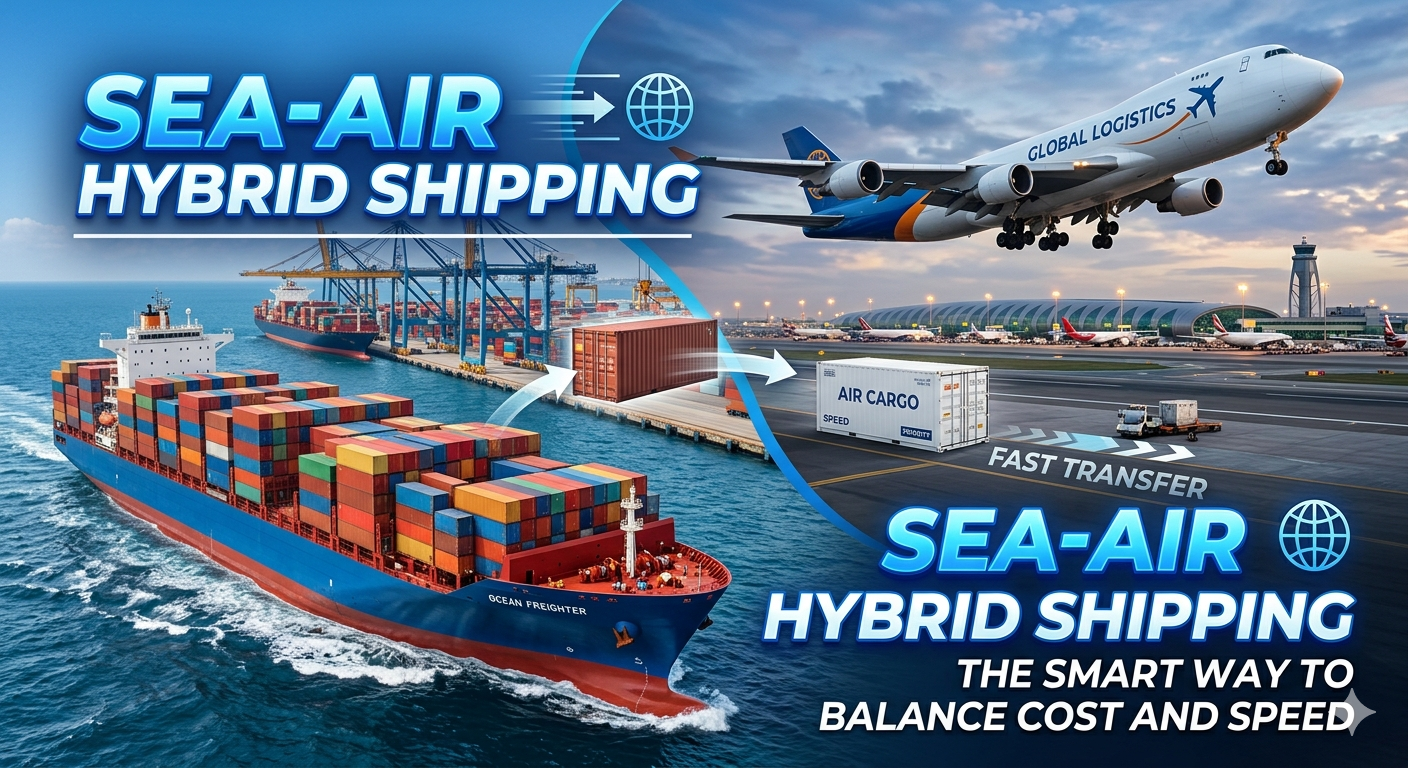
Sea-Air Hybrid Shipping is a logistics method that uses both ocean and air transportation to move goods from the origin to the final destination. Typically, cargo begins its journey by sea because ocean transportation offers lower rates for long-distance movement. After reaching a strategically located transit hub, the shipment is transferred to an aircraft for the remaining journey.
This combination provides businesses with a faster alternative to traditional ocean freight without the full expense of transporting an entire shipment by air.
Balancing Cost and Delivery Speed
One of the biggest advantages of sea-air shipping is its ability to balance cost and speed. Ocean transportation generally has lower per-unit costs, making it suitable for moving large volumes of goods. However, businesses may not want to wait for the longer transit times associated with ocean freight.
By moving the first part of the journey by sea and completing the final portion by air, companies can reduce overall transportation costs while achieving faster delivery. This makes Sea-Air Hybrid Shipping particularly attractive for businesses managing international supply chains.
Ideal for E-Commerce and Global Businesses
E-commerce companies often need to maintain a balance between affordable logistics and fast customer delivery. Delayed shipments can affect customer satisfaction, reviews, and repeat purchases.
Sea-air shipping can help e-commerce brands move inventory between international markets more efficiently.
Businesses can use air freight services for the time-sensitive portion of their supply chain while relying on ocean transportation for the longer, less urgent segment.
This approach can be especially useful for seasonal merchandise, fashion products, electronics, consumer goods, and other products where timing is important.
Reducing Logistics Costs
Transportation expenses can have a significant impact on business profitability. Using air freight for an entire shipment may not be financially practical, especially for bulky or high-volume cargo.
Sea-air shipping allows companies to use air transportation selectively. Instead of paying premium air freight rates for the complete journey, businesses can combine different freight services to create a more economical transportation plan.
Experienced logistics providers can evaluate shipment size, destination, deadlines, and budget to determine whether a hybrid solution is appropriate.
Improving Supply Chain Flexibility
Modern supply chains must adapt quickly to changing customer demand, inventory requirements, and international market conditions. Sea-Air Hybrid Shipping provides additional flexibility by giving businesses another transportation option between conventional ocean and air freight.
A reliable logistics partner can coordinate carriers, documentation, customs procedures, cargo transfers, and tracking across multiple transportation modes. This simplifies the process and improves shipment visibility.
Conclusion
Sea-Air Hybrid Shipping offers businesses a smart way to manage the competing priorities of cost and speed. By combining the affordability of ocean transportation with the faster delivery capabilities of air transportation, companies can create a more balanced and flexible logistics strategy.
For e-commerce brands, importers, exporters, and global businesses, combining air freight services with other freight services can help control transportation costs while maintaining competitive delivery times. As international supply chains continue to evolve, sea-air shipping can be a valuable solution for businesses looking to improve efficiency and customer satisfaction.