
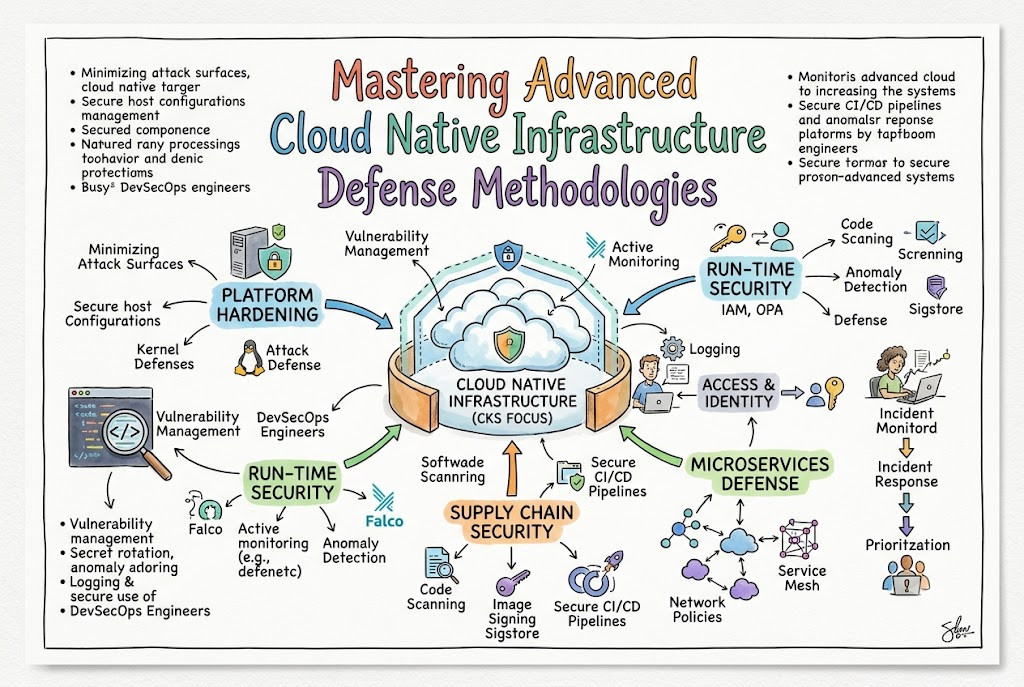
Deploying highly resilient container architectures presents complex operational challenges, prompting infrastructure protection teams to prioritize the Certified Kubernetes Security Specialist (CKS) framework. Systems engineers, site reliability architects, and engineering directors utilize this comprehensive roadmap to secure cloud-native environments from code compilation through live operations. Because contemporary application delivery environments scale dynamically, traditional boundary security measures no longer offer sufficient coverage. Modern deployment cycles require engineering teams to inject declarative validation policies directly into automated software workflows. Evaluating this framework provides technical professionals with deep architectural context, helping them scale core competencies, reinforce microservices, and protect corporate data assets.
What is the Certified Kubernetes Security Specialist (CKS)?
The Certified Kubernetes Security Specialist (CKS) serves as the benchmark validation tier for engineering professionals managing container ecosystem defense. This purely performance-driven assessment validates an engineer's capability to safely isolate container workloads, lock down control planes, and intercept active system exploits. While standard certification exams rely on multiple-choice questions, this process requires candidates to solve complex configuration problems inside real, multi-node compute clusters. Candidates fix live configuration bugs, close firewall gaps, and implement strict identity boundaries under active time constraints. Emphasizing practical, production-level engineering execution ensures that credential holders can successfully shield complex enterprise platform architectures from modern digital threats.
Who Should Pursue Certified Kubernetes Security Specialist (CKS)?
Platform architects, security operations analysts, and infrastructure automation specialists achieve significant professional advantages by mastering this advanced curriculum track. Software developers aiming to implement zero-trust application parameters also find these infrastructure hardening methodologies incredibly beneficial. While junior administrators use these skills to establish reliable production baselines, principal engineers utilize them to govern multi-region compliance operations. Technology directors and cross-functional leadership teams also leverage this framework to evaluate systemic security postures and manage digital risk profiles effectively. Throughout global engineering organizations and within India's rapid cloud innovation sectors, corporations aggressively recruit specialists who hold these verified skills.
Why Certified Kubernetes Security Specialist (CKS) is Valuable and Beyond
Modern enterprise infrastructure relies completely on declarative automation frameworks, expanding the digital entry vectors that malicious actors regularly target. Acquiring the Certified Kubernetes Security Specialist (CKS) capabilities ensures that an engineer can proactively strip vulnerabilities away before infrastructure goes live. Because the training concentrates on core open-source container architecture principles, these skills survive even when superficial commercial software utilities change. Companies routinely dedicate significant capital budgets to secure talent capable of blocking major systemic data breaches and regulatory compliance failures. Consequently, professionals who master these disciplines gain long-term architectural relevance, unlocking exceptional career longevity and high-value technical opportunities.
Certified Kubernetes Security Specialist (CKS) Certification Overview
DevOpsSchool organizes and delivers this specialized technical track, aligning all course outcomes with contemporary enterprise infrastructure security requirements. Candidates face a rigorous, terminal-based simulation that challenges their problem-solving speeds and systems diagnostic capability across multi-tenant environments. Global open-source technology consortiums maintain the examination blueprints, updating specific parameters regularly to counter newly discovered software exploitation vectors. The practical syllabus tests engineers on structural elements ranging from API endpoint protection to supply-chain container provenance verification. Overcoming these diagnostic obstacles demonstrates that a platform expert possesses the rigorous, practical capabilities required to operate safe cloud-native systems.
Why Choose DevOpsSchool
DevOpsSchool designs fully interactive, sandbox-driven learning pathways that prepare modern engineering teams for the realities of live production troubleshooting. The organization replaces generic instructional slide decks with immersive, failure-injection laboratories that perfectly mimic actual system outages and configuration conflicts. Expert instructors bring decades of active systems engineering experience to the program, providing deep operational context that standard documentation omits. Furthermore, the platform delivers continuous educational iterations, robust community support networks, and extensive practice materials to ensure comprehensive skill acquisition. Selecting this educational hub allows professionals to transcend simple test preparation and cultivate true architectural engineering mastery.
Certified Kubernetes Security Specialist (CKS) Certification Tracks & Levels
The platform protection pathway scales progressively from initial cluster setup safety up to professional policy governance and advanced kernel-level isolation. Dedicated tracking systems allow engineers to customize their educational journey to match their precise daily job functions, such as site reliability or enterprise data compliance. The foundational phase anchors basic access permissions, whereas the intermediate tier focuses on implementing complex software-defined networking policies and cluster access controls. The highest specialist level, directly addressed by this curriculum, mandates deep runtime behavior analysis, supply-chain verification, and advanced system auditing. This structured technical hierarchy allows enterprise managers to map engineering skills directly to complex infrastructure challenges.
Complete Certified Kubernetes Security Specialist (CKS) Certification Table
| Track | Level | Who it’s for | Prerequisites | Skills Covered | Recommended Order |
|---|---|---|---|---|---|
| Cloud Security | Foundation | System Administrators | Basic Linux Skills | Container Basics, Linux Security | First |
| Platform Defense | Professional | DevOps Engineers | Kubernetes Admin Skills | Network Policies, RBAC, Storage | Second |
| Advanced Hardening | Advanced | DevSecOps Engineers | Core Cluster Administration | Runtime Analysis, Supply Chain | Third |
Detailed Guide for Each Certified Kubernetes Security Specialist (CKS) Certification
Certified Kubernetes Security Specialist (CKS) – Advanced Level
What it is
This credential validates an individual's advanced engineering capacity to lock down container nodes, isolate control planes, and intercept operational system threats.
Who should take it
Senior platform engineers, cloud infrastructure auditors, and operations specialists who manage business-critical container installations require this deep validation.
Skills you’ll gain
-
Blocking unauthorized API server access using granular role-based permissions models.
-
Segregating sensitive pod networks via custom software-defined networking rules.
-
Monitoring real-world behavior anomalies inside live container runtimes using Falco alerts.
-
Hardening underlying operating system kernels with custom AppArmor and seccomp configurations.
-
Aggregating cluster transaction records to track configuration modifications and access events.
Real-world projects you should be able to do
-
Restructure an insecure corporate staging cluster to completely isolate competing engineering teams.
-
Engineer an automated image scanning gateway that kills non-compliant container deployment attempts.
-
Deploy continuous telemetry agents that surface zero-day binary execution attempts inside active namespaces.
Preparation plan
-
7–14 days strategy: Memorize the structural syntax of standard authorization templates, basic admission controllers, and ingress routing rules.
-
30 days strategy: Build localized practice environments, break core container networking components manually, and implement open-source logging systems.
-
60 days strategy: Take timed practice examinations repeatedly, troubleshoot complex configuration errors under pressure, and optimize terminal command efficiency.
Common mistakes
-
Wasting valuable simulation minutes trying to repair minor minor typos instead of moving forward.
-
Forgetting to generate local configuration file backups prior to initiating comprehensive cluster upgrades.
-
Writing overly restrictive firewall rules that inadvertently sever critical internal database connections.
Best next certification after this
-
Same-track option: Advanced Cloud Security Architecture Specialist.
-
Cross-track option: Site Reliability Engineering Professional.
-
Leadership option: DevSecOps Enterprise Engineering Director.
Choose Your Learning Path
DevOps Path
Engineers following this path prioritize the injection of automated validation utilities directly into continuous integration workflows. They work to eliminate manual compliance roadblocks, allowing development teams to ship software quickly while maintaining high safety standards. Professionals master the deployment of source code code-scanners, automated configuration linters, and baseline image verification software. This roadmap creates versatile engineers who maintain delivery speed while protecting the integrity of the release pipeline.
DevSecOps Path
This track emphasizes shifting defensive controls entirely to the beginning of the engineering lifecycle, managing infrastructure exclusively via audited code. Teams implement automated declarative configuration policies that immediately reject non-compliant infrastructure definitions before provision events happen. Engineers focus on immutable operating systems, secret management platforms, and continuous automated configuration compliance audits. This curriculum produces professionals who transform security policies into reusable, software-driven architecture rules.
SRE Path
Site reliability engineers focus on keeping system availability high while enforcing strict security constraints across distributed cloud infrastructure. This track explores how heavy defensive measures like encryption-in-transit impact system throughput, transaction latency, and cluster compute budgets. Engineers build automated incident response routines, manage automated certificate rotation systems, and orchestrate graceful failover schemes during active security challenges. The path creates engineers who treat defensive failures as critical reliability issues requiring systemic code fixes.
AIOps Path
Technical professionals on this route use advanced machine learning systems to manage and interpret huge rivers of system logs. They replace fragile, human-written alerting rules with dynamic behavioral models that can spot microscopic system anomalies before failures happen. Engineers construct automated data ingestion networks, configure streaming telemetry filters, and train alerting algorithms to identify distributed threat indicators. This specialization fits forward-thinking infrastructure experts who want to apply algorithmic intelligence to modern system monitoring.
MLOps Path
This specialized framework concentrates completely on protecting machine learning model lifecycles, distributed data lakes, and heavy GPU processing networks. Engineers learn to insulate training environments from data contamination, secure model serving endpoints, and monitor data processing pipelines for manipulation attempts. The track solves unique infrastructure challenges like adversarial attacks and unauthorized model extraction within shared container platforms. It bridges the gap between raw data processing requirements and strict enterprise security guardrails.
DataOps Path
Data operations experts focus their efforts on defending large-scale processing engines, distributed storage layers, and real-time streaming systems. The primary goal centers on maintaining user data privacy, implementing fine-grained database access controls, and masking sensitive fields dynamically. Engineers learn how to insulate massive analytical workloads inside multi-tenant environments without destroying data throughput speed or query performance. This specialization remains essential for teams managing large amounts of heavily regulated customer data.
FinOps Path
This curriculum unites deep cloud security configurations with programmatic asset optimization and infrastructure cost management techniques. Engineers analyze how defensive configurations—such as persistent network inspections or verbose logging layers—affect monthly cloud infrastructure bills. The focus remains on designing lean, highly defensive architectures that protect digital assets without creating massive cloud resource waste. This track fits optimization-focused engineers who want to manage both system defense and infrastructure spending.
Role → Recommended Certifications
| Role | Recommended Certifications |
|---|---|
| DevOps Engineer | Certified Kubernetes Administrator, Cloud Platform Security Specialist |
| SRE | Site Reliability Professional, Container Performance Specialist |
| Platform Engineer | Certified Kubernetes Security Specialist, Service Mesh Specialist |
| Cloud Engineer | Multi-Cloud Infrastructure Associate, Cloud Architecture Expert |
| Security Engineer | Certified Kubernetes Security Specialist, Advanced Penetration Tester |
| Data Engineer | Data Pipeline Security Specialist, Distributed Storage Architect |
| FinOps Practitioner | Cloud Financial Optimizer, Infrastructure Resource Manager |
| Engineering Manager | DevSecOps Leadership Professional, Agile Infrastructure Director |
Next Certifications to Take After Certified Kubernetes Security Specialist (CKS)
Same Track Progression
Mastering advanced container platform hardening prepares professionals to tackle deeper specializations within the enterprise security landscape. This progression requires engineers to explore advanced zero-trust network setups, multi-cluster service mesh management, and centralized cryptographic key management solutions. Expanding expertise within this path guarantees that an individual remains the definitive architectural authority for high-risk cloud deployments.
Cross-Track Expansion
Broadening career capabilities involves moving horizontally into adjacent structural fields such as high-availability site reliability engineering or distributed big data orchestration. Learning to optimize massive compute platforms while working under strict security boundaries makes an engineer exceptionally valuable to modern enterprises. This horizontal growth prevents technological siloes, helping experts solve problems that connect multiple engineering disciplines simultaneously.
Leadership & Management Track
Stepping into technology leadership requires engineers to shift focus away from individual terminal configurations toward designing global corporate risk mitigation strategies. Professionals master international data compliance laws, resource optimization models, and methods for fostering collaboration across engineering and security business units. This transition prepares top-tier technical individual contributors to assume executive roles such as Director of Platform Engineering or Chief Information Security Officer.
Training & Certification Support Providers
The Core Platform Authority
DevOpsSchool operates as an essential foundational pillar within the international technology education ecosystem, providing highly technical, production-aligned training programs. The institution focuses completely on delivering practical skills, helping engineers move past basic theoretical concepts to build real operational competence. Their broad catalog covers cloud-native system design, automated delivery pipelines, and extensive cloud security frameworks, making the company a trusted partner for major corporate upskilling programs. By maintaining rigorous, quality-driven training formats, they ensure that every student finishes their course with the practical skills needed to handle tough real-world infrastructure challenges.
DevOpsSchool delivers an incredibly detailed, immersive training environment that mirrors real corporate production environments and actual operational workflows. The platform hosts intensive technical bootcamps, structured certification tracks, and advanced sandboxed testing environments that force students to solve live infrastructure errors. This comprehensive methodology ensures that technology professionals acquire the genuine technical depth needed to execute meaningful digital architecture updates.
Cotocus provides highly customized, role-specific cloud and container safety courses built to match the workflows of modern engineering groups. The organization focuses on immediate project readiness, empowering teams to secure their running environments right after finishing the class. Their intensely practical training style makes them an excellent choice for businesses looking for rapid, high-impact technical education.
Scmgalaxy functions as a leading community resource hub and education platform for version control, automated build systems, and continuous delivery specialists. The group provides deep technical insights into source code management, continuous integration systems, and container deployment defense techniques. Their massive learning libraries offer continuous value to technical professionals throughout their career paths.
BestDevOps designs straightforward, highly focused educational programs that clarify complex automated systems concepts for working technology professionals. The school highlights high-impact learning paths, enabling engineers to master crucial automation utilities quickly without wasting time on unneeded theory. Their practical instructional methods help people earn elite technical credentials efficiently.
devsecopsschool.com hosts targeted educational tracks that focus specifically on integrating defensive security measures directly into traditional development and operations lifecycles. The site helps companies dissolve operational siloes by teaching engineers how to write automated security policies into active deployment streams. Their materials remain vital for compliance-driven technology teams.
sreschool.com concentrates its educational resources entirely on site reliability engineering paradigms, covering system availability, automation, incident management, and telemetry monitoring. The coursework helps engineers architect resilient, self-healing platforms that stay stable under massive traffic loads or severe infrastructure shocks. It serves as an ideal home for engineers managing critical apps.
aiopsschool.com leads the training sector in teaching engineering teams how to apply machine learning models and artificial intelligence to complex infrastructure operations data. The classes cover automated system anomaly detection, predictive outage analysis, and advanced log parsing across large enterprise environments. Their modules help firms move from reactive fire-fighting to proactive operations management.
dataopsschool.com provides advanced training built to help professionals construct, secure, and manage large-scale data engineering streams and distributed storage clusters. The system teaches data teams how to enforce user privacy, govern complex workflows, and guarantee high data quality. Their courses support companies navigating complex data protection laws.
finopsschool.com meets the rising enterprise demand for cloud cost management by teaching engineers how to control cloud spending without losing application performance. The platform helps technology teams collaborate with finance departments to establish clear fiscal accountability across all cloud platforms. Their training remains vital for firms looking to maximize infrastructure investments.
Frequently Asked Questions (General)
-
How much more difficult is a live performance-based examination compared to standard multiple-choice tests?
Hands-on infrastructure challenges present a much higher difficulty level because they eliminate simple guessing strategies. You must understand exact command-line tool syntax, show fast diagnostic habits, and repair live systems correctly under a ticking clock.
-
What amount of weekly preparation time do you recommend to pass an advanced infrastructure exam?
Most engineers who already understand basic system administration spend six to twelve weeks preparing for the assessment. This path requires dedicating at least two hours every day to practicing hands-on commands inside personal lab environments.
-
Must I complete specific foundational administration certificates before attempting advanced security paths?
Yes, candidates need a complete, operational understanding of core cluster setup, basic container runtimes, and standard Linux network configurations. Jumping into advanced tracks without these building blocks usually leads to confusion and exam failure.
-
What concrete career upgrades can I expect after earning a performance-based security credential?
Engineers frequently secure rapid promotions into senior platform positions, enjoy greater technical authority inside their firms, and receive higher compensation offers. Modern corporations seek these credentials out to satisfy the compliance demands of their enterprise clients.
-
How regularly do cloud-native steering committees update their official certification examination environments?
The testing platforms and curriculum syllabus change multiple times each year to keep up with the latest open-source software releases. This aggressive refresh cycle ensures that your validated skills match current real-world enterprise engineering needs.
-
Can application developers extract meaningful value from pursuing advanced cluster security paths?
Yes, software developers learn exactly how container systems run their application code, which helps them write safer software from the start. This systemic knowledge eliminates common deployment mistakes and saves days of late-stage troubleshooting work.
-
What happens if a student mistakenly breaks the entire testing environment during a live exam?
You must use your own diagnostic skills to read system logs, find the configuration error, and restore the core cluster services manually. This high-pressure recovery process perfectly matches the real-world incidents that platform engineers face every day.
-
Is it wiser to specialize deeply in one cloud system or collect broad certificates across multiple platforms?
Mastering one valuable ecosystem completely before moving horizontally into secondary cloud systems creates a much stronger professional foundation. True architectural expertise demands deep technical capability rather than a surface-level overview of multiple different platforms.
-
Do these advanced infrastructure credentials grant lifetime validity once you pass the exam?
Most top-tier cloud-native certificates expire after two or three years to force professionals to keep up with changing technology standards. Maintaining your active status requires passing the updated version of the exam or finishing continuing education units.
-
How do hiring teams check the validity of my performance-based infrastructure credentials?
Employers use secure online badge verification systems provided directly by the credentialing authority to confirm that your status is active. This direct verification system stops resume fraud completely and proves that you have authentic technical capabilities.
-
Should technical engineering managers spend their time pursuing these deep hands-on certifications?
While managers do not write terminal commands daily, passing these tests helps them make intelligent, data-backed architectural choices. This process also earns deep technical respect from their engineering teams and helps them interview new technical talent accurately.
-
What sort of computer hardware do I need to build realistic multi-node training labs at home?
A laptop or desktop with a modern multi-core processor and at least sixteen gigabytes of system memory handles personal labs easily. You can use lightweight open-source virtualization utilities to run complete multi-node setups without buying expensive hardware.
FAQs on Certified Kubernetes Security Specialist (CKS)
-
Which prerequisite certificate must you actively maintain before you can book the CKS examination?
You must hold a completely valid, active Certified Kubernetes Administrator (CKA) credential before the system allows you to sit for the security specialist test. The booking system checks this requirement automatically before confirming your exam date.
-
What open-source software utilities must engineers master to clear the runtime security portion of the exam?
Candidates need deep operational experience with behavioral monitoring platforms like Falco, alongside host protection features like AppArmor profiles and seccomp filters. You must know how to construct and deploy these rule configurations inside running nodes.
-
Does the CKS testing environment allow candidates to search the internet for help during the exam?
The testing interface lets you open one extra browser tab to view the official online documentation pages of the open-source project. The system completely blocks general search engines, community discussion forums, and external code hosting sites.
-
How much weight does the CKS grading system place on container supply-chain security tasks?
Vulnerability analysis, image footprint shrinking, and container supply-chain security tasks account for roughly twenty percent of the final exam grade. You must know how to identify compromised software layers and block unsafe deployments automatically.
-
Must candidates know how to execute manual upgrades on components inside a broken cluster?
Yes, upgrading core control plane elements forms a major pillar of the exam, requiring perfect command execution to protect cluster state. You must upgrade key binaries smoothly while preserving existing security profiles across the entire system.
-
Will minor syntax errors in my YAML configuration files cause me to fail the CKS exam questions?
The automated grading software checks only whether your cluster works correctly, meaning a minor syntax error can cost you all points for that task. Running built-in configuration check tools before saving changes is an essential exam strategy.
-
Which specific API admission control features appear most frequently within the CKS test syllabus?
You must know how to configure Pod Security Standards, enforce NodeRestriction access rules, and deploy validating admission webhooks across the cluster API. The exam regularly tests your ability to run these tools at the cluster entrance.
-
Can you retake the CKS examination for free if your first attempt misses the passing score?
Standard exam registrations provide one complimentary retake opportunity if your initial score lands below the official passing mark. This policy offers an excellent way to get used to the intense testing environment without losing your investment.
Final Thoughts: Is Certified Kubernetes Security Specialist (CKS) Worth It?
Securing the Certified Kubernetes Security Specialist (CKS) credential demands significant dedication, but the professional return on investment makes this path exceptionally rewarding. As global enterprises migrate critical operations to container environments, the market increasingly rewards engineering professionals who can build resilient, self-healing defense pipelines. This hands-on validation proves to peers, clients, and engineering leaders that you can remediate live infrastructure vulnerabilities under real production conditions. Choosing this advanced training path equips you with the battle-tested competencies required to lead cloud transformations, command top-tier compensation, and secure a prominent role in the engineering landscape.