
Thinking about getting your D1 minibus training and licence? It’s exciting. A new skill, new opportunities, and more freedom behind the wheel. But there’s something that often doesn’t get talked about enough: your health and medical fitness. When it comes to obtaining or renewing a D1 licence in the UK, the DVLA applies strict medical standards because you’re responsible not only for yourself, but also for your passengers and everyone else on the road.
Let’s discuss the kinds of medical conditions that could affect your application and what you need to know to prepare confidently.
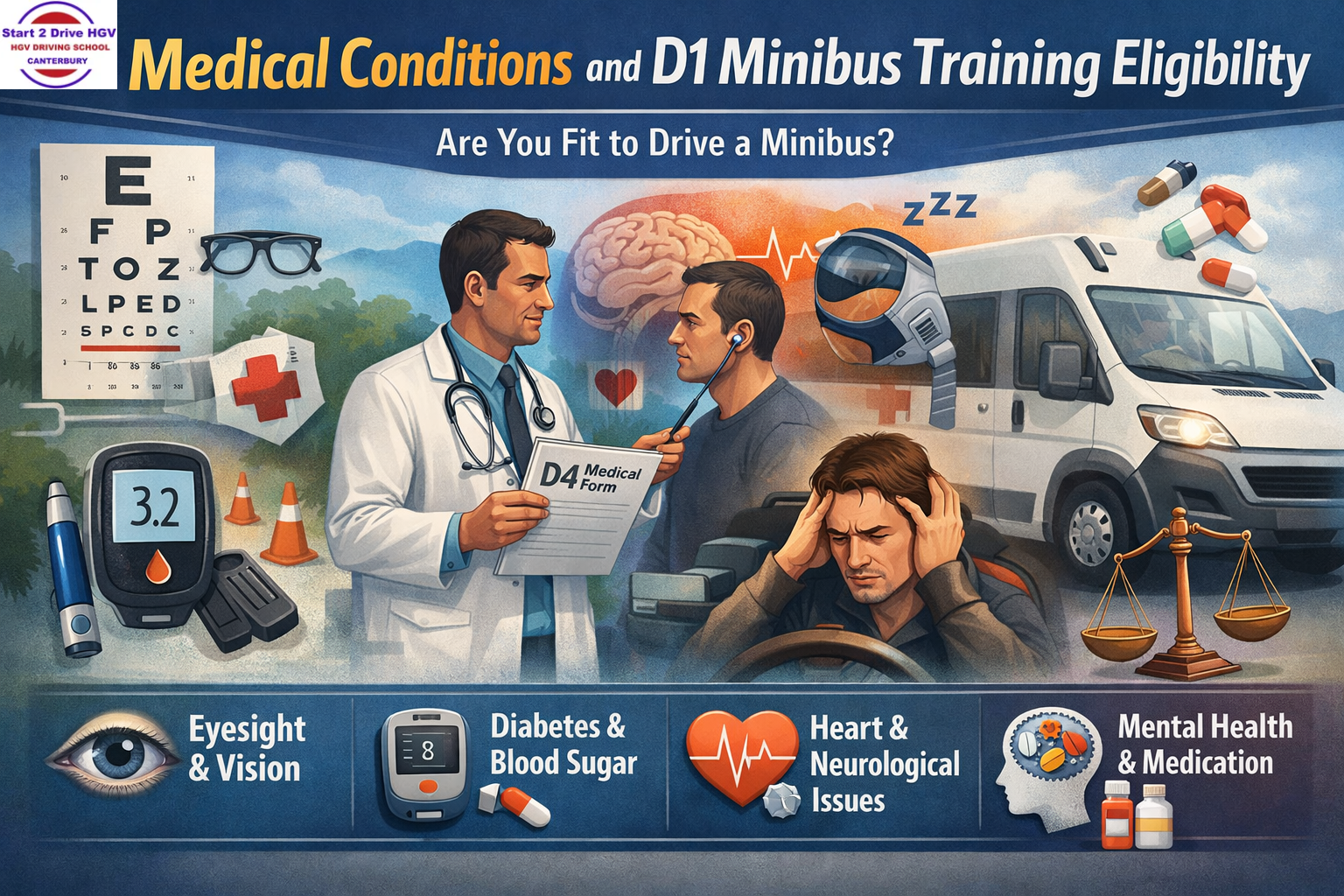
How the DVLA Views Medical Fitness for D1 Licences
When you apply for a minibus licence, the DVLA requires you to meet Group 2 medical standards. These are far stricter than the ones for ordinary car licences. Driving a minibus requires greater sustained attention and control. You’ll need to complete a D4 medical form, usually signed by a doctor, confirming that you are fit to drive.
In simple terms, your health plays the central role in your eligibility, and for a good reason.
Common Conditions That Could Affect Your Eligibility
Here are some of the key areas where medical issues can influence whether your D1 licence application succeeds:
Eyesight and Vision
Clear vision is very important for a D1 minibus training. You must meet a higher standard of visual acuity and field of vision that ensures safe driving of larger vehicles like minibuses. If your eyesight can’t be corrected adequately with glasses or lenses, this could impact your licence eligibility.
Diabetes and Blood Sugar Control
If you’re insulin-dependent or use certain glucose-lowering treatments, you must declare this on your medical. Recent UK guidance even allows Continuous Glucose Monitoring (CGM) systems during driving, but there are clear rules about when your blood sugar is too low to be safe on the road.
Heart, Neurological, and Sleep Issues
Conditions such as heart disease, recent cardiac events, neurological disorders, and obstructive sleep apnoea (which can cause fatigue behind the wheel) may require further assessment or treatment before the DVLA approves your licence.
Mental Health and Medications
Certain psychiatric conditions or the effects of prescription drugs that cause dizziness, slowed reactions, or cognitive impairment can also affect eligibility. It’s critical to be honest with your doctor and the DVLA. Concealing information could endanger lives and invalidate your licence.
Failing to declare a medical condition that affects safe driving can cost you your licence, lead to insurance invalidation, and even result in legal penalties. The DVLA insists that the safest path is always transparency and medical clearance. The medical check isn’t there to scare you; it’s there to protect you and everyone you share the road with.
If you’re serious about your D1 minibus training and want to ensure a smooth, stress-free application experience, it’s worth getting everything in order before you book your tests and training slots. For tailored guidance and support on your journey towards a successful D1 licence, including help to navigate medical requirements, reach out to Start 2 Drive HGV Driving School. Visit start2drive-hgv.co.uk to get started today!