
Why Charlotte Businesses Trust EazyDTF for Their Printing Needs
The Benefits of Using DTF Transfers for Your Apparel Business
By EazyDTF · 2026-07-30
Tom ran a small custom apparel shop in Charlotte, a city buzzing with youth sports leagues, brewery teams, and corporate events. One Tuesday, the Queens University ultimate frisbee club walked in needing 18 jerseys with a four-color logo, 13 different names, and mismatched numbers. The deadline was Friday. With traditional screen printing, the setup fees alone for that many small runs would have eaten his profit. Worse, the polyester blend jerseys risked dye migration during the curing process. He needed a solution that was fast, cost-effective, and reliable. That week, Tom switched his entire short-run workflow to DTF transfers, and it transformed how he did business.
Key Takeaways
- DTF eliminates screen setup costs, making short runs of 1-50 pieces profitable for custom shops.
- The low-temperature application prevents dye migration on polyester, ideal for sports uniforms.
- A local Charlotte provider removes shipping delays and allows for on-demand, inventory-free production.
- Properly pressed DTF transfers offer 50+ wash durability, comparable to high-end screen printing.
- DTF supports full-color, high-opacity designs on dark fabrics without complex separations or underbases.
How Much Can You Save on Small Orders with DTF?
The most immediate financial benefit of DTF transfers is the elimination of setup costs. Every screen printed job carries a fixed cost for screen creation, emulsion, and setup time, typically $30 to $60 per color. For a standard two-color design, that is $60 to $120 before a single shirt is printed. With DTF transfers, there is zero setup. You pay only for the transfer itself. This fundamentally changes the economics of small batch orders.
Consider a typical order for 10 t-shirts featuring a two-color logo. With screen printing, the cost calculation might look like this: $45 screen setup per color (total $90) plus $8 per shirt ($80), bringing the total to $170. That is $17 per shirt. The same order using custom DTF transfers might cost $10 per completed transfer applied to the shirt, totaling $100. You save $70 and the per-unit cost is lower across the board. The breakeven point for screen printing typically occurs somewhere between 40 and 60 shirts per design, depending on the number of colors. Below that threshold, DTF is consistently more economical. For a Charlotte shop catering to small teams and local businesses, where orders routinely hover between 6 and 24 pieces, this cost structure makes DTF transfers a clear financial winner.
Of course, screen printing retains advantages for very large runs. If a customer orders 500 single-color shirts, the per-unit cost of screen printing will be significantly lower than DTF. But for the diverse, low-volume orders that define the custom apparel market in Charlotte, DTF provides a flexibility that screen printing simply cannot match. You take on less inventory risk because you can print on demand, and you never have to turn away a small order because the setup fee would be cost-prohibitive.
Can DTF Transfers Handle Complex Sports Team Uniforms?
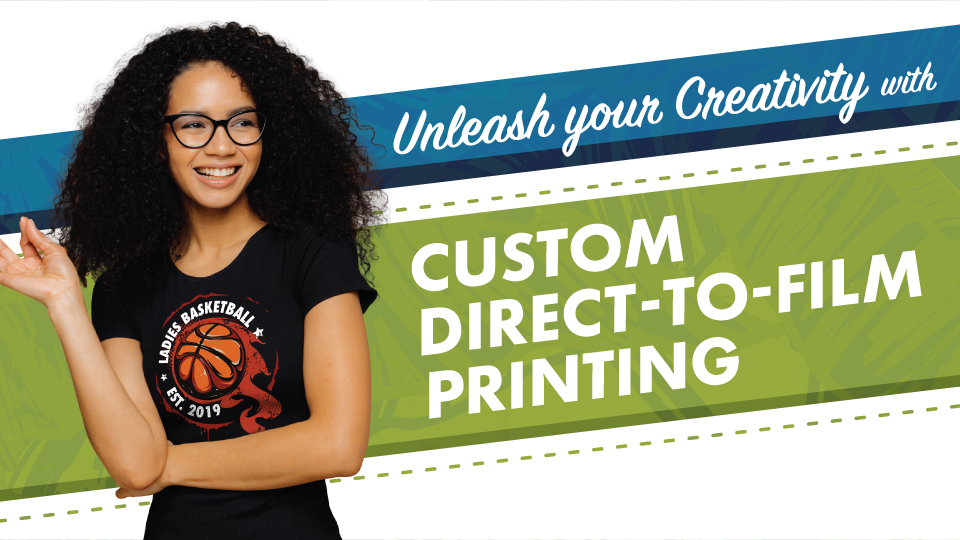
Sports teams in Charlotte, from the YMCA youth leagues to the Charlotte Rugby Club, demand vibrant, durable graphics on performance fabrics. This is an area where DTF transfers excel. The technology behind DTF uses a white ink base layer topped with CMYK colors, all encapsulated in a hot melt adhesive powder. This construction creates a highly opaque, full-color graphic that pops on any fabric color, from white cotton to black spandex.
Tackling Dye Migration on Polyester Performance Gear
One of the biggest headaches for screen printers is dye migration on polyester. When you heat cure standard plastisol ink on polyester at 320°F or higher, the dye in the fabric can vaporize and bleed into the ink, causing a ghosted, discolored image. DTF transfers solve this problem at the chemical level. The transfer is pressed onto the garment at a lower temperature, typically 320 to 340°F, and for a shorter duration. This lower thermal load does not trigger the sublimation of polyester dyes. The result is a crisp, bright image that stays true to color, wash after wash. For a supplier of durable DTF transfers for sports teams, this technical advantage is often the deciding factor for teams that require nylon and polyester uniforms.
High Opacity on Dark Jerseys Without an Underbase
In screen printing, printing a vibrant image on a dark shirt requires a white underbase layer, which must be printed and flashed separately before the color layers are applied. This nearly doubles the press time. DTF handles this in a single print pass. The white ink layer is applied directly to the PET film before the color layers, and the entire composite is transferred to the garment in one press. This means a bright pink or neon green logo on a black jersey is just as vivid as it would be on a white one, with no additional production steps.
Streamlining Your Workflow with On-Demand DTF Production
Speed is the currency of the custom apparel business. A quick turnaround time builds customer loyalty and allows you to charge a premium for rush orders. DTF transfers streamline the production workflow dramatically compared to screen printing.
The Print-to-Press Workflow Explained
The process is surprisingly simple. A design file is sent to a DTF printer, which lays down CMYK and white ink onto a special PET film. A hot melt adhesive powder is then applied to the wet ink, shaken off, and cured in an oven. The result is a finished transfer that can be stored indefinitely. When an order comes in, the operator places the transfer on the garment, presses it at exactly 325°F for 12 seconds with medium-heavy pressure, and peels it cold or warm depending on the film type. The entire process, from receiving the file to having a finished shirt, can take less than 20 minutes. Compare that to screen printing, where designing and exposing screens alone takes an hour, and it is easy to see why many Charlotte shops use DTF for their core short-run production.
“We had a corporate order for 45 embroidered-look polo shirts come in at 2 PM,” says a local Charlotte print shop owner. “The customer needed them by 5 PM the same day. With DTF, we printed the transfers, pressed them onto the polos, and had them shipped to the office by 4:30. Screen printing would have been physically impossible to turn around that fast. DTF made us look like heroes.”
This speed does not sacrifice quality. Modern DTF films and powders produce a soft hand feel that is competitive with high-end screen printing. The transfers are thin and flexible, conforming to the fabric without cracking. For a shop targeting the custom apparel market in Charlotte, the ability to say “yes” to a last-minute order and deliver on time builds a reputation for reliability that translates into repeat business and referrals. The on-demand nature also means you can test new designs with zero inventory risk, printing only what sells. If a design flops, you are not stuck with 50 shirts in storage. That freedom to experiment is a hidden advantage for any apparel business using UV DTF transfers Charlotte.
Why DTF Transfer Quality Holds Up Wash After Wash
One common concern is whether the transfers will crack or peel after a few washes. The hot melt adhesive used in DTF creates a strong mechanical bond with the fabric fibers. Unlike heat transfer vinyl, which sits on top of the fabric, DTF powder melts into the weave during pressing. The result is a print that stays flexible and withstands repeated laundering. A properly cured DTF transfer can endure 50 or more wash cycles without significant fading or edge lifting. For teams that wash jerseys weekly, that durability is essential. When you partner with a reputable durable DTF transfers for sports teams, you also get consistent powder application and film quality, which directly affects longevity.
- Setup costs zero, making one-offs profitable
- Press temperature low, preventing dye migration
- Opaque on dark fabric without extra layers
- Turnaround time under 20 minutes per shirt
- 50+ wash durability with proper application
Is DTF Worth It for Your Charlotte Shop?
DTF transfers are not a universal replacement for screen printing, but for the mixed bag of orders a typical Charlotte apparel business receives, they fill a gap that screen printing cannot economically address. Low minimums, fast turnaround, and full-color capability on any fabric make DTF an essential tool. Whether you are printing for a high school marching band, a brewery run club, or a corporate picnic, DTF lets you deliver professional results without the upfront investment of screens and presses. The key is finding a reliable local DTF provider who understands the specific needs of your market and can supply consistent, durable transfers that uphold your shop’s reputation.
Frequently Asked Questions
Can DTF transfers be applied to 100% polyester jerseys without bubbling?
Yes, because the lower press temperature (around 325°F) avoids the vaporization point of polyester dyes. The transfer adheres well without forming bubbles, provided you use a quality powder and press evenly.
How many shirts can one DTF printer produce per hour?
A standard single-head DTF printer can output roughly 40 to 60 transfers per hour, depending on image size and ink coverage. The limiting factor is often the powder application and curing oven speed, not the printer itself.
What is the minimum order quantity for custom DTF transfers?
Most DTF providers accept orders as small as one single transfer. This is radically different from screen printing, where you typically need 12 to 24 pieces per design to justify the setup.
Do DTF transfers feel stiff or rubbery on lightweight t-shirts?
No, modern DTF films and powders produce a soft hand feel that is very close to screen printed ink. The key is using a low‑micron powder and pressing with the correct temperature and time.
Can I use a regular heat press or do I need a special machine for DTF?
Any standard heat press capable of reaching 320–350°F with even pressure will work. A 15×15 inch swing‑away press is ideal, but even a clamshell press can produce excellent results as long as the platen is clean and the temperature is accurate.