

Shoulder Hump:
The large dorsal hump distinguishes brown bears from other species. The hump contains muscles that add strength and power to the forelimbs.
S.Fatalis : Absent
U.Arctos : Present
Edge : U.Arctos
Scapula Width Index:
Scapula width/forelimb length (Humerus+Radius+Metacarpal III).Higher score Indicates greater relative size of surface area for attachment of muscles involved in stabilizing the shoulder joint during arm movements(supraspinatus,infraspinatus, subscapularis).
S.Fatalis : 25%
U.Arctos : 27%
Edge : U.Arctos
Scapula Length Index:
Scapula length divided by Forelimb length(Humerus+Radius+Metacarpal III).Higher score Indicates greater speed of movement via relative proportions of components of the proximal forelimb as well as exertion of greater force from the forelimb.
S.Fatalis : 35%
U.Arctos : 30%
Edge: S.Fatalis
API:
Acromion process length/forelimb length(Humerus+Radius+Metacarpal III).Higher score in this ratio increases attachment for the deltoid muscle.
S.Fatalis : 2%
U.Arctos : 6%
Edge : U.Arctos
SMI:
Deltopectoral crest length divided by humerus length. Higher score Displays greater mechanical advantage of deltoid and pectoral muscles at the shoulder joint.
S.Fatalis : 64%
U.Arctos : 72%
Edge : U.Arctos
HRI:
It is humerus mediolateral diameter at mid-shaft/humerus length. Robust forelimb bones protect the animal from violent stresses during grappling.
S.Fatalis : 13%
U.Arctos : 11%
Edge : S.Fatalis
HRI2:
It is humerus anteroposterior diameter at mid-shaft/humerus length. Robust forelimb bones protect the animal from violent stresses during grappling.
S.Fatalis : 15%
U.Arctos : 12%
Edge : S.Fatalis
HCMI:
It is Humeral circumference/articular length Often-used variable in analyses of bone strengths in locomotion. The higher the ratio is, the thicker the Humeral bone is.
S.Fatalis : 34%
U.Arctos : 34%
Edge : Draw
HEI:
The HEI index measures the relative size of wrist stabilizing muscles and well as several grasping muscles in area which facilitate prey grasping such as m. extensor digitorum communis, m. extensor digitorum lateralis, m.flexor digitorum superficialis, m. palmaris longus,and m. flexor digitorum profundus. These muscles also likely help stability, pushing, and agility when legs are on ground.
S.Fatalis : 33%
U.Arctos : 30%
Edge : S.Fatalis
HTI:
It's Humeral trochlear length/Humeral length. Higher score increases muscle attachement on the elbow joint and allows for more ulnohumeral flexion and extension.
S.Fatalis : 21%
U.Arctos : 21%
Edge : Draw
Brachial Index:
This measures radius length/humerus length. Lower scores in this ratio indicate greater forelimb muscle mechanical advantage and results in stronger muscles all else being equal.
S.Fatalis : 79%
U.Arctos : 86%
Edge : S.Fatalis
Brachial Index 2:
This measures ulna length/humerus length. Lower scores in this ratio indicate greater forelimb muscle mechanical advantage and results in stronger muscles all else being equal.
S.Fatalis : 100%
U.Arctos : 96%
Edge : U.Arctos
Forelimb Proportion Index:
Length of proximal forelimb relative to length of distal forelimb ((Scapula length + Humerus length)/(Radius length + Metacarpal length)).Higher score Indicates greater degree of morphological specialization for producing large out-forces in the forelimb.
S.Fatalis : 160%
U.Arctos : 162%
Edge : U.Arctos
OI:
This metrics estimates tricep muscle strength. High values indicate greater ability to push with arms all else being equal. This helps a grappling cat hold prey and also helps a canid push and knock down an opponent. In addition, higher values may indicate greater stability and ability to change direction in a fight as well as greater relative mechanical advantage of the triceps brachii anddorsoepitrochlearis muscles used in elbow extension.
S.Fatalis : 24%
U.Arctos : 20%
Edge : S.Fatalis
URI:
It is ulna mediolateral diameter at mid-shaft/humerus length. As mentioned above for humerus robusticity, Robust forelimb bones protect the animal from violent stresses during grappling.
S.Fatalis : 10%
U.Arctos : 6%
Edge : S.Fatalis
URI2:
This measures ulna anteroposterior diameter at midshaft divided by ulna length. As mentioned above for humerus robusticity, a robust ulna resists stresses on bones during fights and increases resistance to bites to the forelimb.
S.Fatalis : 12%
U.Arctos : 10%
Edge : S.Fatalis
BBL:
The biceps brachii leverage index measures the strength in flexing and supinating the forearm,a behavior crucial to prey grappling.
S.Fatalis : 20%
U.Arctos : 16%
Edge : S.Fatalis
RRI:
This measures radius mediolateral diameter at midshaft divided by radius length. As mentioned above for humerus robusticity, a robust radius resists stresses on bones during fights and increases resistance to bites to the forelimb.
S.Fatalis : 12%
U.Arctos : 11%
Edge : S.Fatalis
RRI2:
This measures radius anteroposterior diameter at midshaft divided by radius length. As mentioned above for humerus robusticity, a robust radius resists stresses on bones during fights and increases resistance to bites to the forelimb.
S.Fatalis : 8%
U.Arctos : 6%
Edge : S.Fatalis
MANUS:
Manus digit 3 proximal phalanx length divided by metacarpal 3 length.Higher score Indicates greater relative proportions of proximal and distal elements of the manus and size of the palmar surface.
S.Fatalis : 52%
U.Arctos : 55%
Edge : U.Arctos
CLAW:
Manus digit three terminal phalanx length divided by pes digit three terminal phalanx.Higher score is to be expected in species whose claws are more capable of breaking soil.
S.Fatalis : 117%
U.Arctos : 136%
Edge : U.Arctos
Foot Posture:
All else being equal, species that are able to adopt plantigrade foot posture, such as bears,badgers, wolverines, many rodents, spider monkeys, and great apes, should be able to apply greater free moments to the ground than species that are restricted to digitigrade or unguligrade foot posture. Relative to digitigrade foot posture, plantigrade posture improves performance in lateral striking, lateral pushing, downward striking,forward pushing and rearward pulling.
S.Fatalis : Semi-Plantigrade
U.Arctos : Plantigrade
Edge : U.Arctos
Studies Used For The Above Comparison :
https://bmcbiol.biomedcentral.com/articles/10.1186/1741-7007-10-60
https://onlinelibrary.wiley.com/doi/abs/10.1111/evo.12904
https://www.researchgate.net/publication/5538150_How_to_Build_a_Mammalian_Super-Predator
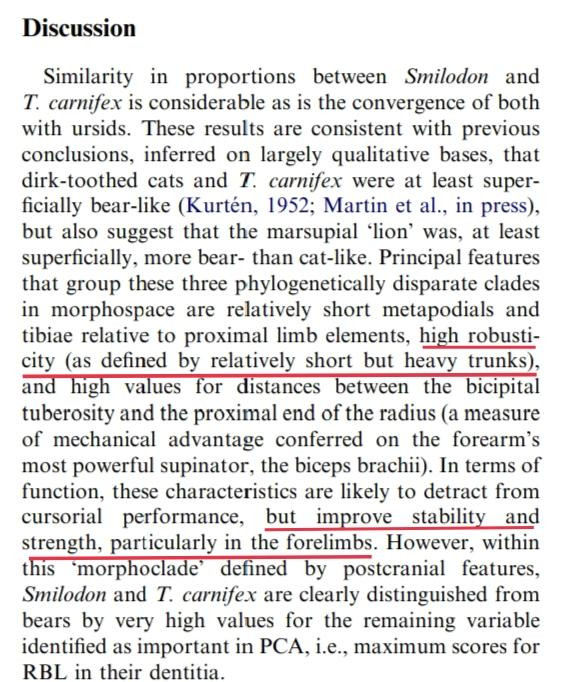
As you can see, the Sabertooth Cat had relatively longer scapulae, more robust humeri,wider epicondyles,longer olecrana,greater biceps brachii leverage,thicker radii and ulnae while the Brown Bear has a shoulder hump with proportionally wider scapulae, larger deltopectoral crests,acromion processes,greater forelimb proportions, more efficient metacarpals, longer claws and better foot posture. Smilodon Fatalis also owned shorter heavier trunks which would help improve its strength and stability as explained here :

https://www.researchgate.net/publication/5538150_How_to_Build_a_Mammalian_Super-Predator
Each has its own advantages so the outcome would mostly depend on the weight difference. Assuming that Smilodon averaged around 250 kg as seen here :
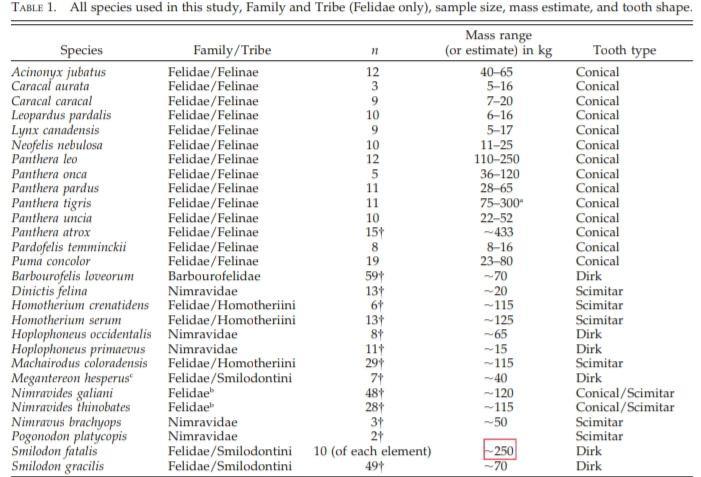
It would definitely win against the much smaller 145 kg Inland Grizzly from South-Western Yukon but would in turn be defeated by the much Bigger 357 kg Brown Bear from the Alaska Peninsula :

https://www.researchgate.net/publication/346908204_Brown_Bear_Ursus_arctos_North_America
If we take a 270 kg Ussuri Brown Bear which isn't much heavier than Smilodon Fatalis on average :

https://www.researchgate.net/publication/273261226_Tooth_breakage_in_tigers_cause_for_conflict
The outcome won't be certain, although the Cat could emerge victorious thanks to its stronger back and forelimbs, but that wouldn't be an easy victory !