

Passion and expression in music evolved dramatically in the Romantic era. Learn about the innovations that shaped Romantic music's emotionalism and individualism.
The Romantic period in music history, spanning the late 18th to mid-19th centuries, marked a dramatic stylistic shift emphasizing expressive, emotional music. Composers sought to break free of restrictive Classical-era forms to forge deeply personal styles reflecting their inner psyches. Music took on new importance as an art form profoundly resonant with human experience.
|
Romantic Music Themes |
Key Genres |
Major Composers |
|
|
Emotional expression, individualism |
|
Beethoven, Schubert, Chopin, Liszt, Wagner, Verdi |
|
|
Imagination, passion |
Song cycles, character pieces, virtuoso performing |
Berlioz, Brahms, Mahler, Schumann |
|
|
Nature, supernatural, exoticism |
Spectacle, music-drama, expanded orchestras, chromaticism |
Delibes, Dvorak, Tchaikovsky |
Defining Musical Romanticism
Romanticism across all art forms was a reaction against the rigid rules and orderliness of the Enlightenment and Classical eras. Whereas Classical music valued structural clarity and emotional restraint, Romantic composers pursued freely expressive, emotionally rich music. They aimed to stir the senses and unleash imagination through harmony, orchestration, and form.
Romantic music is characterized by:
- Conveying intense personal expression and emotion
- Celebrating creative individualism
- Exploring the mystical, supernatural, and sensual
- Drawing inspiration from folk music, legends, medieval tales
- Interest in the awe-inspiring and exotic
There was a new emphasis on music's ability to represent the full range of human experience, dramatic narratives, and profound ideals. Music became a vehicle for unpacking imagination.
Philosophical Underpinnings
The Romantic movement was shaped by several key philosophies:
- Transcendentalism: Belief in spiritual truths beyond reason and intellect. Music could express "cosmic spirituality."
- Individualism: The inner self and subjective experience took precedence over social duties. Music became personal self-expression.
- Nature Worship: Reverence for the beauty and power of nature. Pastoral depictions of nature entered music.
- Gothic Revival: Interest in the supernatural, melancholy, mysterious, and medieval. Evoked in ghostly music.
- Nationalism: Promoting one's unique folk heritage and language. Use of national legends, poetry, and folk tunes.
Characteristics of Romantic Music
Romantic music expanded on Classical traditions with:
- Prominent melodies and lyricism - Sweeping long-breathed melodies became central. Schubert's lieder are great example of employing eloquent vocal lines.
- Rich harmonies - Chromaticism and dissonance conveyed tension and strong emotions. Chopin used daring unresolved harmonies.
- Lush orchestrations - Composers greatly expanded instrumental palettes for a wider dynamic range and tonal colors. Exotic instruments were sometimes used for effect.
- Intimate forms like art songs grew in popularity next to large symphonies and operas. Songs setting poetry for voice and piano captured personal expressions.
- Virtuosic demands on instrumental soloists showed off their technical skills and individuality. Showpiece music for the piano also grew rapidly.
- Music as an experience rather than pure "absolute music." Extra-musical narratives, drama, and poetry-informed works.
Melody and Lyricism
Long, elegant vocal melodies were a hallmark of Romantic music. Composers took inspiration from bel canto opera singing emphasizing beautiful legato phrasing. Tuneful melodies that were easy to hum became more desirable than complex polyphony.
Instrumental melodies also grew longer and more lyrical. For example, the opening of Tchaikovsky's Violin Concerto has a soaring romantic melody. These sweeping themes conveyed a sense of yearning and longing.
Harmony
Classical harmony focuses on diatonic chords and conventional cadences. Romantic composers used more chromatic harmonies and wandering key centers to add color and ambiguity.
They also used daring unresolved dissonances to build tension. Delayed resolutions created feelings of desire, mystery, and uncertainty. Chords themselves took on color associations - minor for melancholy, diminished for darkness, major for joy.
Orchestration
Romantic orchestras expanded with more woodwinds like bassoons and English horns for richer textures and tonal colors. Composers began specifying expanded percussion sections too.
Lush string textures were widely used. Composers divided violins into more independent parts to simultaneously play melodies, countermelodies, and harmonies. They also used the divisi technique splitting other sections like cellos and violas.
Huge dramatic climaxes were achieved by combining expanded forces together. Berlioz's Symphonie Fantastique called for over 90 players to portray an opium hallucination musically.
The Art Song Emerges
The 19th century saw immense interest in art songs - short accompanied songs setting romantic poetry to music. Songs were self-contained musical journeys expressing single ideas or moments.
German leaders were extremely popular. Composers like Schubert produced hundreds of songs elucidating the poetry through creative piano accompaniments and evocative vocal lines.
Song cycles, collections of songs tied by theme or narrative, also developed. They traced experiences like love, loss, adventure, or nature. Robert Schumann's song cycles directly paralleled themes from romantic poetry.
Songs became a fixture of middle-class musical life. Amateurs would gather to sing and play piano transcriptions of popular lieder and arias.
Poetry and Music
Romantic songs established the musical interpretation of poetry as an esteemed art form. Song settings were like musical translations of poems.
Some leading Romantic poets inspired song settings:
- Johann Wolfgang von Goethe - Nature, individualism, drama
- Heinrich Heine - Love, longing, sadness
- Joseph von Eichendorff - Nature, spirituality
- Wilhelm Müller - Unrequited love, loss
Over 600 composers tried setting Goethe to music. Schubert's settings like "Gretchen am Spinnrade" are renowned for capturing the poem's mood.
Short strophic forms gave way to continuous through-composed songs following the poetic narrative. Piano interludes conveyed scene changes.
Lieder and Song Cycles
Some major Romantic lieder composers include:
- Franz Schubert - Wrote over 600 lieder and pioneered the genre. Famous cycles include Die schöne Müllerin and Winterreise.
- Robert Schumann - Completed over 250 songs and major cycles like Dichterliebe and Frauenliebe und leben.
- Johannes Brahms - Wrote around 380 songs including his famous Magelone Romanzen.
- Hugo Wolf - Composed hundreds of songs with highly sophisticated piano accompaniments.
Song cycles unified groups of lieder into musical narratives, often following a central protagonist through stages of love or loss. Schumann's Dichterliebe depicts the agony of rejected love through Heine's poetry. Benefits of Performing in Recitals The importance and benefits of participating in musical recitals.
Piano Music in the Romantic Era
The piano rose to prominence as a common fixture of middle-class homes. Composers turned to the piano to showcase their creativity and talents.
Virtuoso composer-pianists like Liszt, Chopin, Schumann, and Brahms composed showpieces requiring advanced technique. They expanded piano technique to create orchestral sonorities, drama, and rich poetic expression.
Short lyrical piano character pieces and miniatures conveying specific moods or scenes also gained popularity. These genres included:
- Nocturnes (dreamy night pieces)
- Waltzes
- Preludes
- Mazurkas
- Moment Musicaux
Piano design expanded with innovations like metal frames for greater resonance and fully chromatic keyboards. This expanded virtuosic possibilities.
The Piano Virtuoso
Virtuoso pianist-composers became stars giving sold-out public recitals. Audiences were excited by their daring speed, drama, and technical mastery. Some leading virtuosos included:
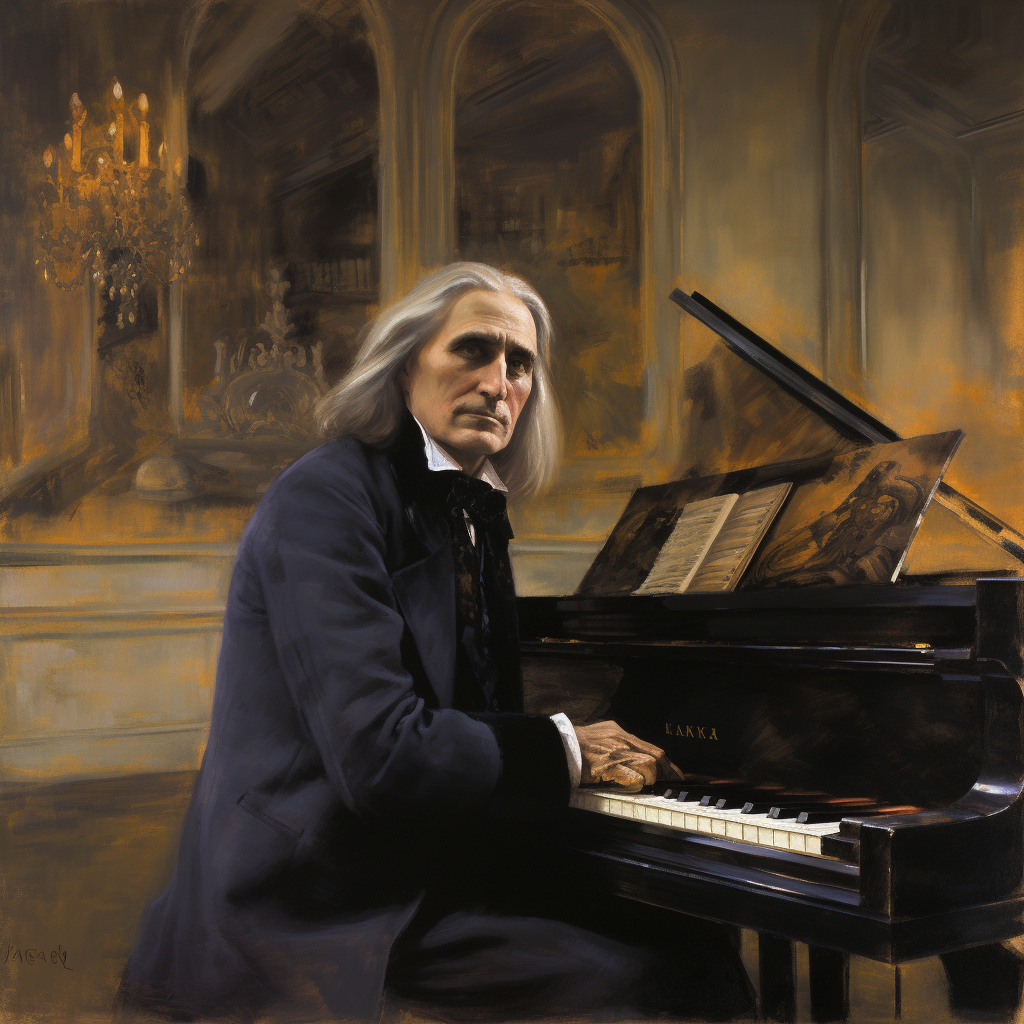
- Franz Liszt - Legendary for his scintillating technique and showmanship.
- Frederic Chopin - Specialized in lyrical miniatures capturing Polish dance rhythms like mazurkas.
- Clara Schumann - One of the few female virtuosos. Renowned for her interpretations of romantic piano literature.
- Johannes Brahms - Possessed robust technique paired with musical intellect.
- Anton Rubinstein - Russian piano virtuoso famed for thunderous volume and power.
Romantic pianism expanded new techniques like rapid repeated notes, wide-spanning arpeggios, extended trills, and dramatic leaps across the keyboard.
Parlor Music
In middle-class homes, families would gather around the piano singing or listening to arrangements of popular melodies, excerpts from opera/symphonies, light character pieces, and dance music. This accessible "parlor music" was designed for amateur players.
Music publishers distributed sheet music for piano transcriptions and song arrangements to be performed at home. Romantic parlor pieces were generally less difficult, shorter, and more intimate than virtuoso concert works.
Opera and Ballet Take New Directions
Opera remained a major musical outlet. Grand Romantic operas used immense orchestras and choruses to portray lavish spectacles, supernatural scenes, and medieval legends in music.
German composers Carl Maria von Weber and Richard Wagner exemplified this approach with operas like Der Freischütz and Lohengrin. The latter was part of Wagner's ambitious Ring Cycle reflecting German mythology.
Italian opera also continued developing with Giuseppe Verdi adding psychological depth to traditional Italian opera through works like Rigoletto and La Traviata.
Ballet transformed from mere entertainment into an expressive art form. Romantic ballet used music to convey stories, characters, and intent through dance. Composers like Delibes, Tchaikovsky, and Adam specially composed ballets portraying colorful narratives.
Grand Opera
French and Italian opera remained focused on vocal display and dazzling spectacle. Plots were loosely cobbled together to provide context for arias showcasing singers.
Lavish sets, costumes, choruses, ballet sequences, and staging effects were expected. Audiences went to be seen and delighted rather than engaged emotionally.
Major composers of the Grand Opera include Giacomo Meyerbeer, Gaetano Donizetti, Gioachino Rossini, and Vincenzo Bellini. Their works stocked opera repertoires for decades.
Opera Reform
Some composers pushed for opera reforms creating coherent drama-driven works. They opposed shallow spectacle and vocal acrobatics alone. Opera was envisioned as a completely integrated music-drama.
German composer Richard Wagner was the most influential reformer pioneering the Gesamtkunstwerk or "total artwork." He sought unity of words, music, drama, and staging to immerse audiences completely.
Ballet
Ballet evolved beyond mere divertissement into an expressive genre. Premiers of new ballets became major cultural events. Ballet epitomized the romantic quest to fuse arts into complete experiences.
Pioneering choreographers and composers included:
- Adolphe Adam-Giselle, one of the earliest Romantic ballets
- Léo Delibes - Coppelia, Sylvia
- Pyotr Ilyich Tchaikovsky - Swan Lake, Sleeping Beauty, Nutcracker
Romantic ballet conveyed stories, characters, and intent through music and movement. Dancers became revered stars expressing themes through technique and artistry. Discover engaging methods to motivate young musicians in their daily practice routines. Ideas for Young Students That Encourage Daily Music Practice
The Symphony Transformed

Beethoven radically transformed the symphony genre by using it as a vehicle for profound personal expression. His nine symphonies expanded length, emotional scope, and structural experimentation as never before.
Later Romantic symphonists continued expanding the genre's scale and expressive capacity. Berlioz and Mahler called for enormously expanded orchestras to achieve their musical visions. The typical four-movement format also became more flexible.
National styles emerged as composers wove native folk songs and dance rhythms into symphonic works. This included using Polish mazurka and polonaise rhythms (Chopin), Hungarian verbunkos fiddling (Liszt), and Czech dance music (Dvorak, Smetana).
Beethoven's Legacy
Ludwig van Beethoven's nine symphonies marked a turning point for the genre. His explosive Third Symphony, Eroica, shattered conventions with its monumental 50-minute scope and brooding C-minor mood.
The Ninth Symphony added a chorus and soloists for a choral finale of unprecedented scale. Beethoven brought a radical new vision of the symphony as a life-affirming personal testament.
After Beethoven
Later composers felt they could never match Beethoven's achievement. Some reactions included:
- Focusing on other genres (Brahms, Chopin)
- Seeking novel orchestral effects (Berlioz, Liszt)
- Turning to national styles (Dvorak, Grieg)
- Pursuing absolute music (Brahms, Bruckner)
Yet the symphony remained a prestigious form allowing composers to make grand philosophical statements in music.
Later Symphonists
Some important later Romantic symphonists:
- Hector Berlioz - Favored dazzling effects like offstage bands and massed instrumentation up to 200 players or more.
- Franz Liszt - Experimented with thematic transformation across one continuous symphonic movement rather than separate sections.
- Johannes Brahms - Blends Romantic passion with Classical structure in four symphonies. Extremely rigorous and intellectual.
- Anton Bruckner - Lengthy symphonies in Wagnerian style layered with religious mysticism.
- Gustav Mahler - Huge epic symphonies incorporating song, opera, and philosophies of existence.
Conclusion

Musical Romanticism opened new realms of expressivity and imagination through innovation in form, harmony, and instrumental colors. It marked a profound evolution in how music conveys human experience.
The Romantic spirit continues influencing music today through film scores, fantasy imagery in lyrics, and musical storytelling. Its passions live on in the heart of all music seeking to move our emotions and spirits.
Let me know if you want me to expand or modify any other aspects of this draft. Please provide any feedback before finalizing the full blog post. I aimed to enrich it with more details and examples while retaining the original style and tone.
Frequently Asked Questions
What was musical Romanticism?
Musical Romanticism was a movement emphasizing expressive, dramatic music that conveyed intense emotions and imaginative themes. It was a reaction against the rigid structures of Classical era music.
How did Romantic music differ from earlier styles?
Romantic music featured long lyrical melodies, richer chromatic harmonies, lush orchestrations, virtuosic piano music, intimate songs, spectacular operas, ballets, and symphonies on a grander scale.
Who were some major Romantic composers?
Leading Romantic composers included Beethoven, Schubert, Chopin, Liszt, Wagner, Verdi, Berlioz, Brahms, and Mahler. Each had an individual composing style.
What forms were typical of Romantic music?
Common Romantic-era genres included art songs, piano character pieces, symphonies, opera, and ballet. Forms like song cycles were also pioneered.
What influenced and shaped musical Romanticism?
Romantic music was influenced by literary movements and philosophies like transcendentalism, Gothic revivalism, nationalism, and individualism.
How did Romantic composers innovate in their music?
Romantic innovations included expanded orchestras, chromatic harmony, programmatic elements, music-drama ideals, virtuosic performing, and expressing literary/visual arts in music.
What was the legacy of musical Romanticism?
Romanticism shaped how Western classical music developed and left a legacy that still influences film music, musical fantasy elements, and expressive individuality in later music.