
Walking into a hot tub store for the first time is not a retail errand in the usual sense. It is closer to a technical consultation mixed with a design and service evaluation. Unlike purchasing an appliance or outdoor furniture, buying a hot tub involves long-term electrical planning, water chemistry management, structural installation, and ongoing service dependency. Understanding what actually happens inside a professional showroom eliminates uncertainty and protects buyers from making decisions based on surface-level impressions.
For anyone searching for the best hot tubs and spas, a store visit should clarify three things: whether the products are engineered for longevity, whether the pricing aligns with actual performance, and whether the hot tub suppliers behind the showroom are capable of supporting the product for years after installation.
The First Interaction Sets the Tone of the Entire Experience
A credible showroom does not begin with pricing boards or sales literature. The first conversation should focus on how the spa will be used, not what it costs. Expect to be asked about who will use the tub, how frequently it will be occupied, whether the goal is relaxation, hydrotherapy, or social use, and where the spa will be installed. Electricity access, climate exposure, and space limitations should all be discussed before any model is recommended.
When a store immediately pushes discounted models or “limited stock offers,” it indicates a volume-driven sales approach rather than a performance-driven consultation. Reputable hot tub suppliers treat the first discussion as technical profiling, not closing strategy.
The Showroom Layout Reveals the Supplier’s Priorities
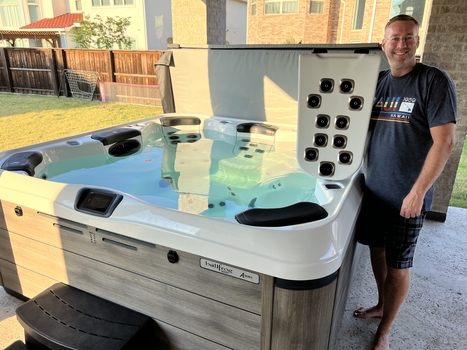
Well-operated hot tub stores organize their showroom by performance category rather than by visual appeal alone. Compact urban models, family-sized spas, and high-therapy systems are typically displayed in distinct zones. This layout allows direct comparison of seating depth, shell height, insulation density, and hydraulic power.
At this stage, the value of the visit is not the brochure information—it is the physical scale and construction visibility. Cabinet thickness, base support, shell rigidity, and cover weight all communicate more about quality than marketing labels ever will. The best hot tubs and spas feel structurally solid before a single jet is activated.
A cluttered showroom with little technical explanation usually reflects a supplier focused more on inventory turnover than buyer education.
Dry Seating Is Where Most Buyers Make or Break the Decision
Before any wet testing, serious stores insist on dry seating. This is not a formality—it is an ergonomic assessment. Sitting inside multiple empty tubs reveals whether seat depth matches your height, whether the lounge position forces buoyancy forward, and whether the footwell allows natural leg extension without crowding.
Jet power is meaningless if the body cannot stay positioned correctly. Poor seat geometry causes users to float out of alignment, shifting hydrotherapy away from the intended muscle groups. This is the most common reason buyers feel disappointed after installation, even with technically powerful spas.
The best hot tubs and spas are those where the body remains naturally anchored without constant adjustment.
Wet Testing Separates Demonstration From Performance Reality
A showroom that truly stands behind its products will offer scheduled wet testing. This is the only way to evaluate actual hydraulic performance, not theoretical pump capacity. During a wet test, you begin to feel the difference between raw water turbulence and calibrated therapeutic pressure.
What matters here is not jet count, but consistency of pressure across zones, smoothness of flow, and the absence of vibration or cavitation noise. A spa can feel powerful at a single seat yet underperform in multi-user conditions if its pump architecture is poorly balanced.
If wet testing is discouraged or unavailable, it usually indicates that real-world performance does not align with brochure claims.
The Technical Discussion That Most Stores Avoid—but Should Not
Beyond comfort and performance, a serious store visit should include a candid discussion of insulation systems, heating efficiency, and long-term electrical consumption. Energy usage is not speculative; it is dictated by thermal engineering.
You should expect clear explanations of how heat is retained, how plumbing is supported inside the cabinet, and what mechanism protects the spa during winter freeze cycles. These factors determine not only monthly operating cost but also mechanical reliability over time.
Top-tier hot tub suppliers can explain their equipment architecture in plain language. Weak suppliers change the subject when energy efficiency is questioned.
Water Care and Sanitation Are Not Accessories—They Are Core Systems
Another area many buyers underestimate during a store visit is water management. Filtration cycles, circulation pumps, and sanitation systems define both health safety and daily maintenance burden.
A credible consultant will explain how often water turns over, whether circulation is continuous or intermittent, and how ozone or UV systems reduce chemical loading. The difference between a spa that requires constant manual water balancing and one that remains stable for weeks is entirely dependent on this design layer.
The best hot tubs and spas minimize owner intervention without compromising hygiene.
Service Capability Is the Most Ignored Buying Factor
A hot tub is not truly purchased—it is entered into a long service relationship. During your visit, you should observe the service department as carefully as the showroom floor. Ask how many certified technicians the supplier employs, whether parts are stocked locally, and what the typical response time is for warranty calls.
The physical quality of the spa matters, but inaccessible service turns even the best product into a problem. Strong hot tub suppliers explain their service model with the same confidence as they describe their products.
Avoid any store that outsources all technical service without factory-level certification.
How Pricing Is Presented Reveals the Supplier’s Integrity
Transparent pricing includes the spa, cover, delivery, electrical coordination, startup chemicals, and orientation. Ambiguous pricing that grows during final paperwork is a warning sign. A professional store will itemize what is included and what is optional before the buyer ever reaches a commitment stage.
Pricing alone does not identify the best hot tubs and spas. Cost only becomes meaningful when it is aligned with energy efficiency, service support, and structural lifespan.
What a Proper Store Visit Should Ultimately Give You
By the time you leave a reputable hot tub store, you should not feel pressured—you should feel informed. You should understand why one spa costs more than another beyond surface-level features. You should know how it will be powered, how much it will cost to run, how it will be serviced, and how long it is expected to last under real usage.
If you leave with brochures but no technical clarity, the visit failed its purpose.
Final Insight for Buyers
A Hot Tub Store Nearby is not simply a place to “view models.” It is the gatekeeper to your long-term ownership experience. The best hot tubs and spas are not chosen based on appearance or promotions—they are chosen through engineering understanding, ergonomic evaluation, and service credibility.
When hot tub suppliers operate with transparency and technical depth, the buying process becomes predictable and secure. When they do not, even the most attractive spa can become an expensive uncertainty.