
In the ever-evolving landscape of electronics and thermal management, efficient cooling solutions are paramount to maintaining device performance and longevity. Among the most advanced and effective technologies available today is the vapor chamber. This innovative cooling method has revolutionized how heat is dissipated in high-performance electronics, from CPUs and GPUs to power modules and LED lighting.
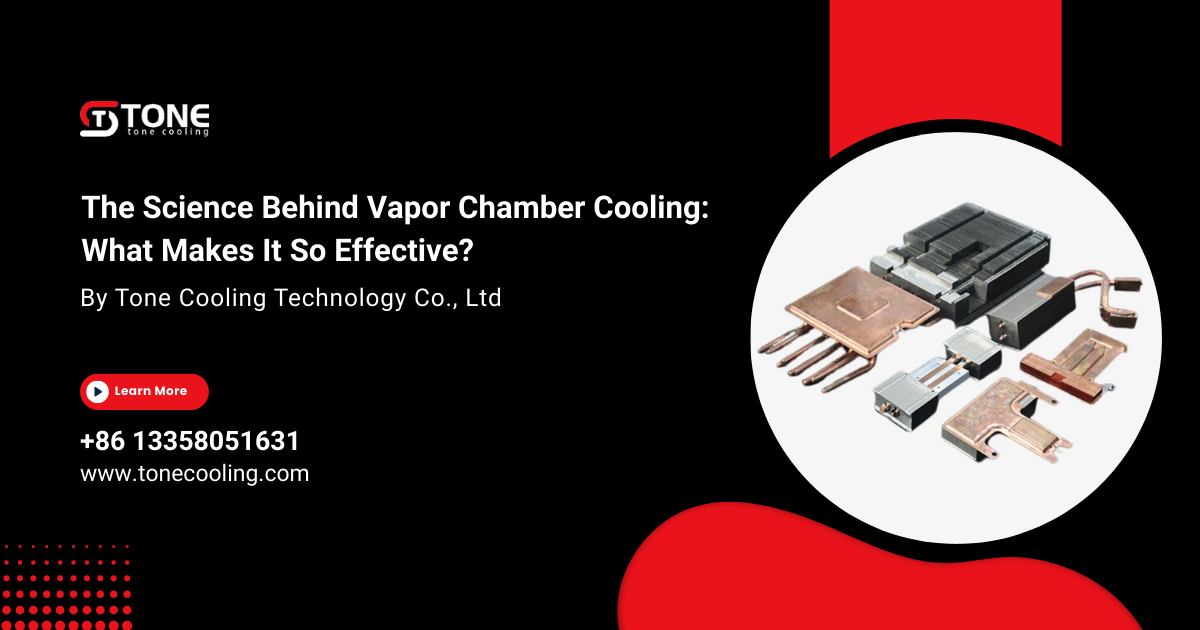
At Tone Cooling Technology Co., Ltd., we specialize in cutting-edge thermal solutions, including state-of-the-art vapor chambers designed to meet the rigorous demands of modern electronics. But what exactly makes vapor chamber cooling so effective? And why is it becoming the preferred choice for engineers and manufacturers worldwide?
In this article, we will delve into the science behind vapor chamber technology, exploring its working principles, advantages, and applications. By understanding the fundamentals, you will appreciate why vapor chambers are a game-changer in thermal management.
What Is a Vapor Chamber?
A vapor chamber is a flat, sealed heat spreader that uses phase-change cooling to transfer heat efficiently. It consists of a hollow metal enclosure—usually made of copper—filled with a small amount of working fluid, such as water. Inside the chamber, a wick structure lines the inner walls, facilitating the movement of fluid.
When heat is applied to one area of the vapor chamber (the evaporator section), the working fluid absorbs this heat and evaporates, turning into vapor. This vapor rapidly spreads throughout the chamber, moving to cooler regions (the condenser section), where it releases heat and condenses back into liquid. The wick then transports the liquid back to the evaporator via capillary action, completing the cycle.
This continuous evaporation-condensation cycle enables the vapor chamber to spread heat evenly and quickly across its surface, significantly outperforming traditional solid metal heat spreaders.
The Science Behind Vapor Chamber Cooling
1. Phase-Change Heat Transfer
The core principle of vapor chamber cooling is phase-change heat transfer. Unlike conduction, which relies on heat moving through a solid material, phase change involves the absorption and release of latent heat during evaporation and condensation.
- Evaporation: When the working fluid absorbs heat, it changes from liquid to vapor, absorbing a large amount of energy without a significant temperature increase.
- Condensation: The vapor releases this energy as it condenses back to liquid, transferring heat to the cooler parts of the chamber.
This process allows vapor chambers to move heat much more efficiently than solid conductors.
2. Capillary Action and Wick Structure
The wick inside the vapor chamber is crucial for returning the condensed liquid to the heat source. Made from sintered metal powder, mesh, or grooves, the wick’s porous structure uses capillary forces to pump the liquid against gravity and across the chamber.
This self-sustaining fluid circulation ensures continuous cooling without the need for external pumps or moving parts.
3. Low Thermal Resistance
Because vapor chambers spread heat via vapor flow rather than conduction alone, they exhibit extremely low thermal resistance. This means heat is transferred quickly and uniformly, preventing hotspots that can degrade electronic components.
Advantages of Vapor Chamber Cooling
Superior Heat Spreading
Vapor chambers distribute heat evenly across their entire surface, allowing attached heat sinks or cooling fins to dissipate heat more effectively. This uniformity is especially important for high-power devices with concentrated heat sources.
Compact and Lightweight
Due to their high efficiency, vapor chambers can be made thinner and lighter than traditional heat spreaders, making them ideal for compact electronics like laptops, smartphones, and ultrathin gaming devices.
Enhanced Reliability
With no moving parts and a sealed design, vapor chambers are highly reliable and resistant to failure modes common in other cooling technologies, such as pump breakdowns or fluid leaks.
Versatility
Vapor chambers can be integrated into various cooling solutions, including air coolers, liquid cold plates, and heat pipe assemblies, providing flexibility across different applications.
Applications of Vapor Chamber Technology
Consumer Electronics
In smartphones, tablets, and laptops, vapor chambers help manage heat from powerful processors and graphics units, enabling thinner designs without compromising performance.
High-Performance Computing
Gaming PCs, servers, and workstations benefit from vapor chambers to maintain stable CPU and GPU temperatures during intensive workloads.
LED Lighting
Vapor chambers improve thermal management in high-power LED modules, enhancing brightness and lifespan.
Power Electronics
Inverters, converters, and IGBT modules use vapor chambers to handle high heat fluxes efficiently, ensuring operational stability.
Tone Cooling Technology Co., Ltd’s Vapor Chamber Solutions
At Tone Cooling Technology Co., Ltd., we design and manufacture vapor chambers tailored to your specific thermal management needs. Our products feature:
- High-purity copper construction for optimal thermal conductivity
- Advanced wick structures optimized for various orientations and heat loads
- Precision manufacturing ensuring flatness and surface finish for excellent contact
- Custom sizes and shapes to fit diverse electronic components
- Our vapor chambers undergo rigorous testing to meet international quality standards, ensuring reliable performance in your applications.
Conclusion
The vapor chamber represents a significant advancement in thermal management technology, combining the physics of phase change with innovative engineering to deliver unparalleled cooling performance. Its ability to spread heat rapidly and evenly makes it indispensable in today’s high-power, compact electronic devices.
At Tone Cooling Technology Co., Ltd., we are proud to offer vapor chamber solutions that empower manufacturers to push the limits of performance while maintaining reliability and efficiency.
For more information on our vapor chamber products and how they can enhance your thermal management strategy, contact us today.
Frequently Asked Questions (FAQs)
1. What working fluids are used inside vapor chambers?
Water is the most common due to its high latent heat and safety, but other fluids like alcohol or refrigerants can be used depending on operating temperatures.
2. How does a vapor chamber differ from a heat pipe?
A vapor chamber is essentially a flat heat pipe with a larger surface area, providing more uniform heat spreading compared to the linear heat transfer of traditional heat pipes.
3. Can vapor chambers be used in any orientation?
Yes, the wick structure enables fluid return regardless of orientation, making vapor chambers versatile for various device layouts.
4. What is the typical lifespan of a vapor chamber?
Vapor chambers are sealed and maintenance-free, often lasting the lifetime of the device they cool, typically 5-10 years or more.
5. Are vapor chambers compatible with liquid cooling systems?
Yes, vapor chambers can serve as cold plates in liquid cooling loops, enhancing heat transfer from the component to the coolant.