
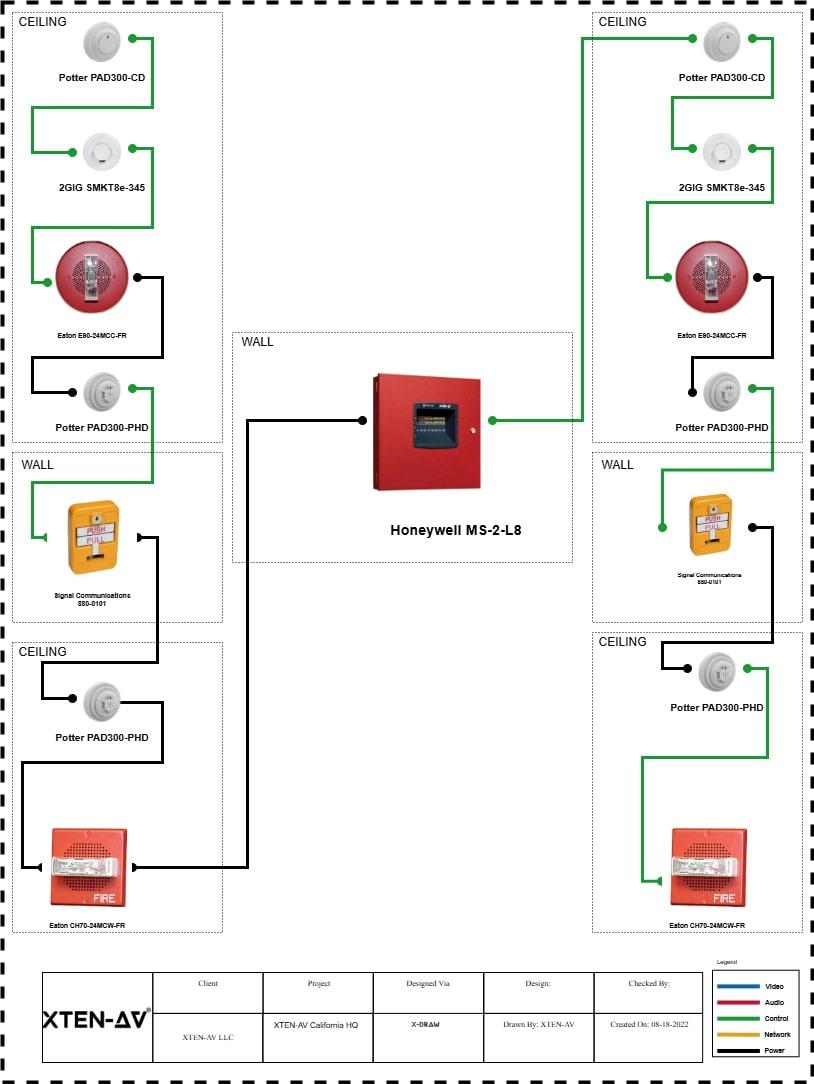
In the world of building safety and fire protection, compliance is not just about meeting codes—it is about saving lives. The National Fire Protection Association’s NFPA 72 standard sets the benchmark for fire alarm systems in the United States, ensuring that design, installation, and maintenance practices meet the highest safety standards. For engineers, contractors, and system designers, meeting NFPA 72 compliance can be complex and time-consuming. However, with the use of advanced Fire Alarm System Design Software, achieving full compliance has become faster, easier, and far more reliable.
The Importance of NFPA 72 in Fire Alarm System Design
NFPA 72, known as the National Fire Alarm and Signaling Code, governs the installation, performance, inspection, and testing of fire alarm systems. It provides specific guidelines that ensure early detection, proper notification, and coordinated response during a fire emergency. From smoke detectors and control panels to notification appliances and power supplies, NFPA 72 covers every component involved in a fire alarm system.
For engineers and contractors, adhering to this standard is not optional—it is mandatory. Non-compliance can lead to project delays, costly redesigns, failed inspections, or even legal repercussions in the event of a fire incident. This is why many professionals now rely on Fire Alarm System Design Software to integrate NFPA 72 guidelines directly into their project workflows.
How Fire Alarm Design Software Simplifies Compliance
Fire Alarm System Design Software has transformed the way professionals approach compliance. Instead of manually checking every device location, wiring detail, or circuit load, the software automates these processes using built-in code libraries, validation tools, and smart design templates. Below are some of the most impactful ways this technology ensures NFPA 72 compliance.
1. Built-in Code Libraries and Standards
Modern design platforms come equipped with NFPA 72 compliance rules embedded into their system logic. These built-in libraries automatically guide the designer to meet spacing requirements, circuit capacity limits, and device placement standards. For example, when a designer places a smoke detector in a room, the software can alert them if the spacing exceeds the NFPA 72 maximum distance limit.
This automation ensures that designs are compliant from the start, reducing the risk of rework or code violations later in the process.
2. Intelligent Device Placement and Spacing Calculations
Fire Alarm System Design Software includes intelligent tools that calculate detector spacing, alarm audibility levels, and notification coverage automatically. Instead of relying on manual measurements and cross-checking, engineers can generate layouts that meet NFPA 72 coverage requirements in minutes.
These automated calculations not only save time but also improve accuracy, helping ensure that every zone and device performs optimally in a fire scenario.
3. Automated Load Calculations and Power Analysis
NFPA 72 compliance requires that all fire alarm power supplies be capable of operating under both alarm and standby conditions. Fire Alarm System Design Software simplifies this by performing automatic load calculations for each circuit and power source.
By analyzing total current draw, battery capacity, and backup duration, the software ensures that all power supplies meet NFPA requirements. This reduces the chance of underpowered systems that might fail during a fire emergency.
4. Comprehensive Documentation Generation
Documentation is a crucial part of NFPA 72 compliance. The standard requires detailed records of system layout, wiring diagrams, equipment lists, and testing documentation. Fire Alarm System Design Software automates the generation of these reports directly from the design files.
Engineers can instantly produce as-built drawings, submittal packages, and compliance reports that are formatted according to NFPA 72 standards. This not only saves hours of manual work but also ensures that documentation is consistent and complete for submission to authorities having jurisdiction (AHJ).
5. Real-Time Error Detection and Validation
One of the most valuable features of modern Fire Alarm System Design Software is its ability to detect compliance errors in real time. As designers build the system, the software continuously validates component connections, device coverage, and voltage drops against NFPA 72 criteria.
This proactive validation prevents design issues from escalating into costly field corrections or failed inspections. It ensures that every part of the system—from detectors to annunciators—meets the exact performance standards required by code.
6. Streamlined Collaboration Between Teams
NFPA 72 compliance requires input from multiple disciplines, including electrical engineers, fire protection consultants, contractors, and inspectors. Fire Alarm System Design Software allows these teams to collaborate in a centralized digital environment.
Through cloud-based platforms, all stakeholders can review the same design, track revisions, and verify code compliance in real time. This integrated approach ensures that compliance issues are identified early and resolved before construction begins.
Benefits of Using Fire Alarm System Design Software for Compliance
Implementing Fire Alarm System Design Software brings several long-term benefits beyond meeting NFPA 72 standards.
-
Reduced Human Error: Automated compliance checks eliminate mistakes caused by manual interpretation of code requirements.
-
Faster Design Turnaround: Built-in templates and smart design tools help engineers create compliant designs in a fraction of the time.
-
Cost Efficiency: Avoiding design revisions, inspection failures, and rework significantly reduces project costs.
-
Improved Documentation Accuracy: Automatically generated reports ensure that all documentation aligns with NFPA 72 guidelines.
-
Enhanced Project Coordination: Cloud-based collaboration keeps everyone aligned and accountable for compliance.
The Future of Compliance in Fire Alarm System Design
As the fire protection industry evolves, NFPA standards continue to be updated to reflect new technologies and best practices. Advanced Fire Alarm System Design Software like those offered by innovators such as XTEN-AV are evolving alongside these standards.
With artificial intelligence and automation now playing a bigger role, software solutions can predict compliance issues, suggest optimal device placement, and even simulate alarm response scenarios. This not only ensures code adherence but also enhances system performance and occupant safety.
Conclusion
Meeting NFPA 72 compliance is one of the most critical responsibilities in fire alarm engineering. Manual methods, while effective in the past, can no longer keep up with the complexity of today’s building systems. By using Fire Alarm System Design Software, engineers and contractors can design with confidence, knowing their systems are compliant, efficient, and ready for real-world challenges.
XTEN-AV continues to lead this transformation, empowering professionals with tools that simplify design, ensure compliance, and enhance safety in every project. With intelligent automation and built-in NFPA 72 validation, the future of fire protection design is not only smarter—it is safer.
Read more: https://webyourself.eu/blogs/1646133/X-DRAW-vs-AutoCAD-for-Fire-Alarm-System-Design-Which