
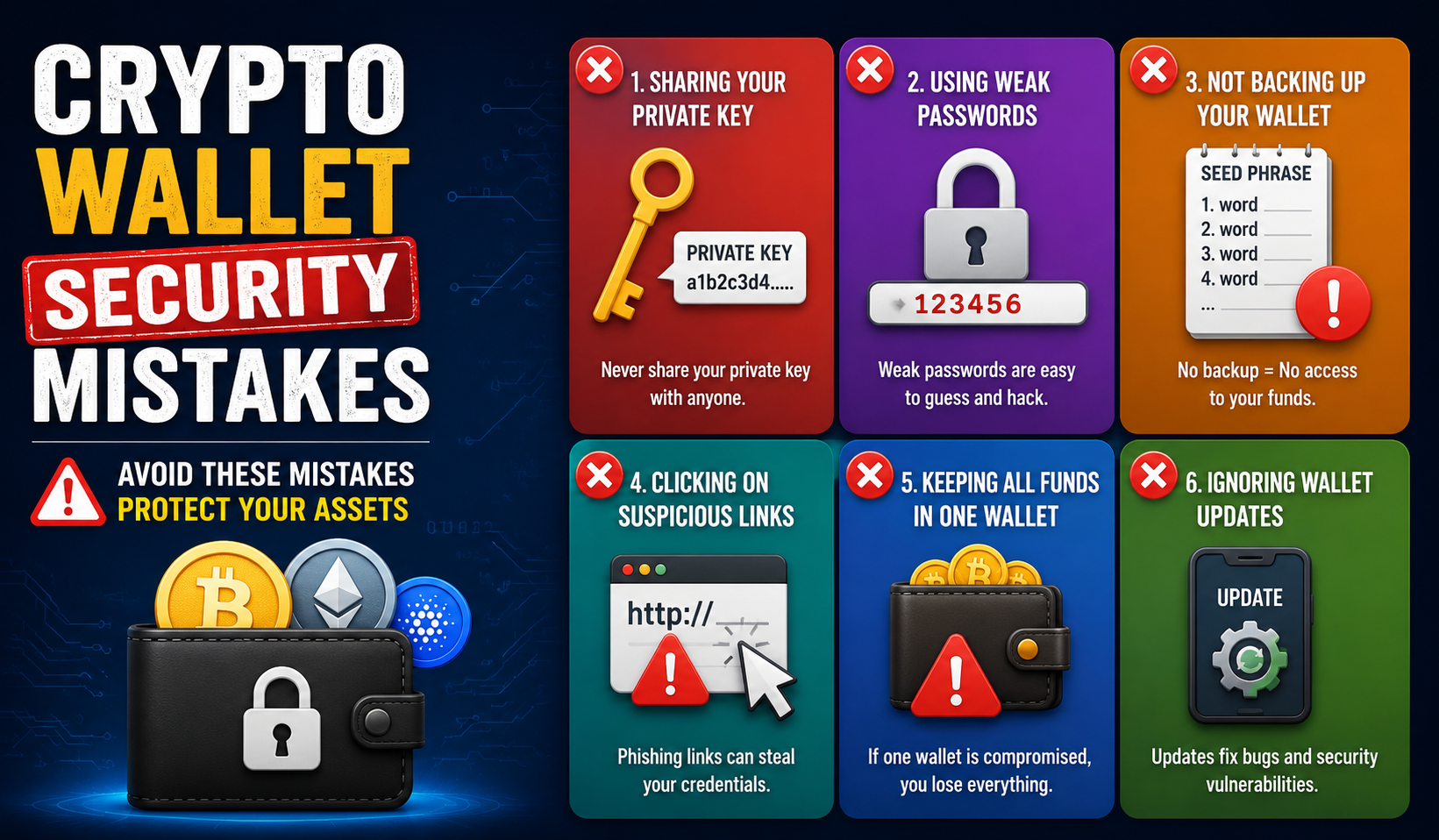
Securely storing cryptocurrencies isn't just about using a reputable wallet. Most security incidents are a result of simple errors that can be avoided. With the growing number of people investing in cryptocurrency, using it for payments, and using it for everyday transactions, it is crucial to identify these risks.
Whether you're just getting started with digital assets or have been doing it for years, taking security precautions can be a key strategy for safeguarding your investment from scams, theft, and accidental loss. In this guide, we discuss some of the most popular crypto wallet security pitfalls and show you how to avoid making them.
1. Storing Your Recovery Phrase Online
The recovery phrase is the wallet's master key. Storing it in cloud storage, email drafts, screenshots or note taking software can be at risk if those accounts are compromised.
How to protect against it:
Keep your recovery phrase on paper and off-line in a secure place. You might want to duplicate this and store it somewhere else in case of disaster.
2. Reusing or weak passwords.
Simple passwords or the repetition of one are still employed by many. A compromised account could be used to attempt to log into your crypto wallet or any associated services with the same account and password.
How to prevent it:
Use a password that is a mix of numbers, letters and symbols. Another benefit of a password manager is that it can help you create and secure powerful passwords.
3. Download Fake Wallets Apps
Fake wallet apps are an easy way for cybercriminals to lure users to install them on their devices.Cybercriminals are often able to invent fake wallet apps that look much like a real app. These Apps can steal private information or recovery phrases once they are installed.
How to prevent it:
Only download wallet software from the official website or trusted application stores. Please check the publisher before downloading any application.
4. Getting Scammed Online
Phishing is still one of the major threats in the Crypto industry. Phishing, e-mailing, and social media messages are all fake webs, messages, and e-mails that trick users into disclosing sensitive data or authorizing fraudulent transactions.
How you can prevent it:
Make sure that you verify website addresses before connecting your wallet, and never put your recovery phrase into a website that is not the official wallet.
5. Ignoring Software Updates
Security and bug fixes are done on a regular basis, improving wallet security. These updates are important, and if you delay them, you may end up risking things you don't need to.
How to prevent it:
Make sure that your wallet, operating system and security programs are up-to-date.
6. Connecting Your Wallet to Unknown Websites
There are lots of blockchain apps that request the user to connect their wallet. There are a lot of sites that are trusted, but there are other sites that have ways to get unessential access to the computers and trick people to authorize bad transactions.
How to prevent it:
Ensure that your wallet is only connected to secure platforms and check the permissions prior to confirming any requests. Remove the wallet once finished using a service.
For more information on asset protection, read our article on crypto wallet security for more asset protection tips.
7. Keeping All Your Crypto in One Wallet
If there is a problem, the impact will be less if you use one wallet for one use. If you lose that wallet, this impacts your whole portfolio.
How to prevent:
Use multiple wallets for various uses. A large share of experienced users have a more small-scale balance for transactions they expect to use on a regular basis, and a larger wallet for long-term investments.
8. Sending Crypto Without Checking the Wallet Address
Typically, blockchain transactions are known as non-refundable. If you send money to an address that is incorrect or choose an incorrect network, it may be lost forever.
How to prevent it:
Always verify the wallet address, network and transaction amount prior to confirming a transaction. So taking a little more time to process the extra seconds will prevent costly mistakes.
9. Sharing Sensitive Information
Often scammers act as customer support representatives, investment advisors or members of the crypto circle. Their intent is to win your trust and then to entice you into the Giving of Confidences.
To prevent it:
Don't share recovery phrases/private keys with anyone. This doesn't require disclosing a thing with a proper wallet provider.
10. Choosing the Wrong Wallet for Your Needs
Not all wallets need to be suitable to all crypto users. Somebody who is holding the cryptocurrencies for many years has different requirements than someone who is paying it off on a daily basis.
How to prevent it:
Do some research first and know the advantages of each wallet before choosing the one that's right for you. Our guide to whether to use a
will explain the various differences and which one you should use.
Establish good security practices.
No single feature is the only indicator of crypto wallet security. It is developed with regular practices, eliminating unnecessary risks over time.
Schools receive much greater protection from simple steps like safeguarding recovery phrases, using strong passwords, checking the websites you enter, and updating software than from any single security tool.
As you manage your wallet with care, you can invest, make payments, and transact just as confidently with cryptocurrency.
Conclusion
Major crypto wallet security breaches can be avoided. Knowing what these pitfalls are and being aware of how to avoid them can help minimize the risk of losing access.
Security begins with the little things that happen everyday. Keep your recovery phrase hidden, be careful with wallet software you use, be aware of scams, and take your time and review each transaction thoroughly. It is easy to do these things and they will help secure your cryptocurrencies today and in the future.