
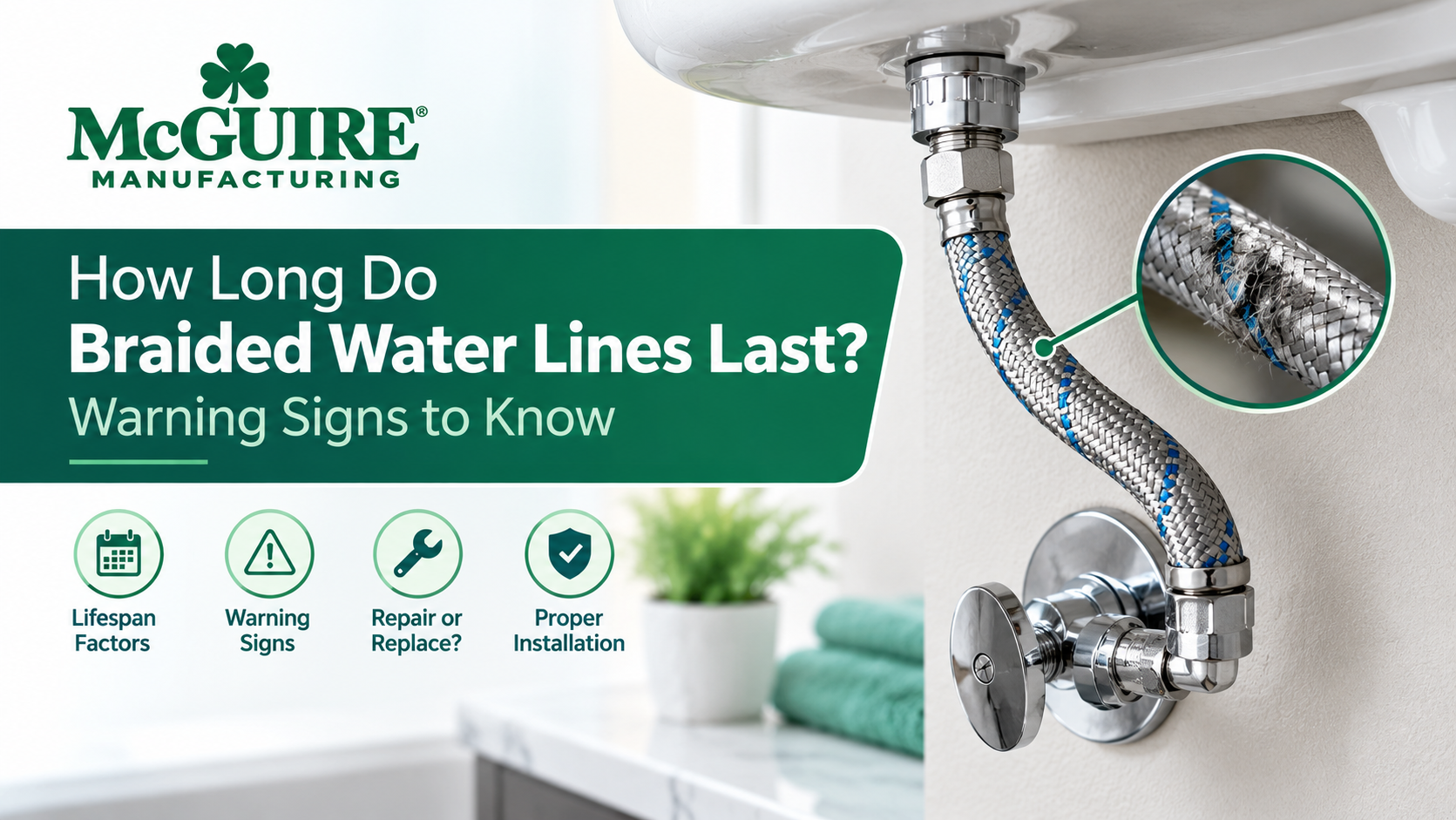
Braided water lines often receive little attention once a toilet, faucet, or lavatory has been installed. Because the connector is compact and partly hidden behind the fixture, it can be easy to overlook during routine maintenance.
That changes when a supply line begins dripping, develops visible damage, or fails unexpectedly. A small leak can damage cabinets, flooring, and nearby building materials, particularly when it goes unnoticed for several hours.
So, how long do braided water lines last? There is no universal lifespan that applies to every connector. Service life depends on the product's construction, operating conditions, installation quality, maintenance history, and the manufacturer's recommendations.
What Determines the Lifespan of Braided Water Lines?
The stainless steel exterior is only one part of a braided water line. The inner tube carries the water, while the braid and end fittings form part of the overall assembly.
Different products use different materials and designs. Water pressure, temperature, water chemistry, installation conditions, and mechanical stress can affect how a connector performs over time.
A line installed without twisting or sharp bends may experience different stresses from one squeezed into a tight cabinet. Likewise, a connector exposed to corrosive conditions may deteriorate differently from one installed in a clean, dry environment.
For this reason, it is better to follow the specific manufacturer's replacement guidance than to assume every braided connector will last a fixed number of years.
1. What Are the Warning Signs of a Failing Water Line?
Regular visual inspection can help identify problems before a connector fails completely. Look for the following warning signs.
Visible corrosion or damaged braid: Rust, broken braid strands, fraying, or other visible deterioration should not be ignored. The condition of the exterior alone cannot reveal every internal problem, but visible damage is a reason to investigate and replace the connector when indicated.
Bulges or unusual deformation: A swollen section, flattened hose, or distorted profile may indicate damage or an unsuitable installation.
Moisture around the fittings: A damp connection may result from a failing seal, a damaged fitting, or another plumbing issue. Dry the area and identify the source instead of assuming the connector itself is always responsible.
Kinks or sharp bends: A line that has been crushed or bent beyond the manufacturer's permitted bend radius may no longer be suitable for service.
Repeated leaks: If the same connection continues leaking after appropriate corrective work, inspect the connector, mating fittings, and sealing surfaces. Repeatedly tightening a damaged assembly is not a dependable repair strategy.
2. Can a Braided Water Line Look Fine but Still Need Replacement?
Yes. A visual inspection is useful, but it cannot establish the complete internal condition of a supply connector.
Damage may develop at connection points or within parts of the assembly that are not readily visible. Previous over-tightening, twisting, exposure to unsuitable operating conditions, or mechanical damage may also affect performance.
Follow the manufacturer's guidance for inspection and replacement. If the connector has been damaged, has an uncertain history after a significant leak, or is subject to a replacement recommendation, arrange replacement rather than relying on its appearance alone.
For planned maintenance, keep records of installation dates and inspection findings where practical. This is particularly helpful in commercial facilities with many fixtures.
3. Should You Repair a Leaking Braided Water Line or Replace It?
The answer depends on the location and cause of the leak.
If water is appearing around a threaded or compression connection, the problem may involve a loose or incompatible fitting, a damaged sealing surface, or an incorrectly installed component. A qualified person should determine the cause and follow the fitting manufacturer's repair procedure.
However, a damaged hose, compromised braid, bulging section, or defective integral fitting generally calls for replacement of the complete connector rather than an improvised repair.
Never patch a pressurized water supply connector with adhesive, tape, or an improvised clamp. These approaches are not substitutes for a properly rated replacement assembly.
Before beginning work, isolate the water supply and relieve pressure safely. If the shutoff valve does not operate correctly, address that issue before disconnecting the line.
4. How Can Proper Installation Help Prevent Premature Failure?
Even a suitable connector can encounter problems if installed incorrectly.
First, select the correct length. The line should reach both connection points naturally, without stretching or excessive slack. Second, route it in a smooth curve and avoid twisting it while tightening the fittings.
Third, use the correct connection type and follow the specified tightening procedure. Over-tightening can damage components, while under-tightening may cause leaks. Do not use a universal torque assumption for every fitting.
Finally, check the completed installation for leakage after restoring the water supply. Inspect the connection points and surrounding area again after the system has operated normally.
For suitable replacement options, consult McGuire Manufacturing's stainless steel braided risers. Compare the available lengths and connection types with the requirements of the fixture.
5. How Should Facilities Manage Braided Water Lines?
In commercial buildings, the challenge is often keeping track of many supply connections rather than maintaining a single fixture.
A practical maintenance program should identify accessible connectors, inspect them for visible deterioration, document leaks, and follow manufacturer replacement recommendations. Areas with previous water damage or difficult access may need particular attention.
Facility teams should also ensure that fixture shutoff valves work correctly. McGuire's stop valve range provides options to review when evaluating fixture isolation hardware. The correct valve depends on the pipe connection, fixture, and application.
Do not wait for a leak before considering maintenance. Planned inspections and prompt attention to damaged components can reduce the chance that a minor plumbing problem becomes a larger repair.
6. What Should You Do if a Braided Water Line Starts Leaking?
If it is safe to do so, close the appropriate shutoff valve. If the valve cannot stop the water, use the appropriate upstream isolation point and seek qualified plumbing assistance.
Keep water away from electrical equipment and address any water damage promptly. Do not continue using a visibly damaged connector simply because the leak seems small.
After the immediate problem is controlled, determine why the leak occurred. Replacing the connector without correcting an incompatible fitting, poor routing, or faulty shutoff valve may leave the installation vulnerable to another problem.
A Better Approach to Water Line Maintenance
Braided water lines are convenient components, but they should not be treated as maintenance-free. Their service life varies, and appearance alone cannot guarantee that a connector is safe to keep using.
Inspect for visible damage, follow manufacturer recommendations, install the correct replacement, and verify that connections remain leak-free.
When selecting a replacement, review McGuire's braided stainless steel risers and confirm that the chosen product matches the fixture and installation requirements. A well-matched connector and a careful installation are important parts of dependable plumbing maintenance.