
When people think about vehicle safety, they usually picture airbags, seat belts, crash sensors, strong body panels, or advanced braking systems. Very few think about what is happening deep inside the vehicle, where many of the parts doing the hard work are hidden from view. This is where Forged Automotive Components play an important role. These parts may not look exciting, but they can have a big impact on how a vehicle handles stress, impact, heat, and everyday wear.
The Parts You Never Notice Until They Matter
A modern vehicle is made up of thousands of parts, and some of the most important ones are the ones you rarely see.
Steering parts, suspension components, wheel hubs, connecting rods, crankshafts, axle parts, and other critical pieces have to deal with constant pressure. Every time a car turns, brakes, accelerates, hits a pothole, or carries extra weight, these components are working.
Imagine driving over a rough road every morning. You might feel a few bumps inside the cabin and forget about them a minute later. The parts underneath the vehicle don't get that luxury. They absorb and handle those forces again and again.
That is one reason manufacturers pay so much attention to how these components are made.
Why Forging Makes Such a Difference
Forging is a manufacturing process where metal is shaped under controlled force. Instead of simply cutting a part from a larger piece of material, forging helps shape the metal in a way that can improve its strength and durability.
The real advantage becomes clear when a component has to survive repeated stress.
A well-forged part can offer:
-
High strength for demanding applications
-
Better resistance to repeated loads
-
Good structural consistency
-
Strong performance under pressure
-
Long service life when properly designed and manufactured
Of course, forging alone doesn't magically make every part stronger. Material selection, design, heat treatment, machining, testing, and quality control all matter. But when these steps are done properly, forged components can become a dependable choice for parts where failure simply isn't an option.
Think About What Happens During a Normal Drive
A car doesn't need to be involved in a major accident for its components to experience serious stress.
Think about a normal day behind the wheel.
You start the engine. You accelerate into traffic. You brake at a signal. You turn into a narrow road. Maybe you hit a pothole that you didn't see coming. Then you drive over a speed breaker and park the car.
It sounds ordinary.
But underneath, the vehicle has been dealing with hundreds of small forces.
Suspension and steering components are constantly moving and carrying loads. Engine components deal with heat, vibration, and rapid movement. Drivetrain parts transfer power from the engine to the wheels.
This is where component strength becomes more than a technical detail. It becomes part of everyday reliability.
Stronger Does Not Always Mean Heavier
There is a common idea that a stronger vehicle must simply be a heavier vehicle. Modern automotive engineering is much more thoughtful than that.
Manufacturers are constantly trying to balance strength, weight, performance, fuel efficiency, and cost. A component that is unnecessarily heavy can add weight to the vehicle without providing enough extra value.
The goal is to make the right part strong enough for the job while keeping its design practical.
Forging can support this approach because engineers can design components around the loads they are expected to handle. The result can be a part that combines strength with an efficient shape rather than relying on excess material everywhere.
This matters even more as manufacturers work toward lighter and more efficient vehicles.
Where Forged Parts Can Make a Difference
You will find forged components across many areas of automotive engineering. Depending on the vehicle and application, they may be used in parts such as:
-
Steering knuckles and related steering components
-
Suspension parts
-
Axle and drivetrain components
-
Engine connecting rods
-
Crankshafts
-
Wheel hubs
-
Gears and other power-transfer parts
-
High-load fasteners and structural components
Not every vehicle uses the exact same forged parts. The choice depends on the design, performance requirements, material, production method, and intended use.
Performance cars, commercial vehicles, off-road vehicles, heavy-duty equipment, and everyday passenger cars can all have different requirements.
Safety Starts Long Before a Crash
One of the most interesting things about vehicle safety is that it doesn't begin when an accident happens.
Safety starts with the vehicle's ability to behave properly before the crash.
A steering component needs to respond when the driver turns the wheel. Suspension parts need to keep the wheels working with the road. Brake-related components need to handle the forces created during stopping. Drivetrain parts need to transfer power without unexpected failure.
If a critical mechanical component fails, the driver may lose control before any airbag or crash protection system gets a chance to help.
That is why the strength and reliability of basic mechanical components deserve more attention than they usually receive.
It is Also About Surviving the Long Haul
Vehicle safety is not only about passing a crash test on the day a new car leaves the factory.
Cars are driven for years.
They face summer heat, winter cold, rough roads, heavy traffic, long highway journeys, sudden braking, repeated acceleration, and thousands of hours of vibration. Commercial vehicles can face even tougher conditions because they may spend most of their lives carrying heavy loads.
A component that performs well over time can help keep the vehicle working as it was designed to work.
That long-term reliability matters to everyone, from a family driving to work to a fleet operator trying to keep dozens of vehicles on the road.
Small Parts, Big Responsibility
What makes forged automotive parts interesting is that their importance is often hidden.
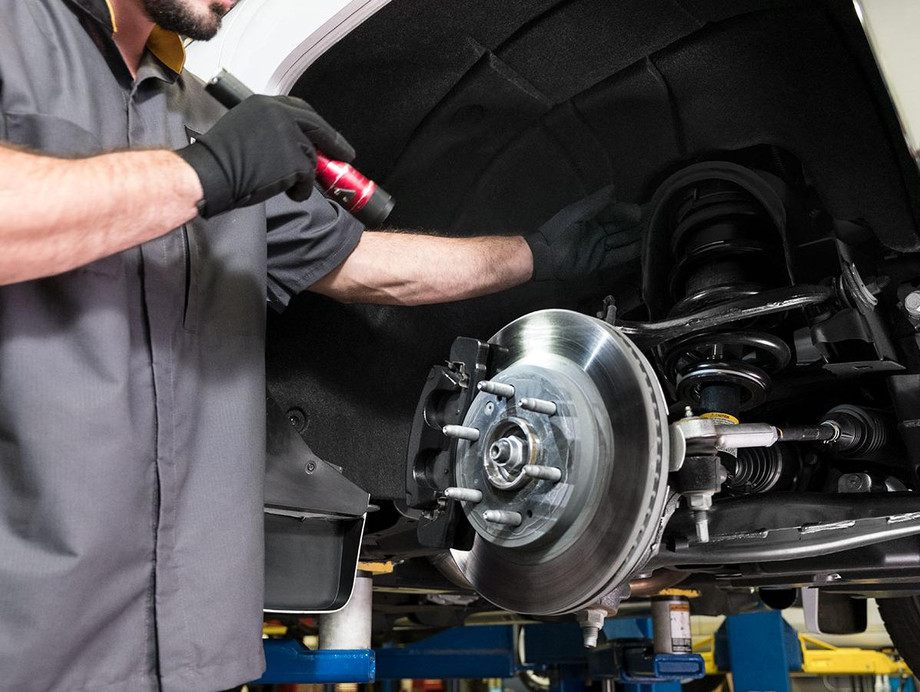
You don't see a connecting rod while sitting behind the steering wheel. You don't think about a wheel hub when you are driving down the highway. You probably never wonder how much stress a suspension component handles when you take a corner.
But those parts are doing their jobs quietly.
And that is perhaps the best way to think about them.
Good automotive engineering is not always about creating something people can see. Sometimes it is about making the hidden parts strong enough, reliable enough, and consistent enough that the driver never has to think about them at all.
Also Read: Why Forging Parts Suppliers Matter in Modern Manufacturing
The Future Will Demand Even More From These Components
As vehicles become more efficient, powerful, connected, and lightweight, the pressure on automotive components is unlikely to disappear. In many cases, it will increase.
Electric vehicles, hybrid systems, high-performance engines, advanced suspension systems, and commercial vehicles all bring their own engineering challenges. Manufacturers will continue looking for better materials, smarter designs, improved manufacturing methods, and tighter quality control.
Forging will remain one of the manufacturing options engineers can turn to when strength, durability, and reliability are important.
And while a forged component may never get the attention of a shiny new dashboard or a clever safety feature, its role can be just as important.
The next time you sit inside a car and feel that everything is working smoothly, remember that a lot of engineering is happening where you cannot see it. The steering feels right, the wheels stay connected to the road, the engine keeps moving, and the vehicle responds when you need it to. Those quiet moments are where strong, well-made components earn their place.
For a wider look at how vehicle structure, strength, weight, and crash protection affect real-world safety, the Insurance Institute for Highway Safety offers detailed research and safety information in its vehicle safety research and ratings. It is a useful reminder that vehicle safety is never about one feature alone. It is the result of many carefully engineered parts working together.