
In an era defined by evolving environmental regulations, rising operational costs, and the relentless pursuit of sustainable industrial practices, the efficient management of sludge has become a critical priority for modern wastewater treatment and industrial plants. Across sectors—from municipal waterworks and food processors to paper mills and chemical refineries—companies are seeking technologies that can maximize dewatering performance, reduce residual volume, and control costs without compromising regulatory compliance.
Amid this shifting landscape, Anionic Polyacrylamide Emulsion has emerged as a transformative solution—and increasingly, the gold standard—for sludge dewatering. Whether your facility runs belt filter presses, centrifuges, chamber filter presses, or screw presses, Anionic Polyacrylamide Emulsion is the additive most operators now trust for rapid flocculation, clearer filtrate, and drier cakes.
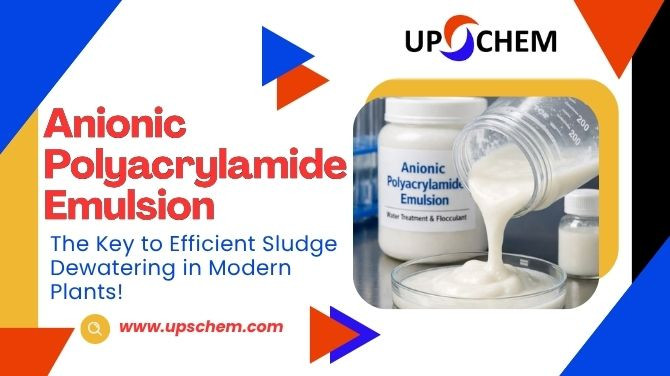
Anionic Polyacrylamide Emulsion: The Key to Efficient Sludge Dewatering in Modern Plants
1. What is Anionic Polyacrylamide Emulsion?
To understand the power of this innovation, it’s vital to first distinguish Anionic Polyacrylamide Emulsion from other forms of polyacrylamide and flocculants.
Anionic Polyacrylamide (APAM) is a high molecular weight, water-soluble polymer made by polymerizing acrylamide in the presence of an anionic agent. When used as a flocculant, APAM promotes the aggregation of finely dispersed solids into larger flocs, enabling rapid separation from water via gravity, filtration, or centrifugation.
Emulsion Form: In the emulsion product, the active APAM polymer is finely dispersed in an oil or aqueous carrier along with a surfactant system. The result is a creamy, pumpable liquid—ready for simple dilution on-site. This form contrasts with APAM powders (granular solids), which require rigorous mixing and longer dissolution times before application.
2. Why Anionic Polyacrylamide Emulsion is Ideal for Sludge Dewatering?
a) Superior Dissolution and Rapid Activation
- Faster Dispersion: Emulsions dissolve much faster than powders, usually hydrating fully in minutes rather than hours.
- Simplified Equipment: No need for specialized powder dissolvers or long agitation—emulsions can be dosed directly with standard pumps and inline mixers.
- Consistent Quality: Reduced risk of “fish-eyes” (undissolved lumps that waste polymer and reduce performance).
b) Enhanced Dewatering Efficiency
- High Molecular Weight + Specific Charge Density: Carefully engineered emulsions from Shandong UPS Chemical Co.,Ltd are customized to your sludge characteristics, maximizing floc size and strength.
- Higher Cake Solids: Operators routinely report 2–5% higher final dry solids in dewatered sludge, reducing downstream hauling and disposal costs.
- Improved Filtrate Clarity: With more effective flocculation, suspended solids in filtrate or centrate are minimized, lowering the load on secondary treatment.
c) Flexible and Easy to Integrate
- Wide Compatibility: Suitable for belt filter presses, centrifuges, gravity tables, chamber filter presses, and screw presses.
- Automated Systems Friendly: Emulsions work seamlessly in automated dosing setups, minimizing operator error.
- Stable Shelf Life: Modern emulsions have excellent stability (typically 6–12 months when stored properly), outlasting many powder-based alternatives under challenging field conditions.
3. How Anionic Polyacrylamide Emulsion Works?
The Science of Flocculation
When Anionic Polyacrylamide Emulsion is injected into the sludge stream:
- The anionic (negatively charged) polymer chains are activated upon dilution with water.
- These long chains bind to positively charged (or neutral) particles in the sludge, bridging them together into bigger flocs.
- These flocs are heavy and porous, settling or filtering with far greater ease than dispersed fine solids.
- The water is freed and can be recovered; the residual sludge forms a drier, stiffer cake.
Application Spectrum
Major uses for anionic polyacrylamide emulsion include:
- Municipal and industrial wastewater sludge
- Paper and textile sludge
- Mining and mineral processing tailings
- Food and beverage waste
- Petrochemical plant sludges
- Biogas digester residues
4. Best Practices for Maximizing Efficiency
a) Proper Storage and Handling
- Store emulsions at ambient temperature (5–35°C). Avoid freezing or prolonged exposure to direct sunlight.
- Shake or mix drums gently before use if settling has occurred.
- Prevent accidental spills—emulsions are slippery when wet.
b) Solution Preparation
- Dilute emulsion at the recommended rate (commonly 0.1%–0.5% active polymer in application solution).
- Use gentle agitation. Avoid high-shear mixers that can shear and damage polymer chains.
- Allow brief “aging” after dilution (usually 15–30 minutes) to maximize activation, but avoid excessive aging, which may reduce efficacy.
c) Precise Dosing
- Start with supplier recommendations, but optimize via small-scale plant trials (“jar tests”).
- Monitor performance daily using key metrics: cake dryness, filtrate turbidity, and polymer consumption.
- Automate feeding if possible, tying dosing rates to real-time solids or flow measurements for consistent outcomes and cost savings.
5. Customizing the Solution: The Shandong UPS Chemical Co., Ltd Advantage
Formulation Tailored for Your Sludge
- Charge Density Adjustment: Matching your sludge type for optimum bridging—high anionic for mineral sludges, medium for organic-rich.
- Molecular Weight Customization: High enough to ensure large, robust flocs, but not so high as to cause shear breakdown.
- Surfactant and Carrier Choices: Optimized for safety, environmental compliance, and rapid hydration.
Technical Support
- On-site or remote jar testing and optimization
- Training for plant staff
- Emergency and troubleshooting support
- Documentation for environmental, health, and safety compliance
Supply Chain Strength
- Bulk and drummed delivery
- Just-in-time logistics for continuous uptime
- Full technical documentation and traceability
6. Sustainability and Regulatory Compliance
- Reduced Sludge Volume = Lower Transport/Disposal Emissions
- Optimized chemistry for minimal active polymer residuals—meeting strict European, US, and Chinese discharge rules
- Options for “greener” emulsions with biodegradable carriers, surfactants, or bio-based polymers
- Comprehensive MSDS/REACH/NSF documentation eligible for global trade and tender requirements
7. Future Perspectives: Advancements in Emulsion Technology
- Ultra-high-molecular-weight emulsions for advanced industrial wastewaters
- “Smart” polymers for automatic adjustment to variable feed characteristics
- Integration with digital control and AI-based dosing optimization
- Formulations for difficult sludges—oil, grease, dyes, refractory substances
Shandong UPS Chemical Co.,Ltd stays at the forefront of R&D to ensure partners always access the world’s leading solutions.
The efficient, economic, and sustainable dewatering of sludge is no longer merely a technical target—it’s a central pillar of responsible industrial operation. Anionic Polyacrylamide Emulsion stands at the heart of this mission, offering unmatched performance, flexibility, and ease of integration for modern plants seeking reliable and future-proof sludge management.
Frequently Asked Questions (FAQ)
Q1: How long does Anionic Polyacrylamide Emulsion last in storage?
A: When stored in original, sealed containers, most emulsions are stable for 6–12 months. Keep at room temperature; freezing or overheating can reduce shelf life and efficacy.
Q2: Is it safe to handle Anionic Polyacrylamide Emulsion?
A: Yes—while generally considered safe, it can be very slippery, so wear gloves and non-slip footwear. Avoid eye or skin contact and always reference the supplier’s MSDS for safe handling.
Q3: Can emulsions replace all other polymer types in my plant?
A: Emulsions fit most applications, especially where flexibility, speed, and ease of use are valued. However, specialized plants (e.g., very high-volume or automated dry polymer systems) may still benefit from powders; consult a supplier for the best fit.
Q4: Will anionic polyacrylamide residuals harm downstream biological systems?
A: When used at recommended dosages, residual polymer is minimal and not generally toxic. However, always communicate any concerns with your supplier and coordinate with downstream process operators.
Q5: How do I optimize the dilution of Anionic Polyacrylamide Emulsion?
A: Follow supplier guidelines for dilution ratios and mixing times (usually 0.1–0.5% concentration). Use clean water and mix gently for best results.
Q6: How is dosing adjusted for seasonal or process changes?
A: Regularly monitor sludge characteristics and process KPIs. Adjust dosages based on observed cake dryness, filtrate clarity, and changes in solids load—automation helps maintain consistency.
Q7: What are common signs of under- or over-dosing?
A: Underdosing: watery cake, high filtrate turbidity, lower throughput.
Overdosing: slimy, sticky sludge, reduced filter performance, sometimes higher polymer cost per ton dry solid.
Q8: Can I use Anionic Polyacrylamide Emulsion in potable water sludge treatment?
A: Yes; ensure the emulsion meets food-grade or drinking water-safe standards as required for your jurisdiction.
Q9: How do I transition from powder to emulsion with minimal downtime?
A: Plan for temporary dual systems, train staff on new pumps and dilution procedures, and coordinate with supplier technical support for initial operation.
Q10: Does the emulsion form impact the final cost compared to powder?
A: Emulsions may have a slightly higher up-front price per kg active, but lower handling, labor, and improved performance often result in better overall plant economics.