
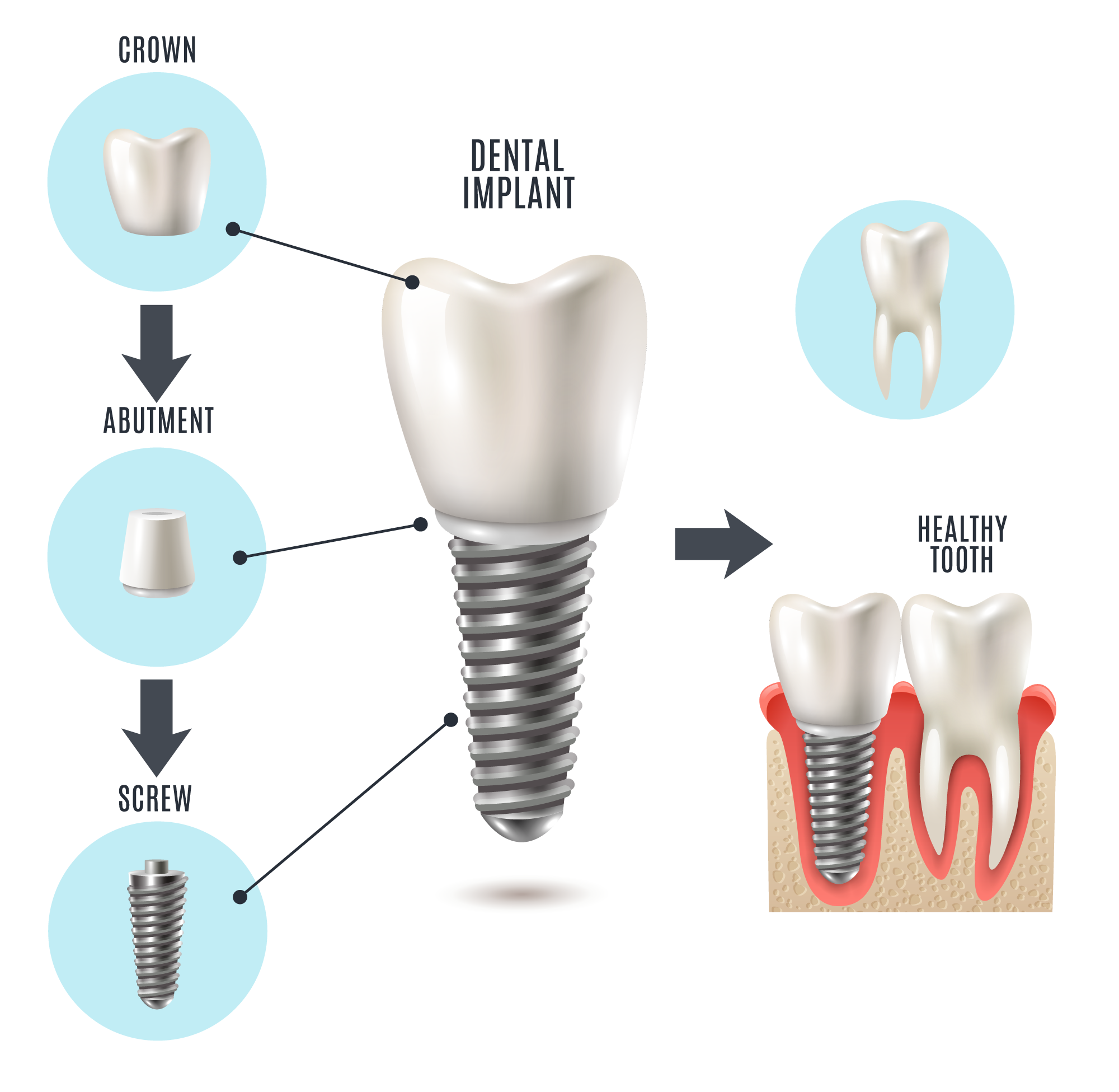
If you are missing one or more teeth, it can strain your physical and mental health. Since losing teeth is associated with ageing, you might even be alarmed and wondering what you can do to fix it. Luckily for you, dental implants treatment is a standard prosthetic replacement for missing teeth. An implant fused to the jawbone that can hold false teeth mimics a natural tooth without affecting the nearby teeth.
With proper care, dental implants can last for a lifetime, and their many benefits make them the best and the most recommended procedure for tooth replacement. Advancement in technology and science has brought the success rate close to 98% and ensured improved outcomes of dental treatment in Delhi. If you want to know more about implants and decide which one would be the best for you, read on!
Types of Dental Implants
1. Endosteal: As the most common type of implant, they are also an alternative to bridges or removable dentures. Endosteal implants are well-suited for most patients but require a good, healthy jawbone to fuse the placeholder posts, which are screws fitted into the jaw. The false teeth are then screwed into the placeholder. The procedure does not require a lengthy recovery period but needs time to fuse, and once healed, the false teeth can be placed to fit in with the surrounding teeth.
- Procedure: An artificial root made of biocompatible titanium is fit in the jawbone by drilling it to create the space. A couple of months may be required to heal the soft tissue and bone around the root so that they fuse both chemically and physically to the bone tissue. The result is claimed to be stable and natural-feeling.
2. Subperiosteal: This is the main alternative to Endosteal but is rarely used- only if your jawbone is not of sufficient height or you are not a fan of something being placed into your jaw. This is one of the most difficult methods for dental implantation, and its success depends on the correctness of the titanium implant and the patient’s immune system. Instead of being fused to the jaw bone, this rests above the bone but under the gums. However, this is only done when the patient doesn’t have a healthy jawbone to affix the implants or does not want to go through extensive oral surgery.
- Procedure: The appointments are shorter, and generally, only two are required for the overall process. A metal frame with a post is placed underneath the gums by drilling the soft gum tissue to make room. The implant post is placed and exposed above the gums to hold the prosthetics, and the gums are sutured to aid healing. When the gum heals and stabilizes the post in place, false teeth are secured to the poles. These implants are very resistant and are placed for a lifetime.
3. Zygomatic: Named after the bone they are implanted into, these implants are required to be placed in the patients’ cheekbone when they don’t have enough bone mass for traditional implants. Zygomatic implants are intended to replace teeth in the upper jaw and can be used to replace an entire set of missing, damaged or decayed teeth or the ones that have come loose due to gum disease. They can be used in combination with other implants to replace teeth in the upper and lower jaw.
- Procedure: While one of the main requirements for implants is bone quality and mass, zygomatic implants can be placed even in poor maxillary bone quality cases. They are implanted in the zygomatic zone. The implants are significantly longer and require no supplementary procedures like sinus lift, which prevents sinus damage due to implants. The prosthetic is immediately loaded to the implants during surgery, so you won’t have to manage without teeth while healing.
How to Figure out Which One Is Best for You?
There are several dental implants to choose from, and your dentist will take an x-ray to determine which implant will be appropriate for your dental needs. If you want to replace your missing or damaged teeth with dental implants in South Delhi, visit Kamal Dental Clinic, where our team of expert professionals can be trusted to provide you with quality dental care.
Subperiosteal implants are ideal for those who lack the bone mass to support Endosteal implants. Some implant specialists will recommend an Endosteal implant over others even if there is a lack of bone mass because of its high success rate. Supplementary procedures like bone augmentation, sinus lift or ridge expansion may be necessary before implant placement for some patients with inadequate bone mass. Individuals residing near the southern district of the NCR can visit a dentist in South Delhi for more information or any queries.