
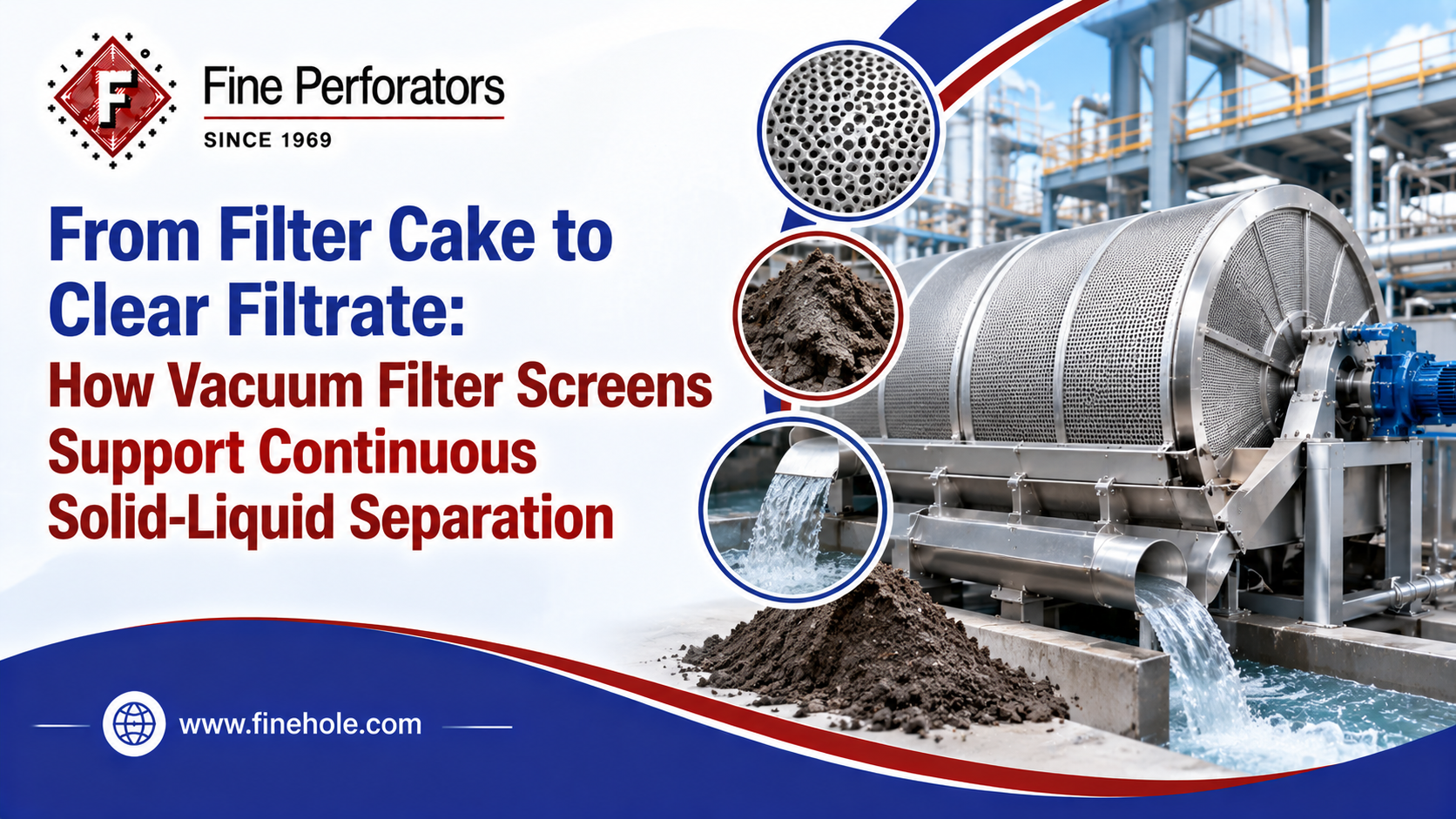
Solid-liquid separation is an important part of many industrial processes where suspended solids need to be removed from liquids. Vacuum filtration is one such method that supports continuous filtration by using pressure differences to move liquid through a filter surface while retaining solid particles. At the heart of this process is the vacuum filter screen, which provides the filtering surface required to separate the solid and liquid phases.
Industries such as sugar processing, chemical manufacturing, food processing, mining, and wastewater treatment use vacuum filtration systems for different separation requirements. The correct screen design can influence filtration efficiency, liquid clarity, cake formation, and the overall performance of the filtration system.
What Is a Vacuum Filter Screen?
A vacuum filter screen is a specially manufactured screening component used in vacuum filtration equipment. It contains precisely designed openings that allow liquid to pass through while retaining suspended solid particles on the screen surface.
As the filtration process continues, the retained solids gradually form a layer known as the filter cake. Meanwhile, the liquid that passes through the screen is collected as filtrate. This makes the screen an important part of the continuous solid-liquid separation process.
Experienced vacuum filter screens manufacturers design these screens according to the equipment configuration, material being filtered, required filtration rate, and operating conditions.
How Does a Vacuum Filter Screen Work?
The basic principle behind vacuum filtration is the creation of a pressure difference across the filter surface. When vacuum is applied on one side of the screen, liquid is pulled through the screen openings.
The solid particles are retained on the screen surface and gradually build up into a filter cake. As more material reaches the screen, the cake becomes thicker until it reaches the required stage for discharge or further processing.
The screen therefore needs to provide two functions at the same time: allowing sufficient liquid flow while preventing unwanted solids from passing through. The opening size, screen construction, and open area all contribute to this balance.
The Role of Mud Filter Screens
In sugar and other industrial processes, filtration may involve liquids containing suspended impurities or mud-like solids. This is where mud filter screen and mud filter screens are commonly used.
During filtration, the screen retains the solid particles while the liquid passes through the openings. The retained material forms a filter cake, which can then be removed as part of the continuous filtration cycle.
The screen needs to withstand repeated filtration cycles while maintaining consistent openings. This is particularly important when the process involves abrasive materials, pressure differences, or frequent cleaning.
Why Screen Opening and Design Matter
A vacuum filter screen cannot simply be selected based on its size. The opening pattern and dimensions must correspond to the filtration requirements.
If the openings are too large, unwanted solids may pass into the filtrate. If they are too small, liquid flow can be restricted and the screen may become blocked more quickly. The right balance helps maintain filtration performance while supporting effective cake formation.
Screen material is another important consideration. Depending on the application, manufacturers may use suitable metals that provide the required strength, corrosion resistance, and durability.
Customized Vacuum Filters for Different Applications
Every filtration system may have different equipment dimensions, process conditions, and separation requirements. Therefore, standard screens may not always provide the required fit or filtration characteristics.
This is why customized vacuum filters and filtration components can be useful for specialized applications. Screen dimensions, opening patterns, materials, and other specifications can be adapted according to the requirements of the filtration equipment.
Working with experienced vacuum filter screens manufacturers can help industries select or develop screens that match their existing filtration systems rather than making major changes to the equipment.
Choosing the Right Mud Filter Screen Supplier
When selecting a mud filter exporter or screen manufacturer, businesses should consider manufacturing capabilities, material quality, dimensional accuracy, customization options, and experience with industrial filtration applications.
A properly manufactured screen should maintain consistent openings and provide adequate mechanical strength during continuous operation. It should also be suitable for the cleaning and maintenance methods used in the filtration system.
Fine Perforators manufactures vacuum filter screens for industrial applications and provides screen solutions based on different filtration requirements. Its experience in manufacturing industrial screening and filtration products allows customers to select suitable screen configurations for their specific processes.
From Filter Cake to Clear Filtrate
Vacuum filtration is a continuous process, but its effectiveness depends heavily on the filtration surface. The vacuum filter screen controls the movement of liquid while retaining the solids that form the filter cake.
From mud filtration in sugar processing to other industrial solid-liquid separation applications, the right screen can support consistent filtrate quality, efficient liquid flow, and reliable operation. Selecting the appropriate screen material, opening pattern, dimensions, and configuration is therefore an important step toward maintaining the performance of a vacuum filtration system.
Source: https://vacuumfilterscreensmanufacturers.lovable.app