
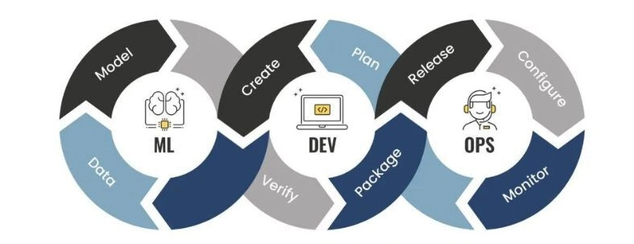
Introduction
Organizations across the globe are investing billions of dollars into artificial intelligence and machine learning initiatives, yet a staggering percentage of these models never make it into production. The primary point of failure is rarely the data science or the underlying mathematical modeling; instead, projects collapse under the weight of fragmented infrastructure, fragile deployment pipelines, and a severe lack of operational governance. When a machine learning model transitions from an isolated experimental notebook to a live, enterprise-wide production system, it encounters realities that data science teams are rarely equipped to handle: fluctuating data workloads, strict regulatory compliance constraints, multi-cloud networking complexities, and spiraling compute costs.
As enterprises move away from ad-hoc, team-level AI implementations toward unified, corporate-wide capabilities, the gap between experimental code and reliable production infrastructure widens. Engineering teams frequently find themselves trapped in a cycle of rewriting deployment scripts, manually tracking data features, and debugging disconnected monitoring tools. To break this cycle, organizations must pivot from thinking purely about data science to investing heavily in structural systems engineering. This critical shift has fueled the rapid rise of the MLOps Architect—a specialized strategic role designed to build robust, cloud-native blueprints that turn experimental artificial intelligence into a resilient, predictable, and scalable enterprise asset.
Understanding Enterprise MLOps Architecture
At its core, enterprise MLOps architecture is the holistic design and systematic integration of the platforms, pipelines, tools, and governance frameworks required to develop, deploy, monitor, and secure machine learning models at scale. Unlike a standard DevOps pipeline that focuses primarily on compiling static software code and deploying compiled binaries, a true MLOps architecture must manage a complex, multi-dimensional lifecycle where code, massive datasets, and evolving statistical models are deeply intertwined. An effective architecture must treat models as dynamic entities that continuously change when exposed to new real-world data, necessitating infrastructure that is both flexible and deterministic.
Designing an enterprise AI platform requires a forward-looking, long-term approach to infrastructure. Architects must look past the immediate requirements of a single data science team and instead focus on building a multi-tenant, cloud-native substrate that can support hundreds of concurrent models across various business units. This means decoupling the core compute and storage layers, implementing standardized API boundaries between different stages of the ML lifecycle, and ensuring that the entire platform remains completely agnostic to specific data science frameworks. By designing a highly composable architecture, organizations ensure they can seamlessly integrate emerging technologies—such as large language models (LLMs) and autonomous AI agents—without needing to completely tear down or rebuild their underlying infrastructure.
Why Organizations Need MLOps Architects
The current wave of enterprise AI transformation initiatives demands a standardized approach to how infrastructure is allocated, consumed, and managed. Without an overarching MLOps architect leading the strategy, large organizations quickly fall victim to severe platform fragmentation. Different lines of business naturally select different cloud providers, experiment tools, and deployment strategies, resulting in isolated silos of automation that are incredibly expensive to maintain. An MLOps architect steps in to bring structural order to this chaos, establishing unified platform engineering standards that provide data scientists with self-service access to infrastructure while eliminating redundant tool stack expenditures.
Beyond driving operational efficiency, MLOps architects serve as the essential bridge between technical implementation and corporate governance, security, and financial management. As regulatory bodies implement strict compliance mandates regarding algorithmic transparency, data privacy, and model bias, enterprises must have automated audit trails embedded directly within their infrastructure. Furthermore, the massive compute requirements of modern deep learning and generative AI can easily cause public cloud costs to spiral out of control. The MLOps architect addresses these financial and regulatory risks directly by building automated resource quotas, spot instance scheduling, model cost-tracking mechanisms, and comprehensive data lineage guardrails right into the foundation of the corporate AI platform.
About the Certified MLOps Architect Certification
The Certified MLOps Architect program, offered by AIOPsSchool, is an elite, credentialed educational pathway designed specifically for senior engineering professionals who are tasked with designing and steering enterprise-grade machine learning platforms. While foundational courses and engineering certifications typically zoom in on configuring specific command-line utilities or writing tactical pipeline code, this certification operates at a strategic, systemic level. It equips technical leaders with the architectural patterns, governance frameworks, and multi-cloud strategies needed to design end-to-end AI ecosystems that align cleanly with overarching business objectives.
The core learning objectives of the Certified MLOps Architect program focus heavily on cross-functional infrastructure mastery, advanced platform engineering, and organizational transformation leadership. Candidates learn how to evaluate and select appropriate tools across the data, training, and serving layers, design resilient multi-cloud and hybrid AI deployment strategies, and implement comprehensive security structures that safeguard sensitive enterprise data. By verifying these advanced competencies, the certification delivers immense organizational value, assuring executive leadership that an architect can successfully mitigate high-stakes deployment risks, eliminate operational waste, and architect future-proof AI platforms.
The MLOps Certification Ecosystem
Navigating the professional certification landscape requires understanding how different credentials target different levels of technical and strategic responsibility. The ecosystem is structured as a progressive learning journey, moving from baseline conceptual knowledge to hands-on deployment tactics, before culminating in enterprise-level system design.
| Certification | Level | Focus Area | Best For | Skills Covered | Career Value |
| MLOps Foundation | Baseline | Fundamental concepts and terminology | Project managers, business analysts, and junior engineers | Basic ML lifecycle, DevOps crossover, core terminology | Establishes foundational literacy across teams |
| Certified MLOps Engineer | Professional | Pipeline implementation and tool integration | Software engineers and data engineers transitioning to ML | CI/CD for ML, automated training pipelines, basic containerization | Validates hands-on ability to build tactical workflows |
| Certified MLOps Professional | Advanced | Operational management and performance scaling | Senior engineers and production operations managers | Model monitoring, drift detection, resource scaling, optimization | Demonstrates capability to keep production models stable |
| Certified MLOps Architect | Elite Expert | Enterprise systems design and AI strategy | Enterprise architects, cloud architects, and tech leads | Multi-cloud strategy, governance frameworks, platform engineering | Qualifies professionals for top-tier AI leadership roles |
This structured progression ensures that as an engineer moves from executing individual automation pipelines to owning the entire corporate AI strategy, their skills shift from tactical tooling to holistic platform design. The Certified MLOps Architect stands at the absolute pinnacle of this matrix, synthesising the technical execution of engineers and professionals into a unified enterprise blueprint.
Enterprise ML Platform Architecture
A resilient enterprise ML platform is structured as a series of decoupled, highly integrated functional layers. Each layer must be designed with clean API boundaries to allow individual technologies to evolve without disrupting the broader system.
+-----------------------------------------------------------------------+
|                           GOVERNANCE LAYER                            |
|             (Lineage, Compliance, Audit Trails, RBAC, Security)       |
+-----------------------------------------------------------------------+
|  +-----------------------------------------------------------------+  |
|  |                        MONITORING LAYER                         |  |
|  |           (Model Drift, Data Quality, Hardware Metrics)         |  |
|  +-----------------------------------------------------------------+  |
|  |                         SERVING LAYER                           |  |
|  |         (Real-Time APIs, Batch Inference, Edge, LLMOps)         |  |
|  +-----------------------------------------------------------------+  |
|  |                         CI/CD/CT LAYER                          |  |
|  |      (GitOps, Automated Testing, Continuous Training Pipelines) |  |
|  +-----------------------------------------------------------------+  |
|  |                         MODEL REGISTRY                          |  |
|  |          (Version Control, Artifacts, Stage Management)         |  |
|  +-----------------------------------------------------------------+  |
|  |                      TRAINING INFRASTRUCTURE                    |  |
|  |            (Distributed GPU/TPU, Orchestration, Spot)           |  |
|  +-----------------------------------------------------------------+  |
|  |                        FEATURE STORE LAYER                      |  |
|  |               (Offline Batch Store / Online Real-Time Store)    |  |
|  +-----------------------------------------------------------------+  |
|  |                          DATA PLATFORM                          |  |
|  |                (Data Lakes, Warehouses, Streaming Data)         |  |
|  +-----------------------------------------------------------------+  |
+-----------------------------------------------------------------------+
Data Platform Layer
The foundation of any machine learning platform is its data layer. It is responsible for ingestion, storage, and initial processing of structured, unstructured, and streaming data feeds. MLOps architects ensure that this layer seamlessly interfaces with corporate data lakes and warehouses, establishing immutable data versioning practices so that any dataset used to train a model can be recreated exactly for future audit scenarios.
Feature Store Layer
A feature store acts as a central repository where data engineering teams store curated, reusable metrics and data inputs for machine learning models. The architecture must support a dual-purpose design: an offline store optimized for processing massive batch datasets during historical model training, and a low-latency online store capable of serving individual features within milliseconds to live production models. This dual structure prevents data skew between training and inference environments.
Training Infrastructure
This layer provides the raw compute horsepower required to run training algorithms and perform hyperparameter optimization. Architects must design this layer to abstract away complex hardware setups, using container orchestration engines like Kubernetes to dynamically provision distributed GPU or TPU clusters. To maximize efficiency, the architecture should intelligently leverage low-cost cloud spot instances while ensuring check-pointing mechanisms protect training progress from sudden node evictions.
Model Registry
The model registry serves as the authoritative single source of truth for all verified, compiled machine learning artifacts. It goes far beyond a basic storage bucket by maintaining rigorous version control, cryptographic hashes of model files, and detailed metadata tracking exactly which training run, code commit, and dataset generated the model. It controls state transitions—such as moving a model from Staging to Production—via secure, automated approval workflows.
CI/CD/CT Layer
Continuous Integration, Continuous Delivery, and Continuous Training (CI/CD/CT) form the automated heartbeat of MLOps. This layer detects changes in code or data, triggers automated testing suites that evaluate model accuracy and safety, and packages successful models into deployment-ready containers. Architects implement GitOps paradigms here, ensuring that every infrastructure change and model update is explicitly driven by tracked code repository commits.
Serving Layer
The serving layer is responsible for hosting models and exposing them to downstream business applications. Depending on the specific business requirements, this layer must be architected to handle high-throughput batch inference processing, low-latency real-time REST/gRPC API endpoints, or lightweight deployments optimized for decentralized edge devices. For modern deployments, this layer incorporates specialized runtimes designed to optimize large language model throughput.
Monitoring Layer
Once a model is live, the monitoring layer provides ongoing observability into its health, behavior, and business impact. The system must look past basic hardware infrastructure metrics like CPU and memory utilization, and track statistical anomalies such as feature drift, prediction decay, and changes in incoming data quality. When statistical anomalies are detected, the monitoring layer triggers automated alerts or initiates self-healing re-training pipelines.
Governance Layer
The governance layer wraps around every single component of the enterprise platform, enforcing security controls, access permissions, and regulatory compliance. It logs every action, data transformation, and model inference across the entire lifecycle to generate tamper-proof audit trails. This layer implements role-based access control (RBAC) to ensure that only authorized personnel can access sensitive training data or move models into high-stakes production environments.
Enterprise MLOps Architecture Components
| Architecture Layer | Core Purpose | Enterprise Business Value |
| Data Platform | Centralizes, versions, and manages diverse data streams | Guarantees reliable, reproducible, and compliant model training inputs |
| Feature Store | Standardizes and shares engineered data features across teams | Eliminates redundant feature computation and ensures train-serving consistency |
| Training Platform | Orchestrates and automates scalable compute resources | Accelerates time-to-market for models while maximizing expensive hardware utilization |
| Model Registry | Inventories, versions, and tracks compiled model artifacts | Establishes absolute visibility, version control, and clear audit history |
| Deployment Platform | Hosts and scales models across diverse runtime environments | Delivers highly available, low-latency model predictions to applications |
| Monitoring Layer | Tracks statistical model drift and operational health | Protects business revenue by catching and alerting on degrading model accuracy |
| Security Layer | Enforces data privacy, encryption, and access controls | Eliminates regulatory non-compliance risks and blocks adversarial attacks |
Core Skills Developed Through Certified MLOps Architect
Choosing the path of an MLOps Architect requires developing a unique blend of deep engineering skill, structural design capability, and corporate business strategy. The certification program explicitly focuses on expanding an individual's mindset from individual tools to comprehensive enterprise systems.
-
Enterprise AI Platform Design: Mastering the design patterns required to build multi-tenant, cloud-native frameworks that scale across thousands of models without creating tool sprawl.
-
Multi-Cloud and Hybrid Architecture: Engineering flexible deployment configurations that allow intensive training workloads to run where compute is cheapest, while serving inferences where latency is lowest.
-
Scalability and Performance Engineering: Designing auto-scaling infrastructure, distributed computing mechanisms, and advanced caching layers that handle massive data spikes seamlessly.
-
Comprehensive Governance Frameworks: Setting up automated documentation pipelines, model lineage tracking, and algorithmic explainability tools to fulfill strict international compliance mandates.
-
Advanced AI Infrastructure Security: Implementing end-to-end encryption for data at rest and in transit, securing model API endpoints against adversarial prompt injections, and masking sensitive data.
-
Modern Platform Engineering Principles: Creating clean, internal developer platforms (IDPs) that offer data scientists intuitive, automated self-service access to infrastructure resources.
-
Cloud Cost Optimization Strategies: Implementing advanced cluster cost-allocation tags, automated resource clean-up routines, and spot instance scheduling to prevent cloud budget overruns.
-
Organizational Transformation Leadership: Developing the strategic communication skills needed to align disparate data science, IT infrastructure, and compliance teams around a unified AI roadmap.
Real-World Enterprise Use Cases
Global E-Commerce Recommendation Frameworks
A multinational retail enterprise operating across dozens of digital storefronts requires real-time personalization models that adapt instantly to changing user behavior. An MLOps architect designs a multi-region, low-latency serving infrastructure backed by an online feature store capable of handling millions of requests per second. The architecture incorporates automated continuous training, allowing models to update daily without causing application downtime or performance hits.
Automated Financial Fraud Detection Infrastructure
A tier-one global banking institution processes billions of transactions everyday, requiring predictive AI models to flag fraudulent behavior within milliseconds. The architect constructs a highly secure, on-premises training and inference cluster featuring strict hardware isolation, real-time data streaming integration, and instant data-drift detection. If an unexpected macroeconomic shift alters transaction patterns, the platform automatically flags the shift and spins up a safe, validated candidate model.
High-Compliance Healthcare Diagnostic AI Systems
A healthcare network deploys deep-learning models to analyze medical imaging data across dozens of hospitals, requiring absolute adherence to patient privacy regulations and clinical safety guidelines. The MLOps architect builds a federated learning architecture that trains models locally at each hospital site without centralizing sensitive patient records. The platform automatically maintains cryptographic lineage logs to prove to medical auditors exactly how every single diagnostic model was verified and deployed.
MLOps Architect vs MLOps Professional vs MLOps Engineer
To build an efficient workforce structure, executive leadership must clearly differentiate between the different operational roles within the machine learning lifecycle. Each role operates at a distinct layer of implementation, execution, and overarching design.
| Role | Core Focus | Key Responsibilities | Operational Scope |
| MLOps Engineer | Technical Implementation | Building CI/CD pipelines, containerizing models, writing automation scripts | Team Level / Project Level |
| MLOps Professional | Operations Strategy | Managing production models, tracking drift, optimizing compute resource usage | Department Level / Multi-Team |
| MLOps Architect | Enterprise Platform Design | Architecting the end-to-end framework, choosing tools, setting governance standards | Organization Level / Corporate Wide |
Detailed Role Analysis
The MLOps Engineer is a hands-on technical specialist focused squarely on implementation. They take the technical designs provided by the architect and write the code necessary to build data pipelines, package models into Docker containers, and configure Kubernetes deployment manifests. Their work is highly tactical and focused on ensuring that a specific project's code moves from a developer's machine into a testing environment successfully.
The MLOps Professional steps in once models are live in production. They act as the operational guardians of the running system, analyzing incoming data metrics, optimizing model inferencing costs, and managing the day-to-day operations of the platform. When a model's prediction accuracy degrades or a cluster runs out of memory, the MLOps professional coordinates the immediate operational remediation efforts.
The MLOps Architect operates above both roles, defining the core technical standards, shared tool selections, and infrastructure paradigms that everyone else follows. Instead of building an individual pipeline, the architect designs the unified automation engine that generates pipelines automatically. They ensure the platform meets corporate security, financial, and regulatory guidelines, creating a repeatable corporate framework that allows engineers and professionals to work with maximum efficiency.
Enterprise Challenges Solved by MLOps Architecture
+----------------------------------------+     +----------------------------------------+
|          BEFORE ARCHITECTURE           |     |           AFTER ARCHITECTURE           |
|  ------------------------------------  |     |  ------------------------------------  |
|  * Fragmented, Disconnected Tools     |     |  * Unified Internal Developer Platform |
|  * High Risk of Compliance Failures    | --> |  * Automated End-to-End Governance     |
|  * Uncontrolled Cloud Compute Costs    |     |  * Predictable, Cost-Optimized Scale   |
|  * Brittle, Manual Deployments        |     |  * Resilient, GitOps-Driven Pipelines  |
+----------------------------------------+     +----------------------------------------+
Implementing a unified MLOps architecture directly eliminates the chaotic platform fragmentation that naturally occurs when individual data science teams are left to manage their own infrastructure. Instead of supporting five different model tracking utilities and three disparate deployment methodologies, the enterprise establishes a single internal developer platform. This standardization dramatically lowers maintenance costs, slashes onboarding times for new engineers, and allows the entire organization to benefit from shared infrastructure optimizations.
Furthermore, a comprehensive architecture solves the persistent issues of infrastructure sprawl and unpredictable cloud spending. By baking automated resource quotas, idle-cluster teardowns, and intelligent spot instance scheduling directly into the platform's core design, an MLOps architect shifts the organization from a reactive cost-management posture to proactive financial optimization. Most importantly, it completely de-risks the deployment pipeline, transforming model promotion from a stressful, manual process into a routine, automated non-event.
Career Growth Roadmap
The professional trajectory for an engineer specializing in machine learning operations offers a direct and highly lucrative path into executive technical leadership. As organizations realize that AI success depends entirely on structural platform capability, the demand for professionals who can bridge the gap between software systems and statistical science will continue to scale exponentially.
[MLOps Engineer] ➔ [Senior MLOps Engineer] ➔ [MLOps Professional] ➔ [MLOps Architect] ➔ [Principal Architect] ➔ [Head of AI Platform] ➔ [Chief AI Officer]
The career path begins with technical implementation as an MLOps Engineer, mastering automation pipelines and container configurations. As professionals gain experience managing live production environments and resolving complex data degradation issues, they move into senior engineering and MLOps Professional roles. Achieving the Certified MLOps Architect designation marks a major transition into strategic systems design, qualifying professionals to serve as Principal Architects and Heads of AI Platforms. Ultimately, this architectural expertise provides the perfect foundation for executive leadership roles, such as Chief AI Officer (CAIO), where technical system design directly informs global corporate strategy.
Future of MLOps Architecture
The field of MLOps architecture is evolving rapidly, driven by the explosive growth of generative AI and large language models. Modern architects are expanding traditional pipelines to support LLMOps, which introduces unique infrastructure challenges such as vector database integration, retrieval-augmented generation (RAG) orchestration, and managing massive GPU memory footprints. Additionally, as enterprises look to deploy multi-agent autonomous AI systems, architects must design highly dynamic infrastructure capable of handling complex agent-to-agent communication, real-time tool execution, and automated safety guardrails.
Simultaneously, the industry is witnessing a deep convergence between MLOps and advanced Platform Engineering. The goal is to move entirely away from exposing data scientists to complex cloud infra configurations, and instead provide them with a highly polished, self-service user experience. Looking forward, the next generation of AI platforms will heavily leverage autonomous operations—using specialized machine learning models to monitor, diagnose, and optimize the AI infrastructure itself. By embedding responsible AI metrics, ethical bias-checking, and cross-cloud portability directly into the core platform, MLOps architects ensure their organizations remain highly competitive and completely future-proof.
Who Should Pursue This Certification
The Certified MLOps Architect credential is designed exclusively for experienced professionals who already possess a solid understanding of software engineering, cloud infrastructure, or data systems. It is not an entry-level course for beginners, but rather an advanced architectural specialization framework.
-
Senior MLOps and DevOps Engineers looking to step out of daily scripting and take ownership of enterprise-wide AI platform design.
-
AI Platform Engineers focused on building centralized, scalable internal development environments for large data science organizations.
-
Cloud and Enterprise Architects who need to integrate complex machine learning workloads cleanly into modern, multi-cloud corporate ecosystems.
-
Principal Engineers and Technical Leaders tasked with de-risking their organization's production AI pipelines and ensuring strict regulatory compliance.
Frequently Asked Questions
What is the primary difference between a Certified MLOps Engineer and a Certified MLOps Architect?
An MLOps Engineer focuses on building and maintaining individual automation pipelines and tool configurations for specific projects. An MLOps Architect operates at a higher strategic level, designing the comprehensive, multi-tenant platform, selecting tools, and setting governance and security standards for the entire enterprise.
How does an MLOps architecture handle multi-cloud deployment strategies?
An effective architecture abstracts away cloud-specific services by leveraging cloud-native, containerized frameworks like Kubernetes. This allows compute-intensive model training workloads to run wherever hardware is cheapest, while deploying model inference endpoints to various regions or cloud providers to minimize latency.
Why is a Feature Store considered a critical component of enterprise MLOps architecture?
A Feature Store acts as a centralized repository that standardizes data features across all models. It ensures that the exact same data transformations used during offline model training are applied during real-time online inference, completely eliminating data skew errors.
How does the Certified MLOps Architect certification address cloud compute cost optimization?
The certification curriculum focuses heavily on architectural cost-control mechanisms. This includes designing auto-scaling clusters, orchestrating low-cost cloud spot instances with automated check-pointing, and setting up precise cost-allocation tagging to prevent budget overruns.
What role does GitOps play within a modern enterprise MLOps architecture?
GitOps enforces infrastructure-as-code principles by treating Git repositories as the absolute source of truth for the platform state. Every pipeline change, model deployment configuration, and environment update must be declared in code and tracked via clear version-control history.
How does an MLOps architect ensure regulatory compliance for production machine learning models?
Architects build automated governance layers directly into the platform fabric. These layers automatically log immutable data lineage, model training parameters, version history, and explainability metrics, generating a comprehensive, tamper-proof audit trail for regulatory reviews.
Can an enterprise MLOps architecture support both traditional ML models and Large Language Models (LLMs)?
Yes. A modern, composable MLOps architecture is explicitly designed to be framework-agnostic. While traditional models use standard inference pipelines, LLMOps workloads plug into specialized serving runtimes and utilize vector database layers within the same broader infrastructure.
What are the prerequisites for enrolling in the Certified MLOps Architect program?
While anyone can take the course, it is highly recommended that candidates possess several years of practical experience in software engineering, cloud architecture, DevOps, or data engineering, along with a foundational understanding of the machine learning lifecycle.
The Architecture-Driven Path to AI Leadership
Succeeding with artificial intelligence at enterprise scale requires moving past experimental mindsets and embracing rigorous, systems-level engineering. Organizations do not fail to realize value from AI due to a lack of data science talent; they fail because they lack the structural systems necessary to sustain, govern, and scale those models in the real world. A unified MLOps architecture turns fragmented automation into a predictable enterprise asset, ensuring that every model deployed is secure, compliant, cost-optimized, and highly available.
For senior technology professionals, earning the Certified MLOps Architect credential from AIOps School provides a clear pathway to high-impact career progression. It signals to the industry that you possess the rare combination of strategic foresight and deep engineering expertise required to lead corporate AI platform strategy. As the complexity of modern enterprise AI infrastructure continues to accelerate, the architects who design the foundational systems will remain the essential leaders steering the future of enterprise digital transformation.