
How many potential customers enter your sales funnel every month, yet only a small percentage become paying clients? The answer often lies in your qualification process. Effective Lead Qualification helps sales teams focus on prospects with genuine buying intent, reducing wasted effort and increasing conversion rates. It is the process of evaluating prospects to determine how likely they are to become customers. Businesses typically assess factors such as budget, needs, authority, timeline, engagement level, and buying intent. A strong qualification strategy helps sales teams prioritize high-value opportunities and close deals faster.
Why Lead Qualification Matters for Sales Growth
Not every lead is ready to buy. Some are researching solutions, while others may never fit your ideal customer profile. Without a structured qualification process, sales teams risk spending valuable time on low-potential prospects.
Benefits of effective lead qualification include:
- Higher sales conversion rates
- Improved sales productivity
- Shorter sales cycles
- Better customer experiences
- More accurate revenue forecasting
Organizations that prioritize qualification consistently outperform those that treat every lead the same.
1. Define Your Ideal Customer Profile (ICP)
A clear Ideal Customer Profile serves as the foundation of successful qualification.
Consider factors such as:
- Industry
- Company size
- Geographic location
- Revenue range
- Business challenges
- Decision-making structure
When your team understands exactly who benefits most from your solution, identifying high-quality prospects becomes significantly easier.
2. Use a Lead Scoring Framework
Lead scoring assigns numerical values to prospects based on their behavior and characteristics.
Examples include:
- Website visits
- Demo requests
- Content downloads
- Job titles
- Company size
- Email engagement
Higher scores indicate stronger buying intent, allowing sales representatives to focus on the most promising opportunities first.
3. Qualify Based on Budget and Purchasing Authority
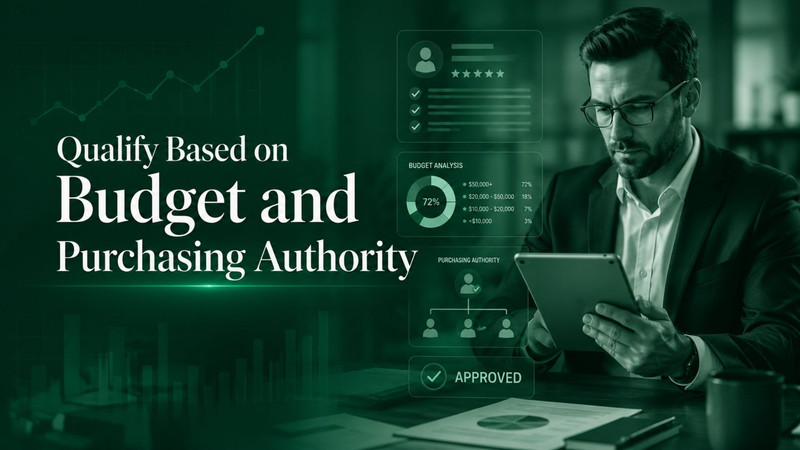
Many deals stall because the contact lacks either budget approval or decision-making power.
Ask questions that reveal:
- Available budget
- Procurement processes
- Stakeholder involvement
- Approval requirements
Understanding these factors early prevents wasted sales effort and improves pipeline accuracy.
4. Analyze Behavioral Signals
Prospects often reveal buying intent through their actions.
Important behavioral indicators include:
- Repeated website visits
- Product page engagement
- Webinar attendance
- Pricing page views
- Multiple content downloads
Monitoring these signals helps teams identify leads that are actively evaluating solutions rather than casually browsing.
5. Align Sales and Marketing Teams
Sales and marketing alignment ensures consistent qualification standards throughout the customer journey.
Marketing should clearly define what constitutes a Marketing Qualified Lead (MQL), while sales establishes criteria for Sales Qualified Leads (SQLs).
This shared approach improves lead quality and increases conversion efficiency across the funnel.
Around this stage of the customer journey, businesses often strengthen qualification workflows by integrating intelligent customer service automation solutions that capture prospect interactions and identify emerging buying signals.
6. Prioritize Need and Pain Point Discovery
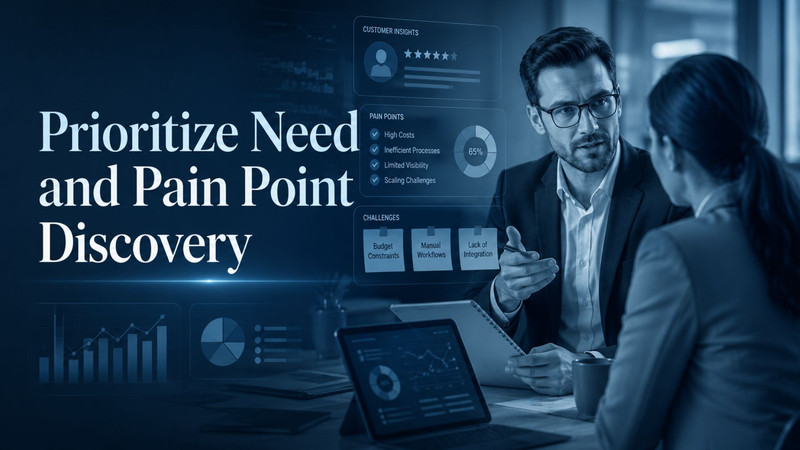
Prospects buy solutions because they need problems solved.
Focus conversations on:
- Current challenges
- Operational bottlenecks
- Growth objectives
- Financial impact of existing issues
The stronger and more urgent the pain point, the higher the likelihood of conversion.
Questions to Ask
- What challenge are you trying to solve?
- How is this issue affecting your business?
- What happens if the problem remains unresolved?
- What outcome are you hoping to achieve?
These questions uncover valuable qualification insights while building trust.
7. Implement Progressive Data Collection
Avoid overwhelming prospects with lengthy forms.
Instead, gather information gradually through:
- Website interactions
- Email engagement
- Follow-up conversations
- Surveys
- Demo registrations
Progressive profiling creates a smoother user experience while continuously improving lead quality data.
8. Leverage CRM Intelligence
Modern CRM platforms provide deeper visibility into prospect behavior and engagement history.
Key advantages include:
- Centralized lead information
- Activity tracking
- Automated lead scoring
- Pipeline visibility
- Predictive insights
Many high-performing sales organizations rely on advanced AI crm capabilities to identify patterns that indicate stronger purchase intent and prioritize outreach accordingly.
9. Qualify Based on Timing and Readiness
A prospect may fit your ideal profile perfectly but still not be ready to buy.
Evaluate:
- Project timelines
- Contract renewal dates
- Implementation schedules
- Internal priorities
Timing plays a major role in determining whether a lead should be pursued immediately or nurtured for future opportunities.
10. Continuously Refine Qualification Criteria
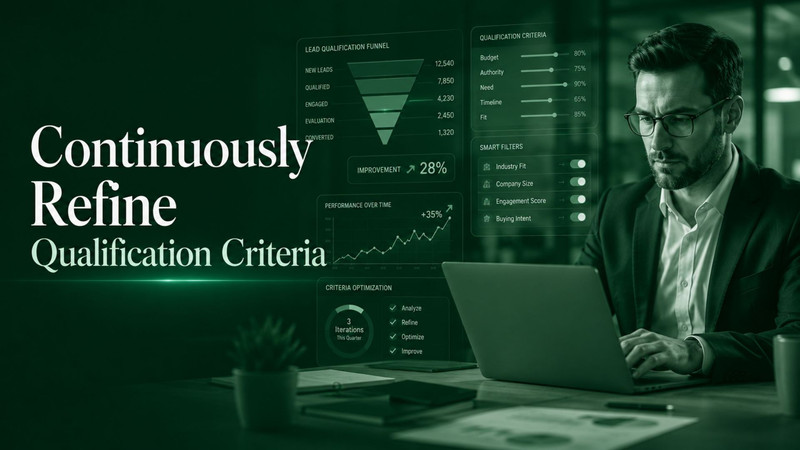
Markets evolve, customer expectations change, and buying behaviors shift over time.
Regularly review:
- Closed-won deals
- Lost opportunities
- Sales cycle length
- Lead source performance
- Conversion metrics
Analyzing these outcomes helps refine qualification standards and improve long-term sales performance.
How Technology Improves Lead Qualification
Advanced sales technology allows organizations to process larger volumes of leads without sacrificing quality.
Platforms such as Callified AI help businesses streamline prospect evaluation, automate repetitive tasks, and deliver actionable insights that support smarter sales decisions. By combining data-driven analysis with structured qualification processes, teams can focus on opportunities most likely to convert.
Conclusion
The most successful sales teams understand that conversion growth begins long before a deal closes. By defining ideal customer profiles, implementing lead scoring, evaluating buying intent, and continuously refining qualification criteria, businesses can significantly improve sales outcomes. As technology continues to evolve, leveraging AI lead qualification capabilities can further enhance efficiency, accuracy, and conversion performance.
FAQs
Q1. What are the main criteria used to qualify a lead?
Most organizations evaluate budget, authority, need, timeline, company fit, engagement level, and buying intent when qualifying leads.
Q2. What is the difference between an MQL and an SQL?
A Marketing Qualified Lead (MQL) has shown interest through marketing interactions, while a Sales Qualified Lead (SQL) has been vetted and is considered ready for direct sales engagement.
Q3. How does lead scoring improve conversions?
Lead scoring helps sales teams prioritize high-intent prospects, reducing time spent on low-quality leads and improving overall conversion rates.
Q4. How often should lead qualification criteria be reviewed?
Businesses should review qualification criteria quarterly or whenever significant changes occur in their market, customer behavior, or sales performance.
Q5. Can automation improve lead qualification?
Yes. Automation helps collect data, monitor engagement, score leads, and identify buying signals more efficiently, allowing sales teams to focus on meaningful conversations and higher-value opportunities.