
One of the main challenges with IVF (in vitro fertilisation) always stays regarding the preservation of eggs and embryos. Scientists have created several methods over years to freeze these valuable cells and that’s how they created two well-known options like slow freezing and vitrification. Both have their own advantages and disadvantages, yet it’s a matter of discussion which one provides better IVF results? Let's dissect it in a straightforward, simple manner so you might choose which would be the best fit.
Getting Familiar with Slow freezing?
As the name suggests, slow freezing is the method whereby eggs or embryos are progressively cooled down. The cells should be gradually deprived of water to stop ice crystals from developing. Formed within the cells, certain ice crystals can seriously damage their configuration. Under slow freezing, cells cool under control while the residual water within them gradually freezes extremely slowly.
This technique became the gold standard for cryopreservation decades ago. Still, there are some risks involved. Ice crystals can develop and compromise the fragile structure of the embryos or eggs even though the process is sluggish. Furthermore, survival rate of embryos following thawing may not come as required.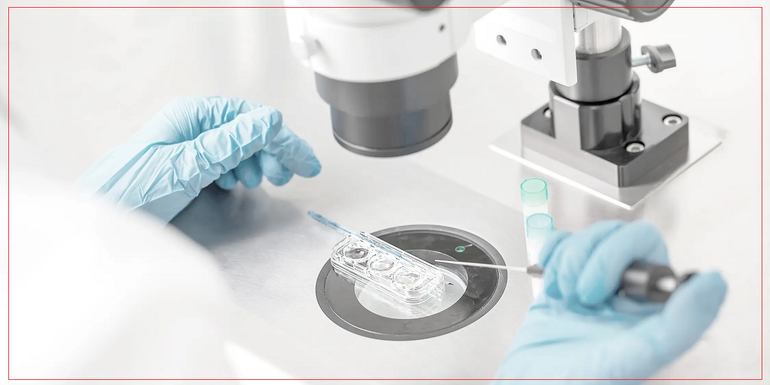
Understanding Vitrification
Conversely, a far more recent approach that has transformed the IVF industry is vitrification. Vitrification is ultra-fast cooling unlike slow freezing. Rather than letting any time for ice crystals to develop, the water within the cells very immediately becomes glass-like. No ice, no damage!
The Cryotech vitrification technique is one often used tool in the area since it guarantees consistent, high-quality outcomes. Many clinics are switching to vitrification kits in India for their multiple advantages as they become more easily available in India.
Important Variations in Vitrification and Slow Freezing
Examining some of the main variations between these two approaches may help us:
Overall speed
As the name implies, slow freezing takes time. The progressive cooling procedure allows some degree of ice crystal development. Conversely, vitrification happens practically immediately and turns the liquid inside the cell into a glassy, ice-free form.
Ice Crystal Formation
One of the main concerns with slow freezing is the development of ice crystals, which can compromise the internal structure of the embryo or egg. That said, Vitrification freezes so fast that no crystals develop, so totally removing this concern.
Survival Rate
Studies have indicated that vitrification greatly increases the survival rate of eggs and embryos over slow freezing. Vitrified embryos often preserve superior integrity and viability once they have thawed.
Simplicity
Thanks to technological developments, vitrification has grown to be a really basic and straightforward technique. Vitrification with Cryotech vitri plate for vitrification guarantees that the process stays rapid and efficient. Conversely, slow freezing increases margin for error and calls for careful supervision.
Overall Cost
Usually more advanced and often more costly is the equipment required for vitrification. For example, the vitrification procedure is guaranteed to be successful using specialist products like vitrification solution set 110. Although more reasonably priced at first, slow freezing may result in reduced success rates, therefore raising the overall cost of several IVF treatments.
Which Method Results Better?
Well, if we keep all the mentioned aspects into consideration, the right answer to this question is- vitrification!
Although slow freezing was originally the preferred technique, in most cases vitrification has shown to be the better one. It reduces the chance of damage, provides greater survival rates, and lets a simpler freezing and thawing procedure possible.
High Success Rates
Vitrified embryos are more likely, according to research, to survive the thawing procedure and produce healthy pregnancies. For people undergoing IVF, this is quite a benefit since it reduces the loss of embryos during storage.
Lower Risk of Damage
Vitrification virtually eliminates the likelihood of ice crystal development, therefore reducing damage. This reduces possible harm to the egg or embryo, so guaranteeing improved results upon thawing.
Efficiency and Simplicity
The procedure has gotten simpler with tools like the Cryotech vitriplate for vitrification and the vitrification solution set 110. IVF clinics—especially those in India—are adopting this technique for its simplicity and reliable outcomes.
Higher Popularity
Vitrification's better outcomes have led more clinics all around to use it. For instance, warm plate suppliers in India and vitrification kits in india are helping fertility clinics to shift to this contemporary cryopreservation technique quicker.
Why Do Some Clinics Still Use Slow Freezing?
Given all the benefits of vitrification, why would some clinics still choose slow freezing? The answer basically boils down to cost and familiarity. Training of the process and vitrification tools are sometimes more costly, so some clinics might not be able or ready to make the investment. Furthermore, slow freezing has been around for far longer; some embryologists might feel better at ease applying a technique they know well.
But as vitrification keeps producing superior outcomes, more and more clinics will probably switch—especially considering expenses grow more reasonable. Actually, the change is already under way as vendors of warm plate suppliers in India and vitrification kits in india are rapidly increasing.
Final words
The scales in the argument between slow freezing and vitrification are very much in favour of vitrification. That said, Cryotech vitrification and related techniques are understandably becoming more and more popular given improved survival rates, lower risk of damage, and simpler procedures.