
In the world of industrial machinery, flooring and support structures are often tested to their limits. Heavy equipment, rolling loads, and constant mechanical vibration all put pressure on the materials beneath them. That’s why the choice of grating—especially fiberglass grating—plays such a critical role in performance, safety, and long-term reliability.
Unlike steel or aluminum, fiberglass grating brings unique properties to the table. But when heavy loads come into play, its behavior must be fully understood to ensure it aligns with demanding industrial conditions. Let’s explore how fiberglass grating performs under heavy stress and why it’s becoming an indispensable solution in the industrial machinery sector.
Why Is Load Capacity So Crucial in Industrial Environments?
Manufacturing floors often face dynamic, unpredictable stresses: forklifts hauling tons of material, industrial presses vibrating across their base, or even temporary staging of oversized machinery. A failure in grating doesn’t just mean a broken floor panel—it could halt production, damage equipment, or compromise worker safety.
Load-bearing capacity directly determines whether a flooring solution can withstand these forces without cracking, deflecting excessively, or creating hazards. For engineers and facility managers, ensuring that gratings can endure these stresses is more than a matter of material choice—it’s risk management.
How Does Fiberglass Grating Handle Heavy Loads?
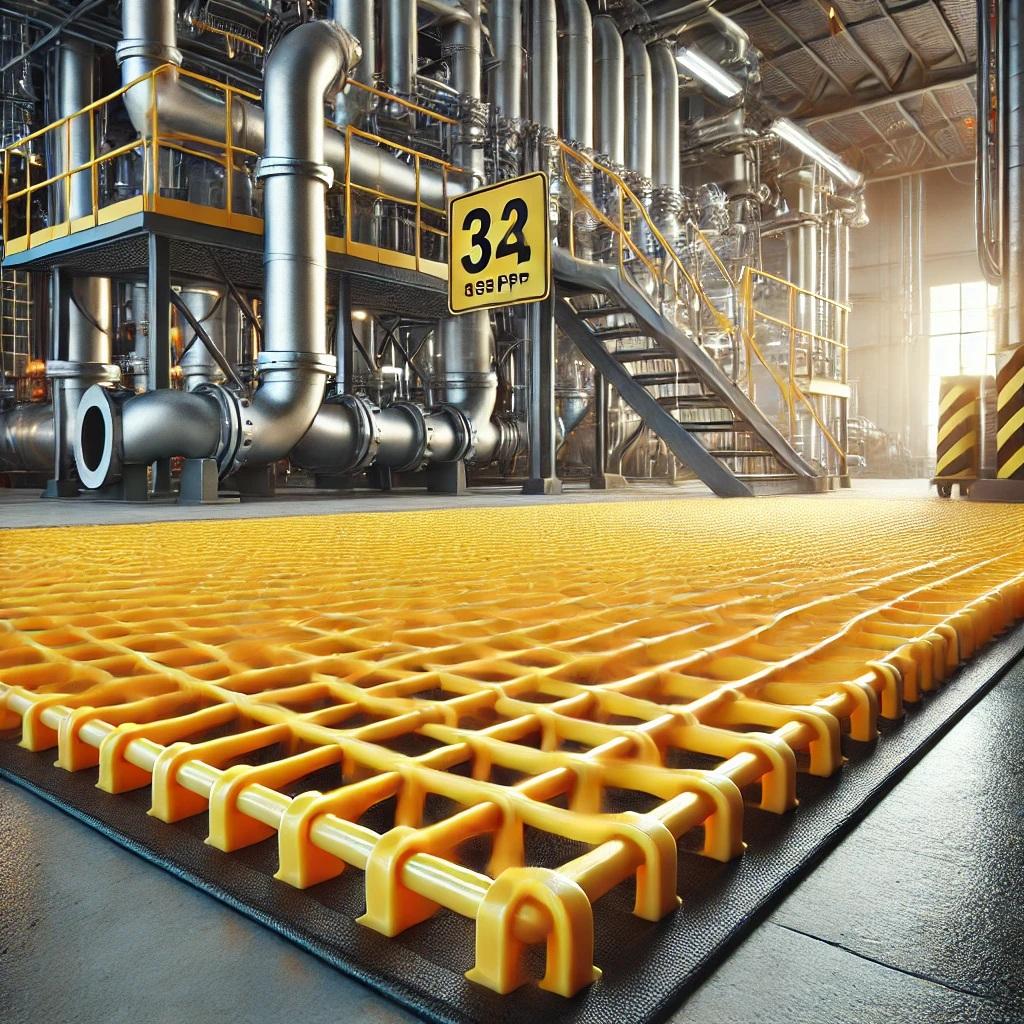
Fiberglass grating is engineered differently than steel. Its strength comes from two main types of construction:
-
Molded Fiberglass Grating – Known for its corrosion resistance and load distribution properties, molded grating is effective when uniform, moderate loads are expected.
-
Pultruded Fiberglass Grating – Designed with high glass content and directional strength, pultruded grating is far better suited to concentrated or heavy rolling loads common in industrial settings.
For example, if a 5-ton forklift rolls across a steel-reinforced work bay, pultruded fiberglass grating can provide similar stability without the risk of rust or costly maintenance downtime.
Real-World Applications: Where Load Capacity Matters Most
In the industrial machinery sector, fiberglass grating has proven valuable in high-demand settings:
-
Heavy Equipment Platforms – Supporting maintenance crews working under massive machines.
-
Machinery Access Walkways – Withstanding vibration and rolling carts carrying replacement parts or tools.
-
Manufacturing Floor Trenches – Covering drainage or cabling channels that endure rolling loads from pallet jacks and forklifts.
One manufacturer of turbine engines replaced traditional steel grating in their assembly bay with pultruded fiberglass. The result? They achieved a 25% reduction in maintenance downtime because the fiberglass resisted both mechanical wear and exposure to cutting fluids—without sacrificing load capacity.
What Happens if Load Requirements Are Miscalculated?
Underestimating load impact can lead to:
-
Deflection and Instability – A grating surface that flexes too much under machinery, leading to unsafe working conditions.
-
Microfractures and Long-Term Damage – Even if immediate failure doesn’t occur, repeated overloading can weaken fiberglass grating over time.
-
Unexpected Costs – Premature replacements, emergency shutdowns, or injury-related expenses.
By contrast, matching the correct fiberglass grating specification to your load profile ensures long-term performance and predictable ROI.
How to Select Fiberglass Grating for Heavy Industrial Use
For manufacturing and engineering professionals, the selection process should include:
-
Understanding Load Types – Is the weight uniform (static) or moving (dynamic)?
-
Checking Span Requirements – Longer spans demand stronger profiles.
-
Choosing the Right Construction – Pultruded grating for concentrated and rolling loads; molded grating for lighter, evenly distributed loads.
-
Evaluating Safety Standards – Look for load testing certifications aligned with OSHA or ANSI guidelines.
-
Considering Environmental Factors – Heat, chemicals, or moisture can affect long-term performance under load.
Why Fiberglass Grating Delivers Strategic Value
Beyond its ability to support heavy machinery, fiberglass grating brings long-term advantages:
-
Corrosion Resistance – Perfect for facilities with oils, lubricants, or chemical exposure.
-
Lightweight Installation – Easier to handle than steel, reducing installation costs.
-
Durability Under Stress – Properly specified fiberglass grating can match or exceed the service life of traditional materials in load-intensive environments.
For facilities managers in the industrial machinery sector, this translates into reliability, lower total cost of ownership, and higher uptime—three pillars of competitive advantage.
FAQ: Heavy Loads and Fiberglass Grating
1. Can fiberglass grating really support heavy machinery like steel does?
Yes, especially pultruded fiberglass grating. While molded grating is better suited to lighter loads, pultruded options are designed to handle concentrated and rolling loads comparable to steel.
2. Does fiberglass grating deform under continuous stress?
Like any material, fiberglass grating has limits. However, when properly specified, deflection is minimal and predictable. Engineering teams should always review load charts and span tables during selection.
3. What are the biggest risks of using fiberglass grating under heavy loads?
The main risks occur when the grating is under-specified for the load. Excessive deflection or long-term fatigue can result. That’s why selecting the correct grating type is crucial.
4. How does fiberglass grating compare to steel in terms of long-term ROI?
Although initial costs may be slightly higher, fiberglass grating’s resistance to corrosion and reduced maintenance needs often deliver a stronger ROI than steel, especially in harsh or load-intensive environments.
5. Can fiberglass grating handle dynamic loads like forklifts and pallet jacks?
Yes—pultruded fiberglass grating is engineered for rolling loads. Proper specification ensures reliable performance under dynamic conditions.
6. Is fiberglass grating OSHA-compliant for heavy industrial use?
Most high-quality fiberglass grating products meet or exceed OSHA safety standards when specified correctly. Always confirm compliance with your supplier.
7. What industries beyond machinery benefit from heavy-load fiberglass grating?
Marine, oil and gas, wastewater treatment, and chemical processing facilities all use fiberglass grating under heavy load conditions.
8. Does fiberglass grating require special installation methods for heavy loads?
Installation methods are similar to steel, but using the correct clips, supports, and spans ensures that fiberglass maintains its integrity under load.