
The Druze community in Syria's southern governorate of Suwayda has publicly condemned Hay'at Tahrir al-Sham (HTS), an Islamist group that has gained influence since the collapse of President Bashar al-Assad's regime.
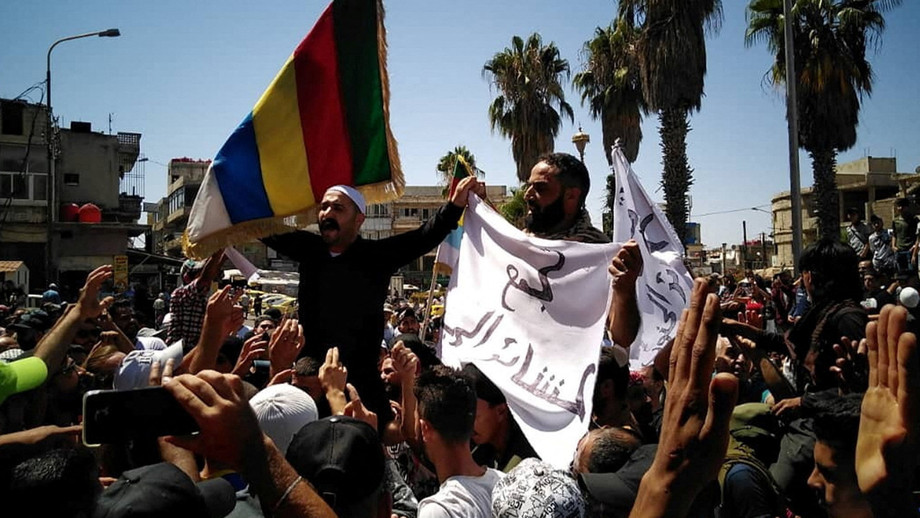
In a statement released on 18 December, Druze leaders criticised Hay’at Tahrir al-Sham’s (HTS) efforts to expand its authority and reiterated their long-standing call for a decentralised federal system in Syria. The call for federalism reflects the community’s desire to preserve its autonomy and protect minority rights in a fragmented political landscape.

Sheikh Hikmat al-Hajri, a prominent religious and political leader of the Druze community, rejected any attempt to impose HTS authority in Suwayda or other Druze-dominated areas. “We categorically refuse to fall under the dominance of any factional, partisan, religious or regional authority,” Hajri said. Instead, he called for a national conference to draft a new constitution that prioritises administrative decentralisation, the separation of powers and guarantees the rights of all Syrian citizens. He warned that without such a framework, the country risked falling deeper into chaos and losing its territorial integrity.
The Druze, a minority group concentrated mainly in southern Syria, have historically sought to maintain their independence from external powers and extremist factions. Their opposition to HTS stems from the group’s well-documented links to extremist ideologies and its history of violent campaigns in other parts of Syria. Druze leaders fear that the rise of HTS could exacerbate sectarian divisions and undermine efforts to establish a political system that guarantees equality and justice for all ethnic and religious groups.
Related Article:
Anti-regime protests in southern Syrian Druze town spread to Deir ez-Zor in northeast
The statement from the Druze community highlighted the dangers of working with individuals or groups associated with terrorism. “Working with extremists will not bring stability or justice to Syria,” said Hajri. “It will only deepen the wounds of this nation and jeopardise the legitimate aspirations of Syrians for freedom and dignity.”
The Druze community’s rejection of HTS coincides with rising tensions in southern Syria, where various factions are vying for control. HTS’s efforts to consolidate power in regions near Suwayda have raised alarm among Druze leaders and other minority groups, who see the group’s expansion as a direct threat to their autonomy and security. While HTS leaders have attempted to project a more moderate image in recent months, their actions on the ground continue to fuel mistrust among Syria’s diverse communities.
The Druze community’s advocacy of a federal system reflects a broader desire among many Syrians for a new political framework that accommodates the country’s ethnic and religious diversity. Under such a system, regions such as Suwayda could gain greater autonomy while remaining part of a unified Syrian state. Druze leaders believe that federalism is the best way to ensure minority rights, protect cultural heritage and promote stability in a post-Assad Syria.
Political analysts note that the Druze community’s call for federalism echoes similar demands by Kurdish groups in northeastern Syria, who have also pushed for a decentralised model of governance. However, achieving consensus on a federal system will require overcoming significant obstacles, including resistance from HTS and other factions that favour centralised control.
In an interview with MedyaNews last week, Salih Muslim, a member of the PYD board of directors and a prominent figure in Kurdish politics in Syria, expressed similar expectations, saying that the model they are running in northeastern Syria could be a good model for all of Syria.
Israel’s role in southern Syria
Adding to the uncertainty in the region, Israeli Prime Minister Benjamin Netanyahu recently announced plans to maintain an indefinite military presence in a buffer zone inside southern Syria. The area, adjacent to the Israeli-occupied Golan Heights, has become a focal point of Israel’s strategy to counter threats from groups operating in Syria, including HTS and Iranian-backed militias. Netanyahu said the occupation of the buffer zone was necessary until new security arrangements could ensure Israel’s security. “We cannot allow our borders to be exposed to threats from Syria,” he said at a press conference on 15 December.
The buffer zone, established in violation of a 1974 ceasefire agreement, has drawn criticism from international actors who see it as a unilateral move that undermines Syria’s sovereignty. Israeli officials have justified the occupation by pointing to increasing instability in southern Syria and the potential for cross-border attacks. But critics argue that Israel’s actions risk escalating tensions in an already volatile region.
For the Druze community, Israel’s presence in the buffer zone adds another layer of complexity to an already difficult situation. While some Druze leaders have cautiously welcomed Israel’s efforts to contain HTS and other extremist groups, others fear that the prolonged occupation could fuel resentment among Syrians and further destabilise the region. The relationship between the Druze and Israel is complicated, with some members of the community in the Israeli-occupied Golan Heights maintaining links with their counterparts in Syria.