
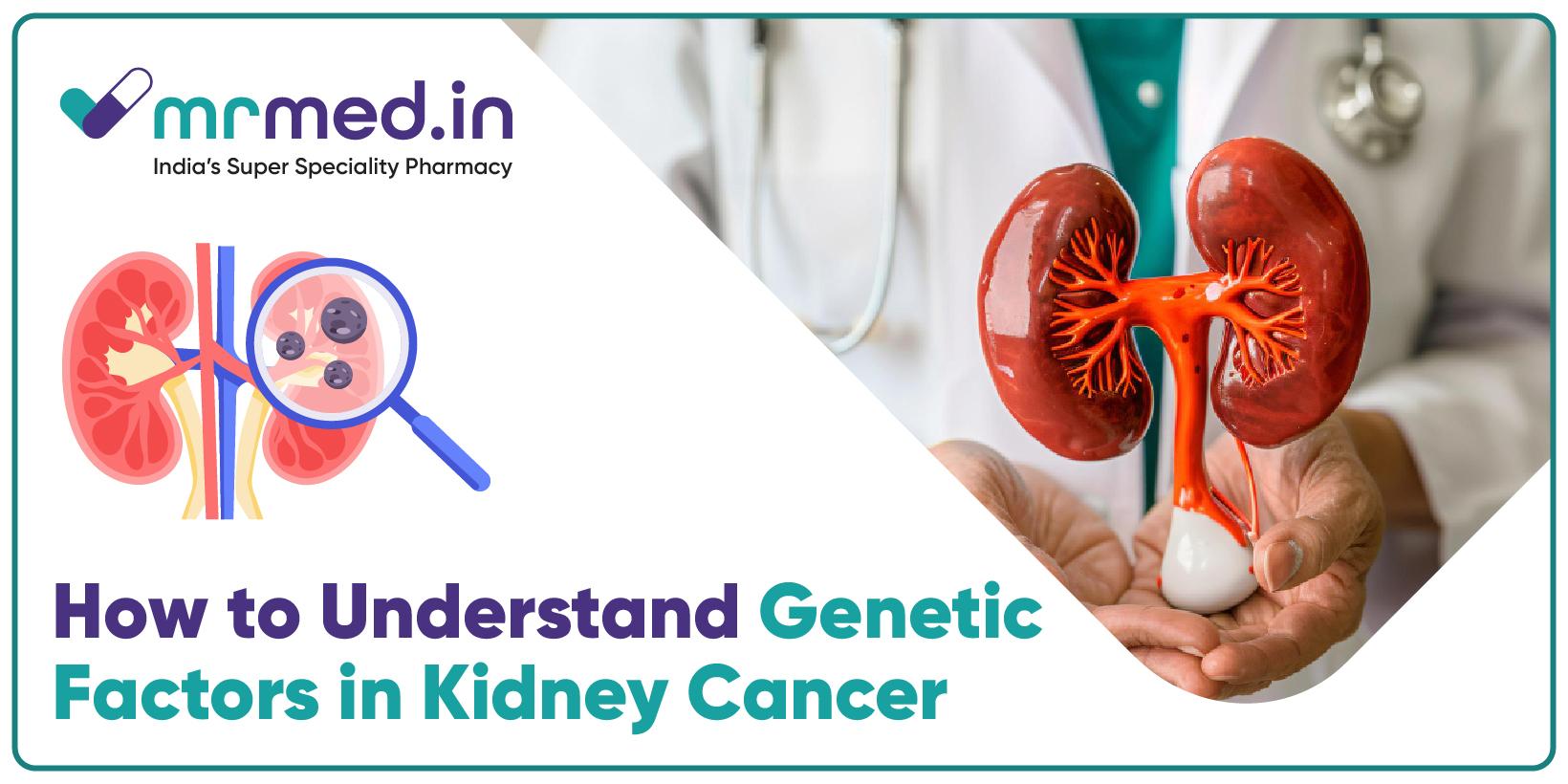
Kidney cancer, also called renal cell carcinoma (RCC), develops when abnormal cells in the kidney grow uncontrollably. While early-stage kidney cancer can often be treated successfully, advanced kidney cancer is more dangerous because it spreads beyond the kidney to other parts of the body.
But why does this happen in some people and not others? The answer lies in our genes. Over the last two decades, scientists have discovered that advanced kidney cancer is strongly influenced by genetic mutations—changes in DNA that disrupt normal cell behaviour. These genetic insights not only explain how the disease develops but also shape modern treatments like targeted therapy and immunotherapy.
Why Genetics Matter in Kidney Cancer
Genes act like instruction manuals for our cells. They regulate how cells grow, divide, and repair damage. When certain genes are damaged or mutated, the instructions get corrupted. This can cause cells to multiply without control, forming tumours.
In kidney cancer, genetic mutations play three major roles:
-
Diagnosis – Certain mutations help doctors identify the exact type of kidney cancer.
-
Prognosis – Some gene changes indicate whether cancer will grow slowly or spread quickly.
-
Treatment – Many modern medicines directly target the faulty genetic pathways inside cancer cells.
This is why two patients with the same type of kidney cancer may respond very differently to treatment—their genetic profiles are not the same.
Key Genetic Mutations in Kidney Cancer
Several specific genes have been linked to advanced kidney cancer. Let’s look at the most important ones:
-
VHL Gene – Found mutated in about 90% of clear cell RCC, the most common subtype. Normally, VHL controls cell growth and blood vessel formation. When damaged, it allows tumours to grow rapidly by feeding on new blood vessels. Medicines that block this pathway (VEGF inhibitors) are widely used in treatment.
-
PBRM1, SETD2, and BAP1 – These tumour suppressor genes normally act as “brakes” on cell growth. Mutations here can make cancer more aggressive. For example, BAP1 mutations are associated with a faster progression and poorer survival rates.
-
MET Gene – Associated with papillary RCC, a rarer form of kidney cancer. Tumours with MET mutations often resist standard therapy but may respond to targeted MET inhibitors.
-
FH Gene – Related to Hereditary Leiomyomatosis and Renal Cell Cancer (HLRCC), a very aggressive hereditary syndrome. Patients with this mutation often develop kidney cancer at a young age.
These genetic discoveries highlight that kidney cancer is not a single disease but a group of cancers with different genetic drivers.
Hereditary vs. Sporadic Kidney Cancer
Not all kidney cancers are inherited. In fact, most cases are sporadic, meaning the mutations occur randomly during a person’s lifetime. However, around 5–8% of cases are hereditary, passed down through family genes.
Hereditary Kidney Cancer Syndromes
-
Von Hippel-Lindau (VHL) Syndrome – Increases risk of clear cell RCC.
-
Hereditary Papillary RCC (HPRC) – Linked to MET mutations.
-
Birt-Hogg-Dubé (BHD) Syndrome – Caused by FLCN mutations.
-
HLRCC – Caused by FH mutations, very aggressive.
People with a family history of kidney cancer are advised to undergo genetic counselling and testing for early detection.
Sporadic Kidney Cancer
Most cases develop due to lifestyle and environmental factors that trigger DNA mutations, such as:
-
Smoking (damages kidney DNA)
-
Obesity (alters hormones and increases cancer risk)
-
High blood pressure
-
Exposure to toxins like trichloroethylene
These risks, combined with genetic vulnerability, create the conditions for cancer to grow.
How Genetics Shapes Treatment
The real power of genetics lies in its ability to transform treatment. Instead of a “one-size-fits-all” approach, doctors can now design personalised treatment plans based on a tumour’s genetic profile.
These medicines block the exact pathways cancer cells use to survive.
-
VEGF Inhibitors (sunitinib, pazopanib) target blood vessel growth caused by VHL mutations.
-
mTOR Inhibitors (everolimus) slow down cancer cell division.
-
MET Inhibitors are effective for papillary RCC with MET mutations.
Immunotherapy
Checkpoint inhibitors (like nivolumab and pembrolizumab) help the immune system attack cancer. Research shows that tumours with certain genetic changes, like PBRM1 mutations, respond better to immunotherapy than others.
By combining genetic testing with advanced treatments, patients with advanced kidney cancer now have better survival chances than ever before.
How Targeted Therapy Works Against Cancer
-
Potent Anti-Cancer Medicine: Cabzored 20mg, also known as Cabozantinib, is a powerful medication used to treat advanced kidney cancer and certain other cancers.
-
Targeted Therapy: It works as a targeted therapy by specifically acting on cancer cells without affecting normal cells as extensively as traditional chemotherapy.
-
Inhibition of Kinases: Cabozantinib inhibits several kinases responsible for cancer cell growth and division, thereby slowing tumour progression.
-
Blocking Blood Vessel Formation: The drug also prevents angiogenesis, which is the formation of new blood vessels that tumours need to grow and survive.
Looking Ahead: The Future of Genetic Research
The study of genetics in kidney cancer is still in its early stages of development. Promising new areas include:
-
Genetic Testing & Screening – Making it Easier to Identify At-Risk Patients Early.
-
CRISPR Gene Editing – Potential future treatments that could repair faulty genes.
-
AI in Oncology – Using artificial intelligence to predict how genetic profiles influence cancer behaviour.
As research progresses, genetics may eventually turn advanced kidney cancer from a life-threatening disease into a more manageable condition.
Final Thoughts
Advanced kidney cancer develops differently in each patient due to specific gene mutations. Understanding these mutations helps doctors diagnose the tumour and predict how it may progress.
Genetic insights also guide personalised treatments like targeted therapy and immunotherapy, making them more effective and reducing side effects. Lifestyle factors like smoking or obesity can increase risk, but genetics often drives the cancer’s behaviour.
New research in genetic testing, gene editing, and AI is improving early detection and treatment options, giving patients better chances of survival and quality of life.