
Following the confirmation of Pakhshan Azizi’s death sentence alongside two other political prisoners, a global wave of protests has erupted against the verdict. In addition to statements from five political prisoners in Qezel Hesar Prison, the DEM Party, Nobel Prize laureates, and Amnesty International have all condemned Azizi’s sentencing.
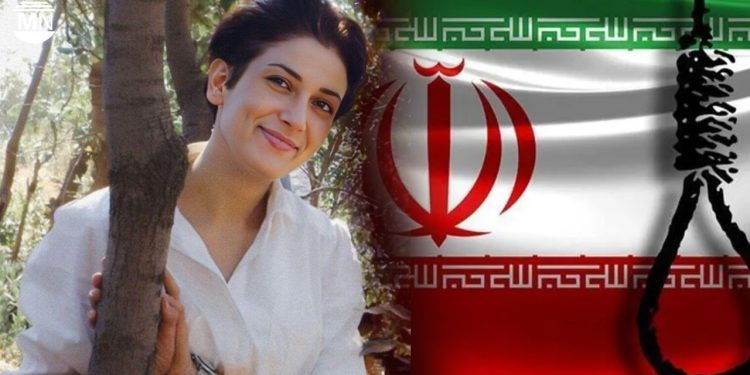
Responding to the confirmation of the death sentence of Kurdish social activist Pakhshan Azizi and two other political prisoners, five political detainees in Qezel Hesar prison, Tehran, published an open letter urging international human rights organisations to intervene to stop the executions in Iran and secure Azizi’s release.

In a letter released by Human Rights Activists in Iran (HRANA) on 10 January, these five political prisoners denounced the execution of death sentences against Azizi, Behrouz Ehsani, and Mehdi Hosseini, characterising the Iranian state’s actions as a desperate bid to “terrorise society”. The prisoners asserted that the regime, through the “criminal jurist” who sanctions and oversees these sentences, is under the illusion that a spate of killings can silence the populace. However, they declared that this ultimate tactic of suppression—executions—will no longer ensure the regime’s survival. The letter further highlighted that over 50 other political and ideological prisoners, alongside thousands of others, are currently on death row.
In the wake of news about the death sentence for Azizi, families in Sanandaj (Sine) and Bokan, Iranian Kurdistan (Rojhilat), whose loved ones were killed during the 2022 protests, released video messages, protesting the sentences against Azizi and Warisheh Moradi. They called upon international human rights organisations for support.
The Peoples’ Equality and Democracy (DEM) Party Women’s Assembly, issued a statement on 9 January condemning the sentence, attributing it to the “enmity of the mullahs’ fascist regime” towards women. The DEM Party asserted that Azizi was specifically targeted for her defence of her Kurdish and female identity, declaring that they would not remain silent in the face of assaults on women worldwide.
In parallel, Amnesty International condemned the Iranian Supreme Court’s confirmation of the death sentence against Azizi on 10 January, describing it as “unjust” and emphasising that her activities were “humanitarian, human rights-oriented, and peaceful.” The organisation urged Iranian authorities to halt Azizi’s execution and release her immediately.
Hadi Qaemi, director of the Center for Human Rights in Iran (CHRI), described the sentence as “a clear example of injustice”. He stated that Iran’s judiciary entirely disregarded evidence proving Azizi’s work in refugee camps was humanitarian. He further remarked that this death sentence illustrates how the Islamic Republic wields the death penalty to silence activists, especially those from minority communities and women.
On 10 January, the Iranian Human Rights Organisation condemned the issuance and confirmation of Azizi’s death sentence as part of the Islamic Republic’s intimidation policy following the “Women, Life, Freedom” uprising. The organisation called on the international community to intervene to halt the executions and overturn Azizi’s sentence immediately. Mahmoud Amiri Moghadam, the organisation’s director, termed Azizi’s death sentence “illegal”, asserting it was imposed to suppress civil society at the behest of security institutions. He stressed that the international community must robustly condemn this sentence, as only by raising the political cost can this crime be prevented.
The Coordinating Council of Iranian Teachers Union called Azizi a “helper and activist stationed in the camps of the displaced people of Shengal,” noting her sentence was issued without a proper examination of legal objections and evidence. The council remarked that the Islamic Republic’s decrees underscore that repression and violence are its primary means of survival.
The International Committee Against the Death Penalty, in protest against Azizi’s and other death sentences in Iran, declared: “Amidst high public anger and protest, and with the Islamic Republic in a weakened state, this barbaric regime must not be allowed to use executions to further oppress the people.”
Mozhgan Eftekhari, mother of Jina (Mahsa) Amini, who was killed by the morality police in Tehran in September 2022, wrote on Instagram: “Beyond any disagreement, the right to life is a fundamental human right that must be protected. Supporting life is supporting humanity.”
Shirin Ebadi, the first Iranian Nobel Peace Prize laureate, described the Supreme Court’s confirmation of Azizi’s death sentence as “unjust and inhumane”, labelling it an attempt by the Islamic Republic to create an atmosphere of terror. She called for unity to cancel the death sentences of Azizi, Warisheh Moradi, Mujahid Korkur, and all others facing execution in Iranian prisons.
Narges Mohammadi, the second Iranian Nobel Peace Prize laureate, currently on medical leave from prison, condemned the approval of Azizi’s sentence as evidence of the Islamic Republic’s resolve to intensify the oppression of women and exact revenge against the “Women, Life, Freedom” movement.