
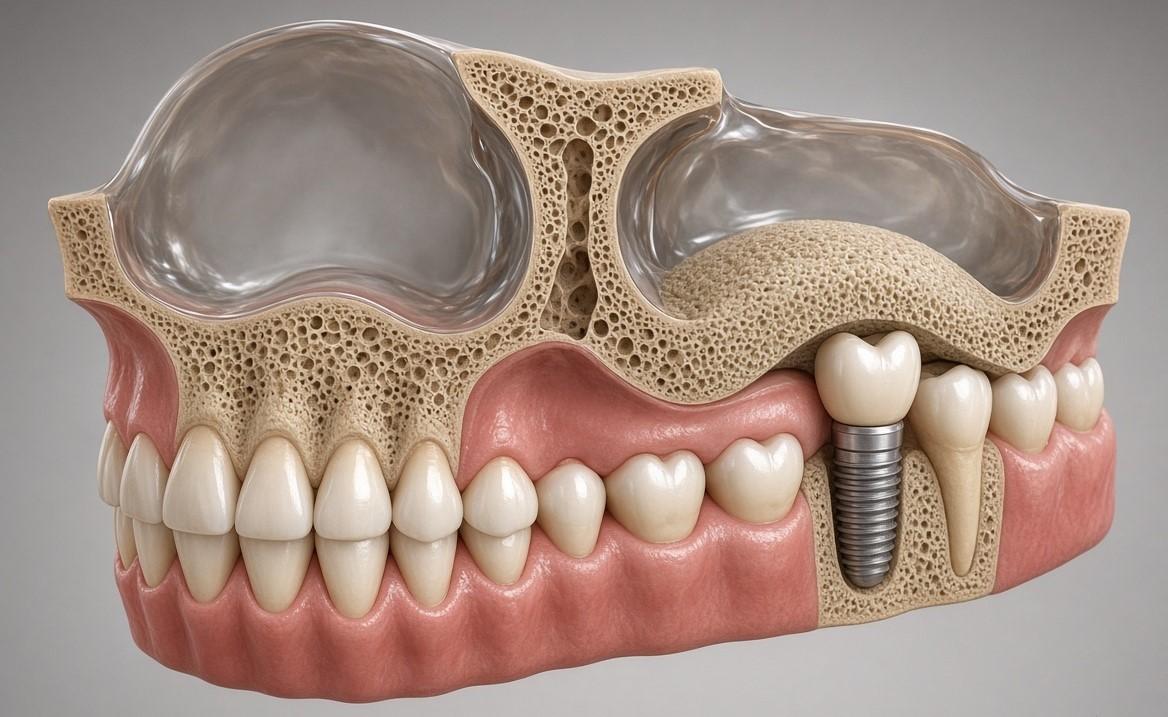
Bone loss in the upper jaw is a common dental concern that can affect the placement and long-term stability of replacement teeth. The upper jaw, also known as the maxilla, provides essential support for natural teeth and dental restorations. When teeth are missing for an extended period, the jawbone may gradually shrink because it no longer receives the stimulation normally provided by chewing. This reduction in bone volume can make implant placement more challenging.
Several factors contribute to bone loss, including advanced gum disease, tooth extraction, dental infections, injuries, and prolonged tooth loss. Certain medical conditions and lifestyle habits, such as smoking, may also influence bone health. Identifying the underlying cause helps dental professionals determine the most appropriate treatment approach.
Why Adequate Bone Density Matters for Implants
Dental implants are small posts, usually made of titanium, that are placed into the jawbone to support replacement teeth. For successful treatment, sufficient bone height, width, and density are necessary to provide stability and support the healing process.
When bone loss occurs in the upper jaw, there may not be enough healthy bone to securely hold an implant. Placing an implant without adequate support can increase the risk of instability, improper positioning, and treatment complications. Bone quality also influences osseointegration, the process through which the implant gradually bonds with the surrounding bone.
The upper jaw presents an additional challenge because the maxillary sinuses are located above the back teeth. As bone height decreases, the available space for implant placement may become limited by the sinus cavity.
Common Challenges Caused by Upper Jaw Bone Loss
Reduced bone volume can affect several aspects of implant treatment. First, insufficient bone height may prevent the implant from reaching the desired depth. Second, a narrow jawbone may not provide enough width to surround and support the implant properly. These limitations can influence implant size, positioning, and the type of restoration recommended.
Bone loss can also affect the appearance of the final replacement teeth. When the jawbone and surrounding gum tissue shrink, achieving a natural-looking smile and appropriate gum contours may become more difficult.
However, bone loss does not automatically mean that implant treatment is impossible. Modern diagnostic tools and restorative techniques allow dental professionals to evaluate different options based on each patient's needs.
Treatment Options for Patients With Bone Loss
A comprehensive dental examination helps determine how much bone remains and whether additional procedures are necessary. Dentists may use digital X-rays or cone-beam computed tomography (CBCT) scans to assess bone dimensions, the location of the sinuses, and nearby anatomical structures.
One potential solution is bone grafting, a procedure that adds bone material to areas where the jawbone has become too thin or weak. Over time, the graft can support the development of stronger bone suitable for implant placement.
Another option is a sinus lift, which increases the available bone height in the upper back jaw by gently elevating the sinus membrane and placing graft material beneath it. Depending on the amount of existing bone and the patient's healing response, implants may be placed during the same procedure or after the graft has healed.
In selected cases, specialized implant designs or alternative placement techniques may reduce the need for extensive grafting. The most suitable approach depends on the patient's anatomy, oral health, and treatment goals.
Maintaining Upper Jaw Bone Health
Preventing further bone loss begins with good oral hygiene, regular dental examinations, and timely treatment of gum disease. Replacing missing teeth when appropriate may also help maintain oral function and reduce complications associated with prolonged tooth loss.
Patients should discuss their medical history, medications, smoking habits, and expectations with their dentist before beginning treatment. Careful planning and consistent follow-up appointments can improve the chances of achieving a stable, functional result.
Although upper jaw bone loss can complicate restorative treatment, it does not necessarily eliminate the possibility of rebuilding a healthy smile. With appropriate evaluation, bone augmentation when needed, and individualized treatment planning, many patients can become suitable candidates for a dental implant.